
How to Organize a Laundry Room
Part of: Tools and everyday fixes
- Difficulty
- Easy
- Time
- 3 to 6 hours
- Tools
- tape measure, pencil, level, drill, driver, stud finder, hammer, utility knife, label maker or marker
- Call a pro if
- You want to move the washer or dryer, add a sink, or change the venting, since those are plumbing, electrical and venting jobs.
In this guide
- Power off first
- Chemical safety
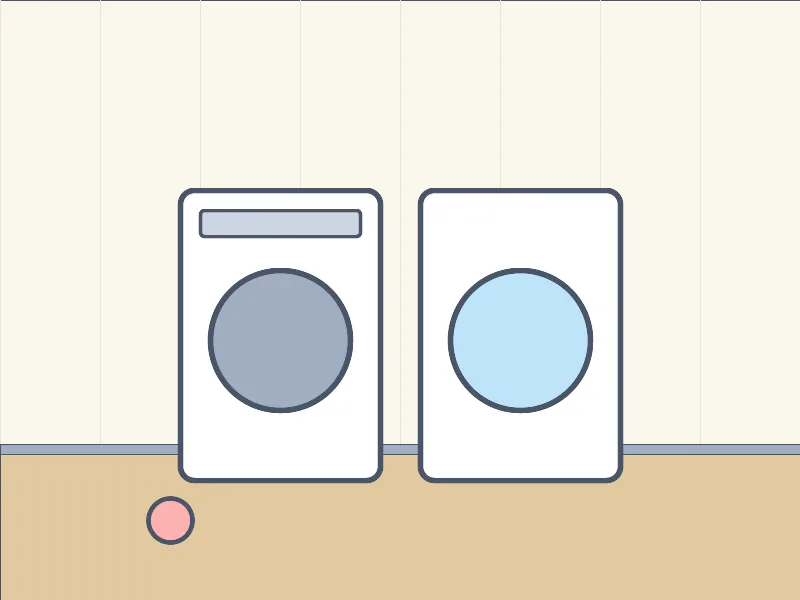
Laundry rooms tend to become storage rooms with appliances in them. The four tasks that happen in the room decide how to organize a laundry room. The fix is not more bins. It is deciding what work happens in the room and putting the tools for each task within reach of where the task happens.
That means a place to sort, a place to treat stains, a flat surface to fold on, a rod to hang, and closed storage for the things that do not need to be visible.
Start by watching how the room gets used for a week before you buy anything. Note where the dirty clothes land, where the clean pile ends up, and which items you reach for most. Most laundry rooms fail because the storage is arranged for how the room looks rather than for the path a basket actually takes from the bedroom to the machine and back.
1. Empty the room completely
Take everything out, including the things that have lived on top of the machines for years. Vacuum the floor, the corners, and behind the machines if you can reach. Look at the empty room and note where the light, outlets, and vent are.
2. Sort what came out
Make four piles: laundry supplies, cleaning supplies, tools and hardware, and everything that belongs somewhere else. Most laundry rooms have a large fourth pile. That pile is the real problem, and it should leave the room today.
3. Plan the zones
Sketch the room. Put the sorting area near the door, the machines where they are plumbed, the folding surface beside or above the dryer, and hanging space close to the dryer. Keep a clear path from door to machines.
If the room is narrow, a counter over the machines is the single best addition.
4. Add shelves above the machines
Measure from the top of the machines to the ceiling. Two shelves, one at about 18 inches above the machines and one higher, hold detergent, baskets, and rarely used items. Fasten shelf standards or cleats into studs. Leave clearance for the machine lids and the hoses. The same shelf and bin logic is laid out in how to organize a small closet.
5. Build a folding surface
A counter over the washer and dryer, or a wall mounted folding table that drops down when needed, gives you a place to fold and to treat stains. A drop down table is the best answer in a small room because it folds out of the way.
6. Add a hanging rod
A rod mounted under a shelf or across a corner holds shirts straight out of the dryer and gives a place for delicates to air dry. Leave enough height that long items do not touch the floor.
7. Set up sorting
Three bags or bins, labeled lights, darks, and towels, near the door. Open bins work better than lidded ones because people actually use them. If the room is too small for bins, a three section sorter on a frame is the compromise.
8. Store chemicals properly
Keep detergents and cleaning products on a shelf above the machines, out of reach of children, or in a cabinet with a child latch. Keep bleach separate from anything that could react with it. Never store gasoline, paint thinner, or other flammables in a laundry room with a gas appliance.
9. Control lint and dust
Lint gets everywhere. Keep a small vacuum or a lint brush in the room. Clean the dryer vent connection and the lint trap housing regularly. Do not store paper goods or fabrics directly against the dryer.
10. Label and maintain
Label bins by purpose, not by contents: stain kit, delicates, rags, extra supplies. Keep a small basket for single socks and lost items. Once a season, empty the room, clean behind the machines, and check the vent.
Common mistakes
- Buying bins before deciding what each zone needs.
- Stacking heavy detergent bottles on a high shelf where they are hard to lift down.
- Blocking the dryer vent with shelves or baskets.
- Keeping the ironing board and iron out where children can reach them.
- Letting the room become the household junk drawer.
- Storing flammables near a gas dryer or water heater.
Related guides
- How to Build Under Stair Storage
- How to Organize Cleaning Supplies
- How to Organize a Toolbox
- How to Organize a Garage on a Budget
- How to Organize a Move With Kids
FAQ
How do I organize a laundry closet instead of a room?
Use the space above the machines for shelves, put a rod under the shelf, and use a fold down table on the wall. Keep the floor clear.
What should go on the shelf above the washer?
Detergent you use weekly, on the lowest shelf. Rarely used supplies and spare light bulbs go higher.
How often should I clean the dryer vent?
Clean the lint trap after every load and check the full vent run at least once a year, more often with heavy use.
Can I put shelves above a front loading washer?
Yes, if you leave clearance for the door and the hoses, and fasten into studs.
What is the best way to store laundry pods?
In a sealed container, high up or locked, and never within reach of children or pets.
More from this topic
- How to Set Up a Laundry Space in a Small Apartment: Learn how to set up a laundry space in a small apartment: check the hookups and lease, stack or combine units...
- How to Organize a Small Garage and Make Room for the Car: Learn how to organize a small garage with zones, wall storage and overhead racks, while keeping fuel, paint...
- How to Organize a Linen Closet So You Can Find Things: How to organize a linen closet: empty and sort it, plan shelf heights for towels and bedding, add baskets and...
- How to Set Up a Laundry Area in a New Home: Learn how to set up a laundry area: check the water, drain and vent, level the machines, fit hoses and the...
- How to Store Seasonal Items in a Small Apartment: Learn how to store seasonal items in a small apartment: sort first, use under bed and vertical space, protect...
 First HomeHow to Set Up a Laundry Space in a Small ApartmentLearn how to set up a laundry space in a small apartment: check the hookups and lease, stack or combine units and plan drying and storage.
 Garage and OutdoorsHow to Organize a Small Garage and Make Room for the CarLearn how to organize a small garage with zones, wall storage and overhead racks, while keeping fuel, paint and fire safety rules in mind.
 First HomeHow to Organize a Linen Closet So You Can Find ThingsHow to organize a linen closet: empty and sort it, plan shelf heights for towels and bedding, add baskets and labels, and keep it from turning back into a pile.
 First HomeHow to Set Up a Laundry Area in a New HomeLearn how to set up a laundry area: check the water, drain and vent, level the machines, fit hoses and the vent, organize the space and prevent leaks.
 First HomeHow to Store Seasonal Items in a Small ApartmentLearn how to store seasonal items in a small apartment: sort first, use under bed and vertical space, protect against damp and pests and label every bin.