
How to Repair a Cracked Wood Door Panel
Part of: Floors, walls and doors
- Difficulty
- Moderate
- Time
- 2 to 3 hours plus drying
- Tools
- putty knife, utility knife, glue syringe or thin nozzle, clamps and cauls, wax paper, sandpaper, block plane, filler, finish
- Call a pro if
- The panel is split through its full thickness or the stiles and rails have separated, since that is a rebuild rather than a repair.
In this guide
- Wear protection
- Chemical safety
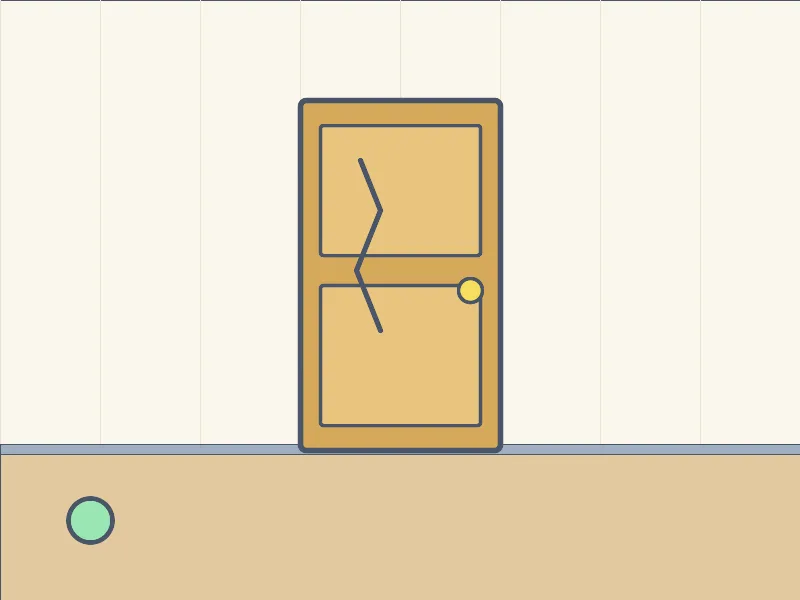
Knowing how to repair a cracked wood door panel saves a door that would otherwise be replaced. Panels crack for a reason: they are trapped by paint or glue, or the door has swollen and the panel had nowhere to go.
The right repair restores movement as well as closing the crack. Glue alone closes the gap; freeing the panel stops it from cracking again in the same place.
1. Find out why the panel cracked
Look at the edges of the panel where it enters the stiles and rails. If the panel is painted tight or glued in place, it could not move. Check also for swelling from moisture, a door that rubs, or a house with very dry winters.
2. Take the door off and lay it flat
Remove the door and lay it on sawhorses with the cracked side up. Work flat so the glue stays in the crack and the clamps pull in line. Mark the hinge positions before you take it off.
3. Clean the crack
Work the crack open slightly and blow or brush out dust and old finish. Glue will not bond to dust or a waxed surface. If the crack has old filler in it, scrape it out with a knife or a thin blade.
4. Work glue into the crack
Use a glue syringe or a thin nozzle to get glue deep into the crack, then flex the panel gently to work it in. Ordinary yellow glue is fine for interior doors. Do not use a gap filling glue, since it will not pull the crack closed.
5. Clamp across the panel
Lay wax paper over the crack, then clamp across the panel with cauls to spread the pressure. Clamp lightly at first, check that the panel is not being pushed out of its grooves, then tighten until the crack closes.
6. Check the panel is free to move
While the door is flat, check whether the panel can still move in its grooves. If paint or glue has locked it, score the paint line around the panel with a knife and free it. This step is what prevents the crack from returning.
7. Wipe the squeeze out
Wipe excess glue with a damp rag before it sets, and check the crack line for a tight joint. If the crack will not close completely, the panel is swollen or something is trapped in the groove, and it should come apart further.
8. Sand and fill the surface
Once the glue is dry, sand the area lightly and fill any remaining crack line with a matched wood filler. On a painted door, use a paintable filler and sand flush. On a stained door, use a filler that takes stain.
9. Refinish the door
Touch up the finish, or refinish the whole door face for an even result. A patch on a stained door will show unless the color and sheen are blended carefully, and painting the whole face is often the better choice.
10. Rehang and check the fit
Rehang the door on its original hinges and check that it closes without rubbing. A door that rubs puts stress back into the panel, which is what caused the crack in the first place. Adjust the hinges or plane the edge if needed.
Common mistakes
- Gluing the crack without freeing the panel, so it cracks again.
- Using a gap filling adhesive that will not pull the joint closed.
- Clamping so hard the panel bows out of its groove.
- Leaving glue squeeze out to dry on the finish.
- Filling the crack with putty instead of gluing it.
- Rehanging a door that still rubs, which restarts the stress.
FAQ
Can a cracked door panel be repaired?
Yes, if the crack is in the panel and not through the stiles or rails. Glue it, clamp it, free the panel so it can move, and finish.
Why did my door panel crack?
Usually because the panel was trapped by paint or glue and could not move with the seasons, or because the door swelled and had nowhere to expand.
What glue should I use on a door panel?
Standard yellow wood glue for interior doors. Use a waterproof glue if the door is exterior.
Should I fill the crack with wood filler?
Only after gluing. Filler alone does not hold a panel crack, since the panel keeps moving.
Can I repair a panel crack without removing the door?
It is possible on a small crack, but working flat gives a much better result, and doors are easier to clamp off the hinges.
Related guides
- How to Repair a Damaged Door Jamb: How to repair a damaged door jamb: cut out the broken section, splice in new wood, and reset the strike or...
- How to Repair a Hole in a Hollow Door: How to repair a hole in a hollow door: cut back to solid skin, add a backing plug, fill in stages, and finish...
- Doors and Windows: Fix Sticking, Squeaks and Drafts: Doors and windows: a door that sticks, scrapes or will not latch, a window painted shut, a draft under an...
- Squeaky Stair Tread: How to Quiet a Creaking Step: A squeaky stair tread is usually wood rubbing on wood. Find the noisy step and fix it from above or below...
- How to Remove a Door Hinge Pin: How to remove a door hinge pin that is stuck: tap from below, use a punch, and free a painted or rusted pin...
 Doors and WindowsHow to Repair a Damaged Door JambHow to repair a damaged door jamb: cut out the broken section, splice in new wood, and reset the strike or hinge so the door latches.
 Doors and WindowsHow to Repair a Hole in a Hollow DoorHow to repair a hole in a hollow door: cut back to solid skin, add a backing plug, fill in stages, and finish so the patch disappears.
 Doors and WindowsDoors and Windows: Fix Sticking, Squeaks and DraftsDoors and windows: a door that sticks, scrapes or will not latch, a window painted shut, a draft under an exterior door or a torn screen: the fixes.
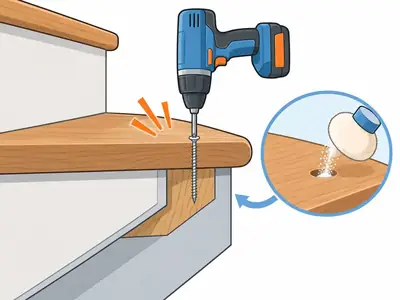 Doors and WindowsSqueaky Stair Tread: How to Quiet a Creaking StepA squeaky stair tread is usually wood rubbing on wood. Find the noisy step and fix it from above or below with screws, glue or small wedges.
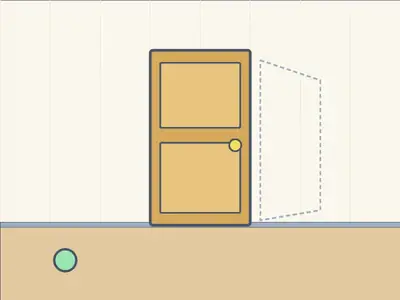 Doors and WindowsHow to Remove a Door Hinge PinHow to remove a door hinge pin that is stuck: tap from below, use a punch, and free a painted or rusted pin without bending the hinge.