
How to Use a Hammer Without Bending Nails
Part of: Tools and everyday fixes · Also in: The Complete Guide to First Home Essentials and Basic Tools
- Difficulty
- Easy
- Time
- 20 minutes to learn
- Tools
- Claw hammer, nails, scrap wood, safety glasses, pencil, pliers
- Call a pro if
- You are fixing structural framing, a deck ledger or a roof, since those need proper fasteners and inspection rather than hand driven nails.
In this guide
- Wear protection
Bent nails usually come from the grip and the first two strikes, not from strength. A few small changes make hand driving reliable. Here is how to use a hammer without bending nails.
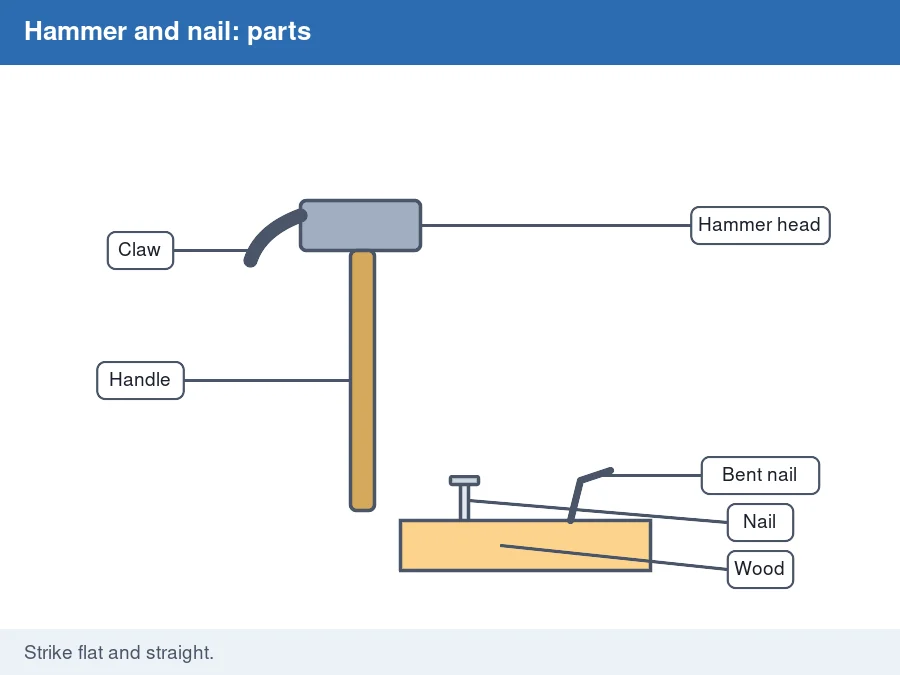
1. Check the hammer
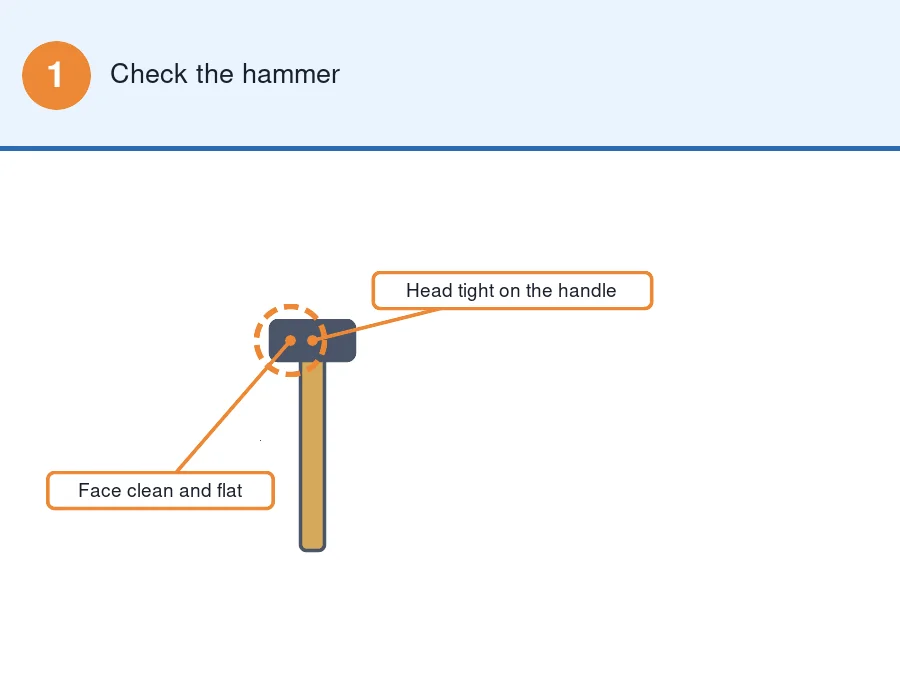
1. Make sure the head is tight on the handle.
2. Check the face for chips, which mark the wood.
3. Use a claw hammer for general work and a smaller one for finish work.
4. Pick a weight you can control, usually 16 ounces for most jobs.
2. Choose the right nail
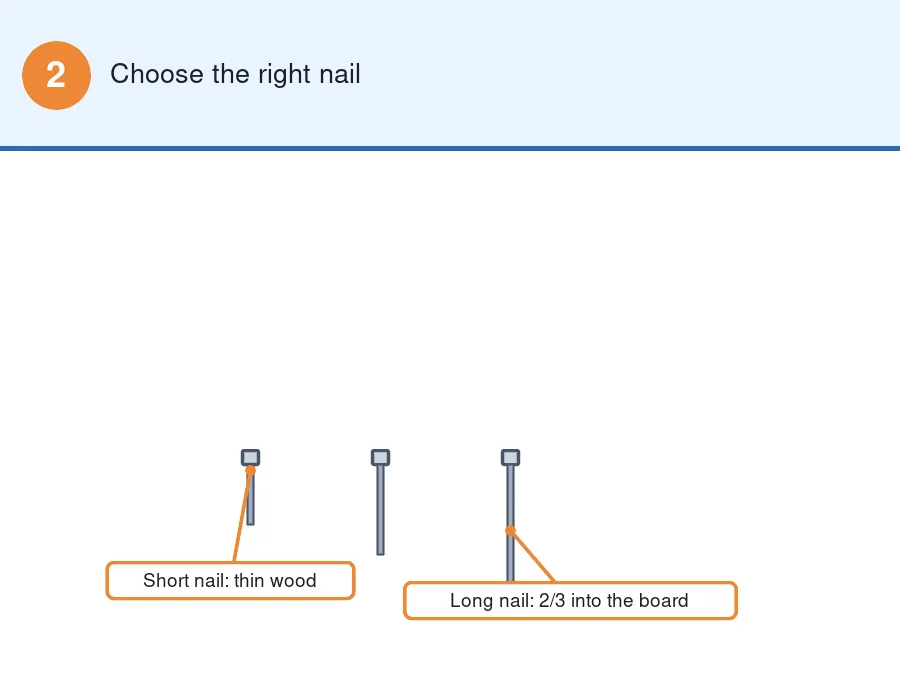
1. Match the nail length to the material: about three times the thickness being fixed.
2. Use galvanized nails outdoors.
3. Use a nail with a slight taper for easier starting.
4. Avoid bent or rusty nails from the bottom of the box.
3. Hold the hammer correctly
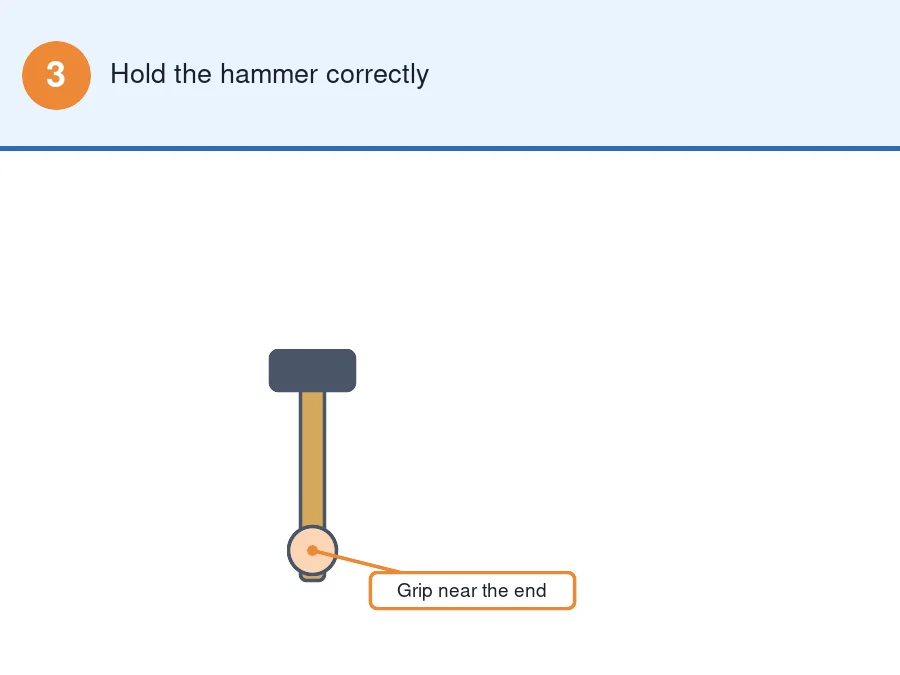
1. Grip near the end of the handle for full swing.
2. Choke up toward the head for control when starting.
3. Hold the handle like a bat, not like a pencil.
4. Keep your wrist loose and let the head do the work.
4. Start the nail
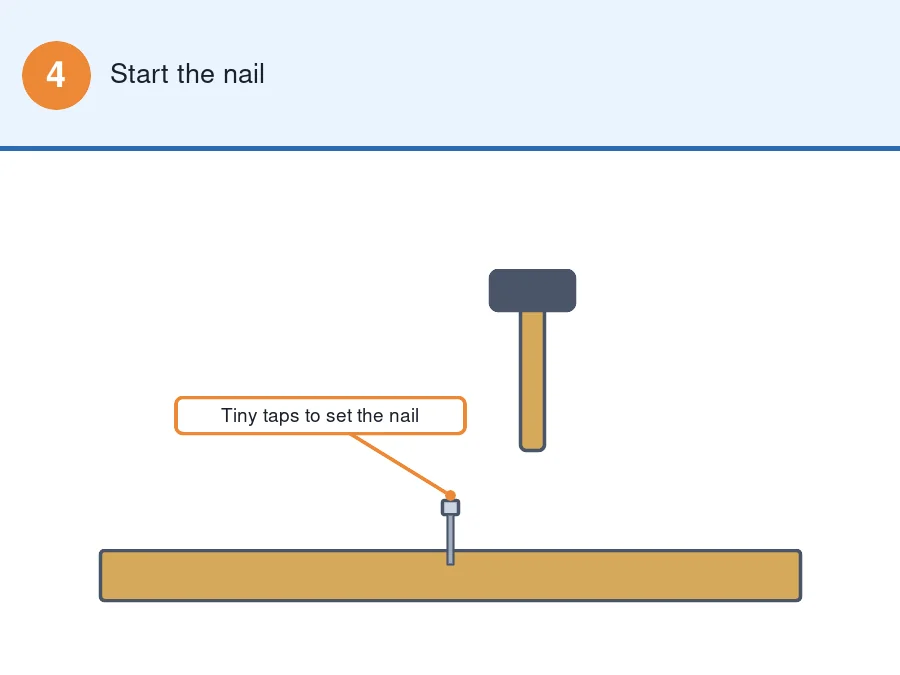
1. Hold the nail near the head, between thumb and finger.
2. Tap it lightly to make a start, with a short choked swing.
3. Keep your eye on the nail head, not the hammer.
4. Move your fingers away as soon as the nail stands.
5. If the nail falls over, start again rather than chasing it.
5. Strike flat and straight
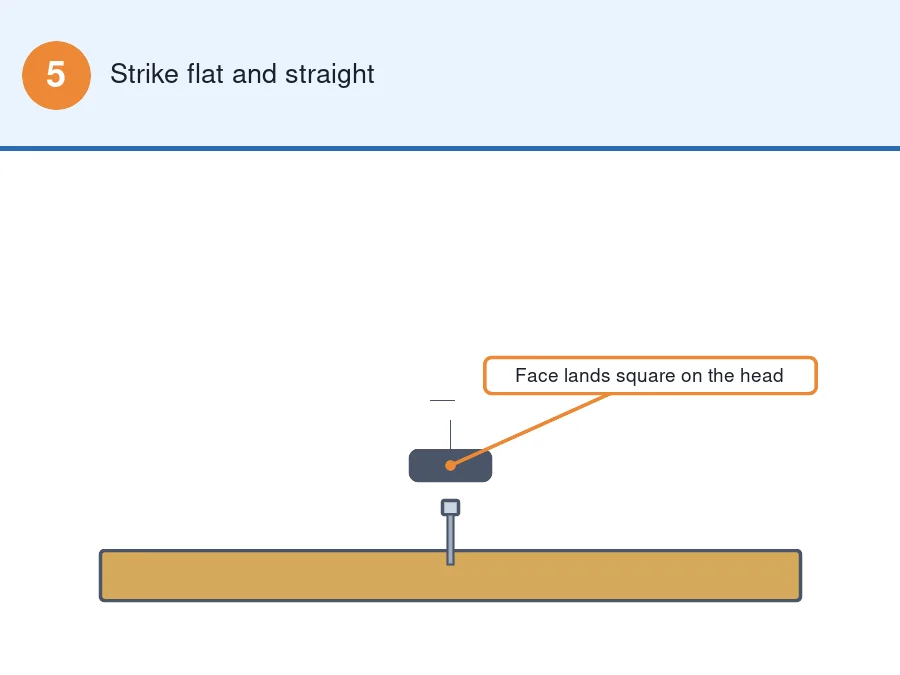
1. Swing from the elbow, with the wrist following.
2. Aim the center of the hammer face at the nail head.
3. Keep the swing in line with the nail.
4. Use a steady rhythm rather than hard single blows.
5. Check the nail angle after every few strikes.
6. Drive it home
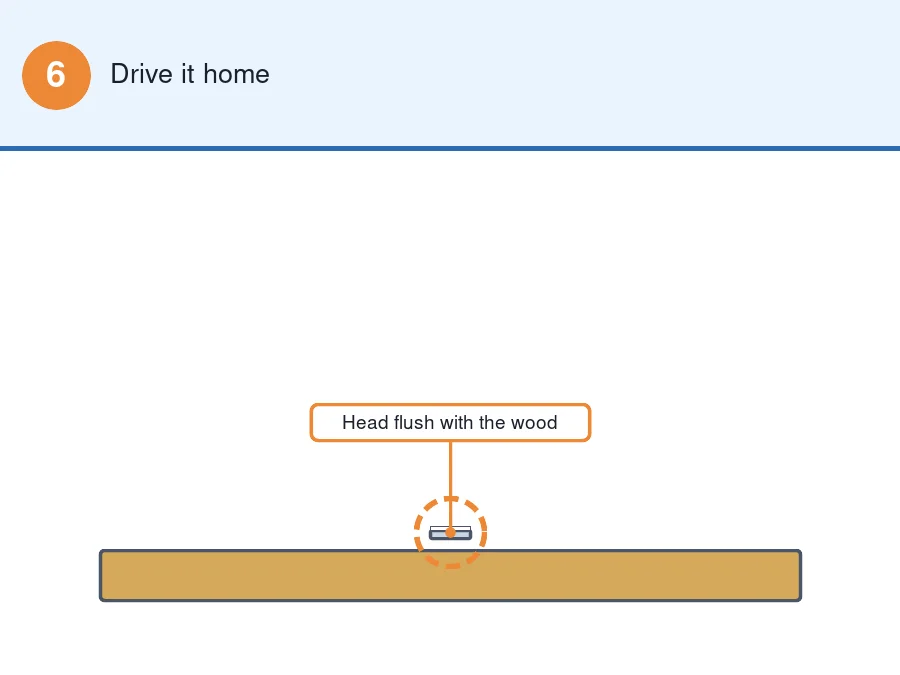
1. Increase the swing as the nail goes in.
2. Keep the last strikes short to control depth.
3. Stop when the head is flush, or just below for a punch finish.
4. Use a nail set to sink the head below the surface.
7. Fix a bent nail
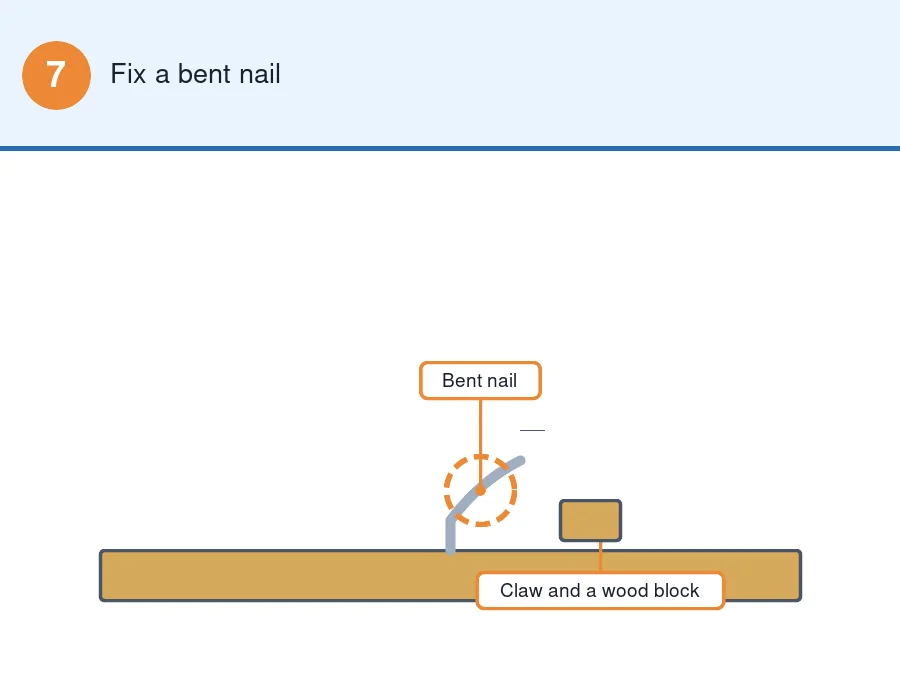
1. Stop striking as soon as the nail bends.
2. Pull it with the claw, using a scrap of wood under the hammer for leverage.
3. Or straighten it with pliers and drive it again if the hole is not damaged.
4. Do not keep hitting a bent nail, which damages the wood.
5. Fill the hole before the next attempt if it is enlarged.
8. Avoid splitting the wood
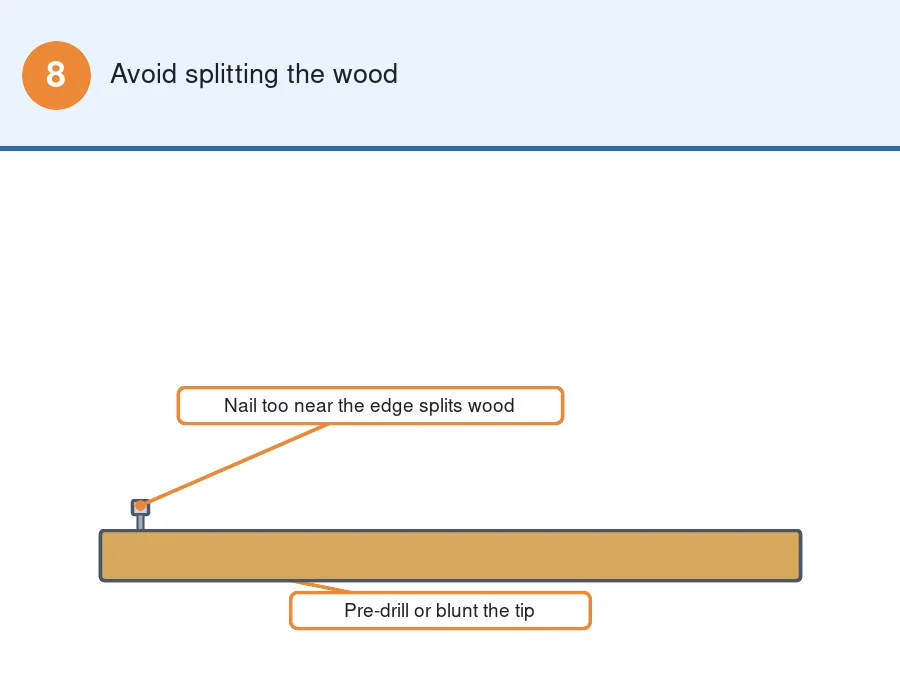
1. Drill a pilot hole near the end of a board.
2. Blunt the point of a nail with a hammer for softwood.
3. Keep nails away from the very end of a board.
4. Stagger nails rather than lining them up.
9. Practice and care
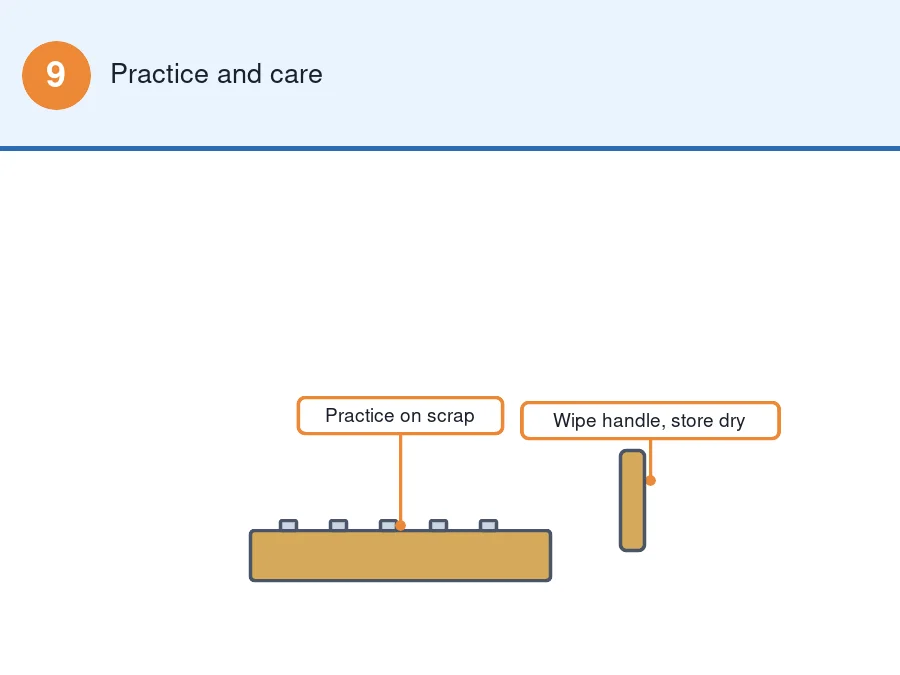
1. Practice on scrap until you can drive ten nails without a bend.
2. Wipe the hammer face clean of rust.
3. Store the hammer hanging, not on the floor.
4. Replace a cracked handle immediately.
5. Keep the claw clean so it grips nail heads.
Common mistakes
- Gripping the handle near the head for a full swing.
- Watching the hammer instead of the nail.
- Hitting too hard before the nail is started.
- Continuing to strike a nail that has bent.
- Using a hammer with a loose head.
Related guides
- How to Use an Adjustable Wrench Correctly
- How to Use a Pry Bar Without Damaging Trim
- How to Drive a Screw Without Splitting Wood
- How to Clean Window Screens Without Bending or Tearing Them
- How to Build a Workbench
FAQ
Why do my nails keep bending?
Usually the grip is too far up the handle, the first strike is too hard, or the swing is not in line with the nail.
Should I drill a pilot hole?
For hardwoods and for nails near the end of a board, yes. It prevents splitting and guides the nail.
What size hammer should a beginner use?
A 16 ounce claw hammer is the usual all round choice. Lighter is easier to control, heavier drives faster.
How do I remove a bent nail without damaging the wood?
Use the claw with a scrap of wood under the head for leverage, and pull in line with the nail.
More from this topic
- How to Use an Adjustable Wrench Correctly: Learn how to use an adjustable wrench correctly: set the jaws on the nut, load the fixed jaw and pull...
- How to Use a Chisel Safely: Learn how to use a chisel safely: keep both hands behind the edge, cut with the grain, sharpen often and...
- How to Use a Hand Saw: Learn how to use a hand saw: pick the right saw, mark and support the work, start the cut with a guide, use...
- How to Use a Random Orbit Sander: Learn how to use a random orbit sander: pick the grit, keep the pad flat, control the speed and avoid swirl...
- How to Use a Hot Glue Gun Safely: Learn how to use a hot glue gun safely: stand it upright, keep fingers back from the tip and press joints...
 Tools and BasicsHow to Use an Adjustable Wrench CorrectlyLearn how to use an adjustable wrench correctly: set the jaws on the nut, load the fixed jaw and pull steadily so the corners stay sharp.
 Tools and BasicsHow to Use a Chisel SafelyLearn how to use a chisel safely: keep both hands behind the edge, cut with the grain, sharpen often and store it with a guard on.
 Tools and BasicsHow to Use a Hand SawLearn how to use a hand saw: pick the right saw, mark and support the work, start the cut with a guide, use long steady strokes and finish without splintering.
 Tools and BasicsHow to Use a Random Orbit SanderLearn how to use a random orbit sander: pick the grit, keep the pad flat, control the speed and avoid swirl marks on the wood.
 Tools and BasicsHow to Use a Hot Glue Gun SafelyLearn how to use a hot glue gun safely: stand it upright, keep fingers back from the tip and press joints while the glue is still hot.