
How to Use a Utility Knife Safely
Part of: Tools and everyday fixes
- Difficulty
- Easy
- Time
- 10 minutes to learn
- Tools
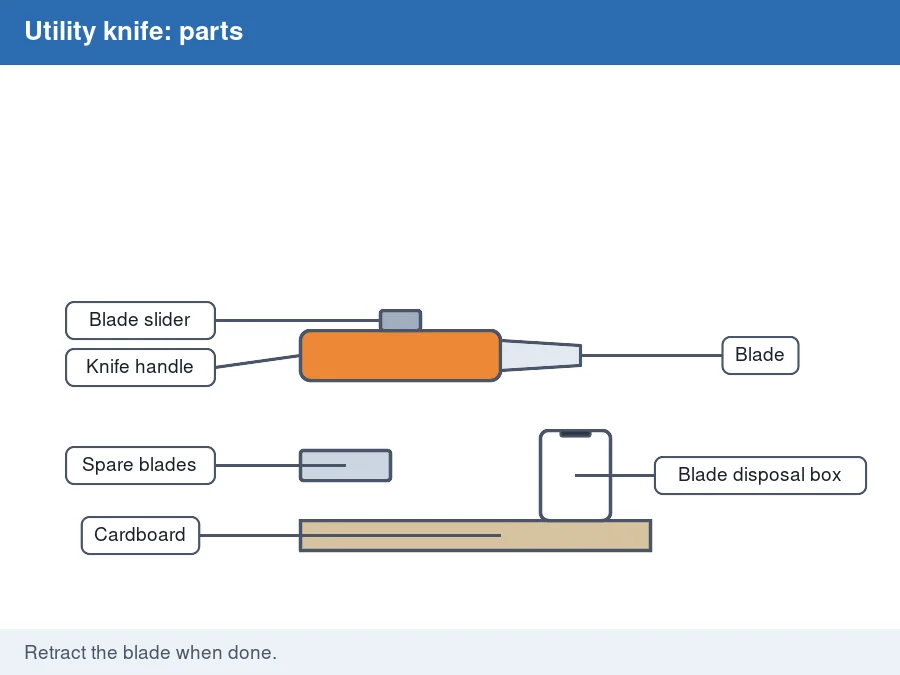
- Utility knife, fresh blades, straight edge, cutting mat, safety glasses, gloves, scrap material
- Call a pro if
- You need to cut material you cannot hold safely, such as a large sheet of glass, or cut above head height, since those need different tools and help.
In this guide
A utility knife is the most used and most injuring tool in a moving box. Almost every cut can be made safer with two habits. Here is how to use a utility knife safely.
1. Choose the right knife
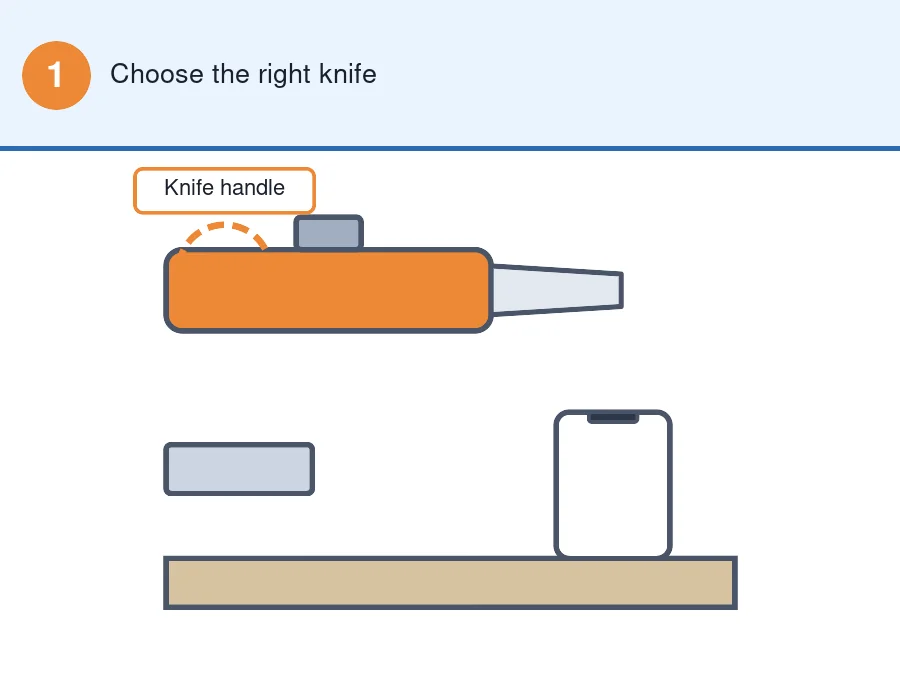
1. Use a retractable knife with a locking blade.
2. Use a fixed blade only for heavy work, and store it in a sheath.
3. Choose a handle that fits your hand.
4. Check the blade lock works before use.
2. Fit a fresh blade
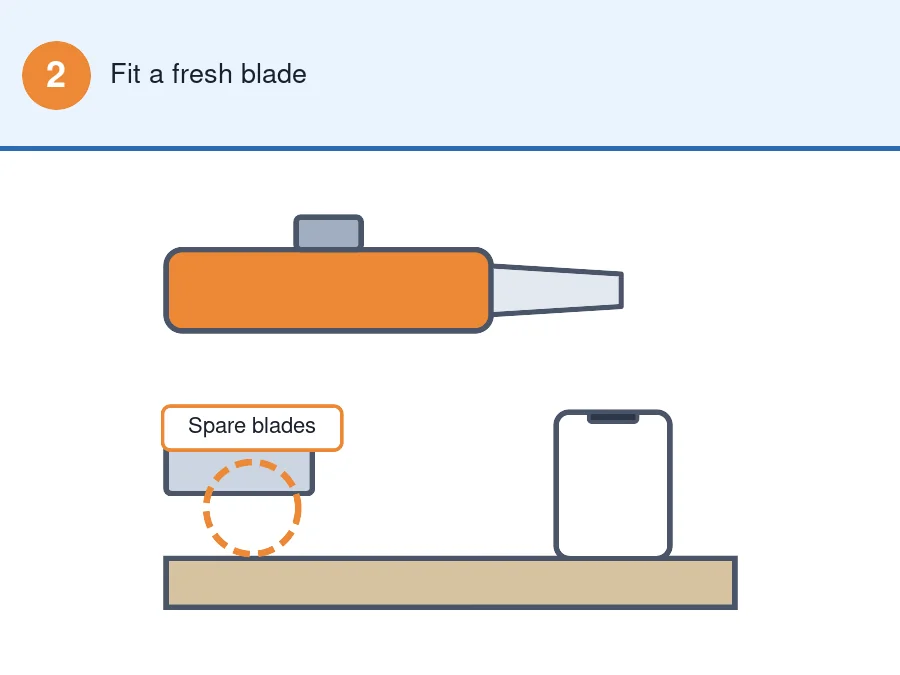
1. Unlock and open the knife as the maker directs.
2. Hold the blade by its blunt end, not the edge.
3. Seat it fully on the stud.
4. Tighten the screw or close the clamp.
5. Dispose of the old blade in a sealed container.
3. Extend the blade correctly
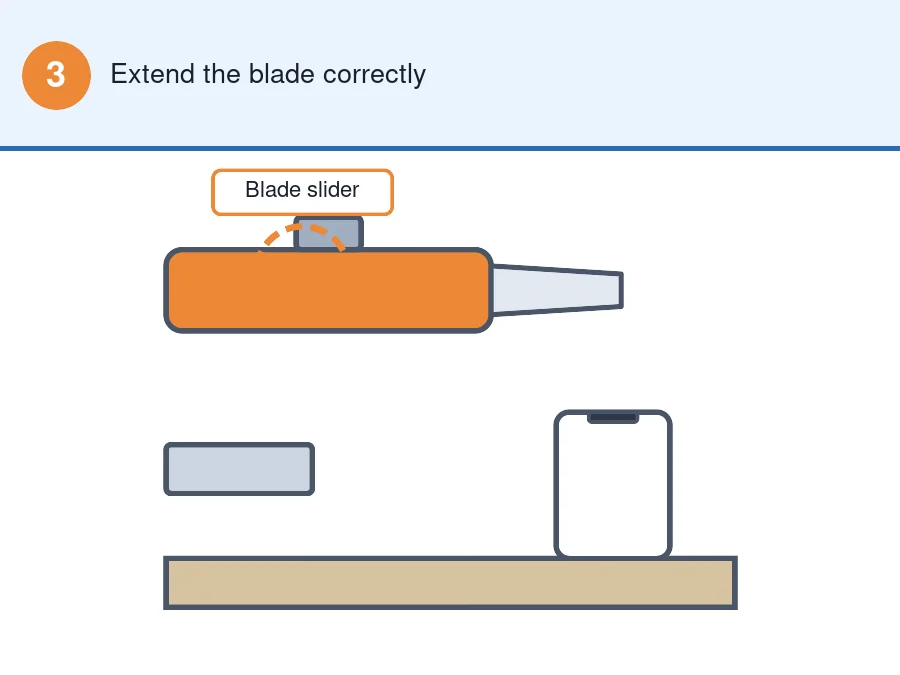
1. Extend only one segment, or the depth of the material.
2. A long blade flexes and snaps.
3. Lock the blade before cutting.
4. Check the blade is straight and not chipped.
4. Set up the cut
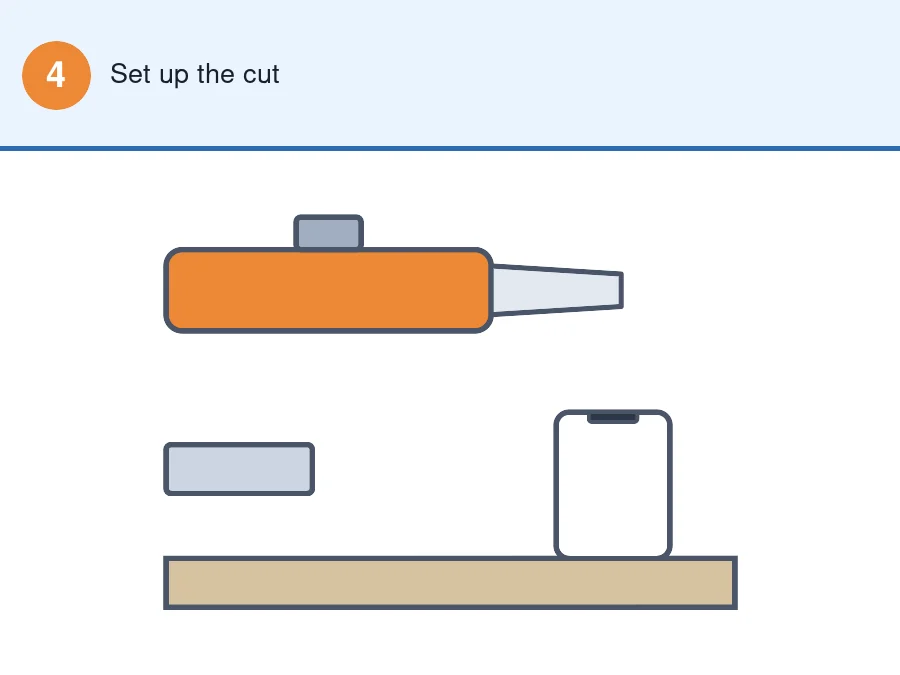
1. Work on a cutting mat or a scrap board.
2. Clamp a straight edge along the cut line.
3. Keep the material flat, not tilted.
4. Wear safety glasses, since blades snap.
5. Cut with control
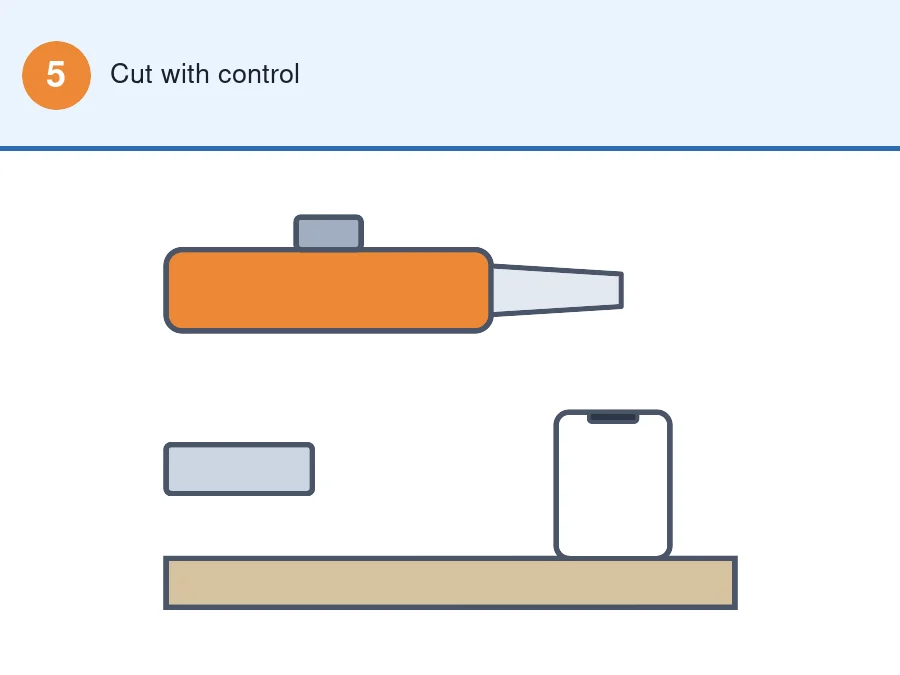
1. Hold the knife in your dominant hand, thumb on the side of the handle.
2. Keep your other hand on the straight edge, never in the cut path.
3. Draw the blade toward you only if your body is out of the line.
4. Use light, repeated passes on thick material.
6. Score and snap
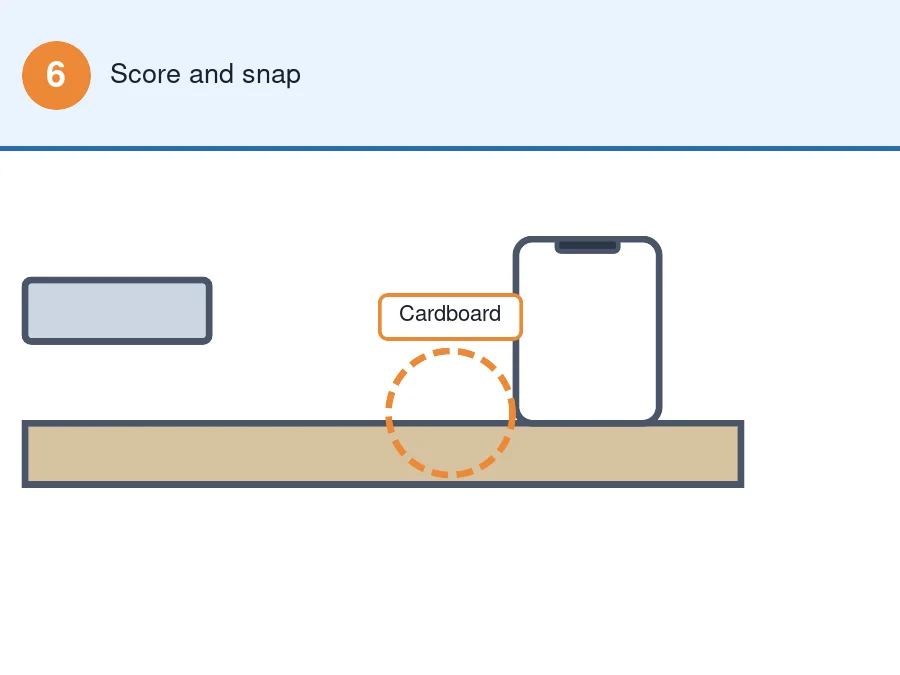
1. Score along the straight edge with light passes.
2. Repeat until the score is a third of the thickness.
3. Snap the material away from you over an edge.
4. Support both sides of the snap.
7. Handle the blade
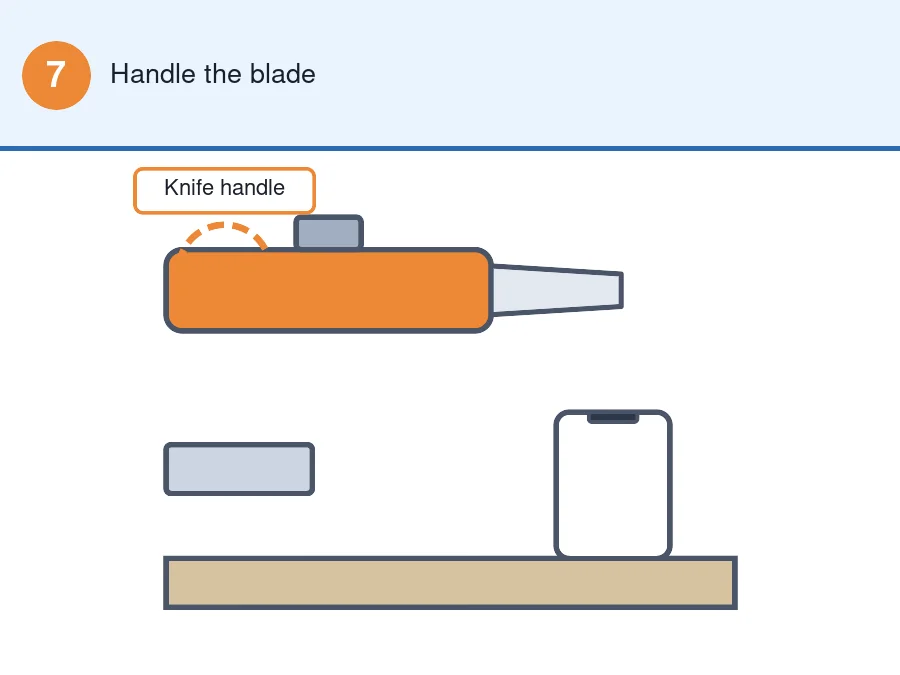
1. Retract the blade before setting the knife down.
2. Never leave a knife open on a bench or floor.
3. Do not catch a falling knife.
4. Keep knives away from children.
8. Dispose of blades safely
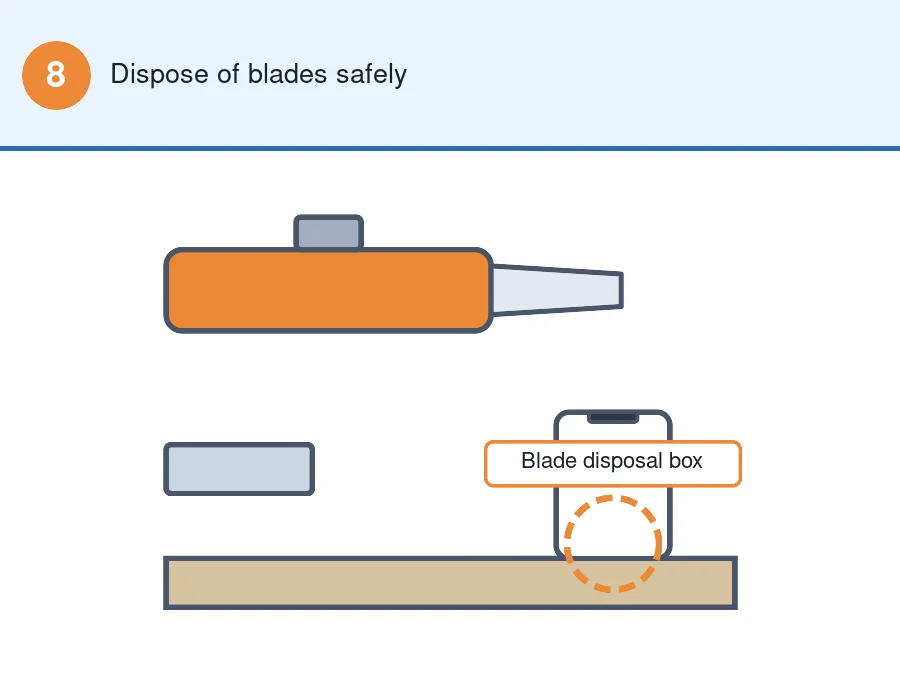
1. Use a blade disposal slot in the handle if it has one.
2. Otherwise use a sealed metal or thick plastic container.
3. Tape the container shut when full.
4. Never put loose blades in a trash bag.
5. Keep the container out of reach of children and pets.
9. Treat a cut
1. Clean the wound under running water.
2. Apply pressure with a clean cloth.
3. Cover with a sterile dressing.
4. Get medical help for a deep or dirty cut.
5. Check your tetanus status if the cut was from a dirty blade.
Common mistakes
- Extending the blade too far, so it snaps.
- Cutting toward your body or your holding hand.
- Using a dull blade and pressing hard.
- Leaving the knife open on a work surface.
- Throwing loose blades into a trash bag.
Related guides
FAQ
How much blade should be exposed?
Just enough to pass through the material, usually one segment. More blade means more flex and more risk.
Can I cut toward myself with a utility knife?
Only if your body and holding hand are clear of the path. Most cuts happen when the blade jumps past the material.
How often should I change the blade?
As soon as it drags or tears rather than slices. Fresh blades are cheaper than stitches.
What should I do with used blades?
Put them in a sealed container, such as a metal tin, and tape it shut before disposal.
More from this topic
- How to Use a Hot Glue Gun Safely: Learn how to use a hot glue gun safely: stand it upright, keep fingers back from the tip and press joints...
- How to Use a Circular Saw Safely: Learn how to use a circular saw safely: set the blade depth, support and clamp the work, cut on the waste...
- How to Use a Wheelbarrow Safely: Learn how to use a wheelbarrow safely: load it evenly, keep the weight over the wheel and move it without...
- How to Choose and Wear a Dust Mask: Learn how to choose and wear a dust mask: match the rating to the dust, fit it with a seal check and replace...
- How to Use a Pipe Cutter: Learn how to use a pipe cutter for a square, burr free cut on copper and plastic pipe, and how to avoid the...
 Tools and BasicsHow to Use a Hot Glue Gun SafelyLearn how to use a hot glue gun safely: stand it upright, keep fingers back from the tip and press joints while the glue is still hot.
 Tools and BasicsHow to Use a Circular Saw SafelyLearn how to use a circular saw safely: set the blade depth, support and clamp the work, cut on the waste side of the line and keep the guard free.
 Tools and BasicsHow to Use a Wheelbarrow SafelyLearn how to use a wheelbarrow safely: load it evenly, keep the weight over the wheel and move it without wrecking your back.
 Tools and BasicsHow to Choose and Wear a Dust MaskLearn how to choose and wear a dust mask: match the rating to the dust, fit it with a seal check and replace it when it loads up.
 PlumbingHow to Use a Pipe CutterLearn how to use a pipe cutter for a square, burr free cut on copper and plastic pipe, and how to avoid the crushed ends that ruin a joint.