
Refrigerator Maintenance Checklist: Twice a Year
Part of: Appliances
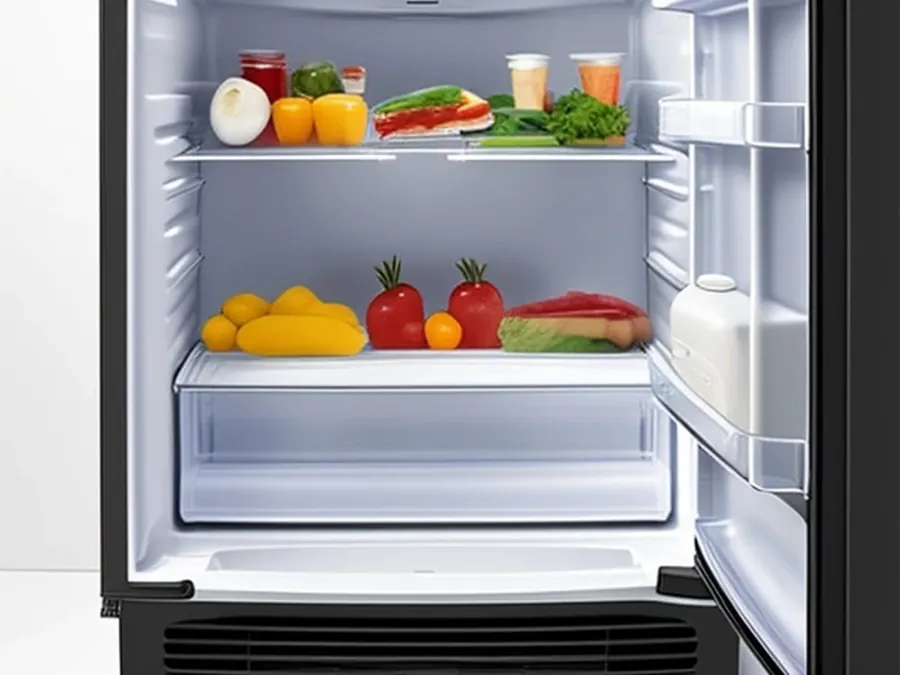
- Difficulty
- Easy
- Time
- 30 to 45 minutes, twice a year
- Tools
- A coil brush or vacuum with a brush attachment, a thermometer, warm soapy water, a dollar bill
- Call a pro if
- The compressor clicks without starting, the back wall frosts over solid, or the fridge warms despite clean coils and good seals, since those are sealed-system or control faults.
In this guide
- Power off first
- Chemical safety
A refrigerator is the one appliance that never gets a day off, and the maintenance it asks for is small: clean coils, good seals, right temperatures, clear drains. This refrigerator maintenance checklist takes half an hour twice a year and prevents the two most common early deaths, overheating and overworking.
1. Clean the condenser coils
Dirty coils are the top cause of a struggling fridge.
1. Unplug the unit and find the coils: behind the lower front grille or on the back.
2. Vacuum them with a brush attachment, then use a coil brush for the packed dust.
3. Homes with pets should do this every three months, not six.
4. The detailed version is in how to clean refrigerator coils.
2. Test the door seals
A leaky gasket makes the compressor run constantly.
1. Close the door on a dollar bill and pull; you should feel firm drag.
2. Test several spots around both doors.
3. Wash the gaskets with warm soapy water and dry them; grime stiffens the seal.
4. A gasket that fails the bill test everywhere needs replacing, and refrigerator door seal not sealing covers the options.
3. Verify the temperatures
Numbers, not dial positions.
1. Leave an appliance thermometer in a glass of water inside the fridge overnight. The reading should be 40 degrees F or below.
2. The freezer should read about 0 degrees.
3. Adjust the controls one step at a time and re-measure the next day.
4. Clear the defrost drain
A blocked drain is the cause of most interior puddles.
1. Look for water pooling under the crisper drawers.
2. Find the drain hole at the back of the fridge compartment and flush it with warm water.
3. A turkey baster or a short pipe cleaner clears the line.
4. If water is reaching the floor, refrigerator leaking water on the floor walks through the other causes.
5. Change the water and ice filter on time
The filter has a memory you should respect.
1. Replace the filter every six months, or when the indicator says so.
2. How to replace a refrigerator water filter shows the two common types.
3. After changing, run a couple of gallons through the dispenser to clear air and carbon dust.
4. A slow dispenser often just wants a new filter; see refrigerator water dispenser not working if it persists.
6. Clean inside and manage the load
Airflow inside matters as much as dust outside.
1. Wipe shelves and bins; the full routine is in how to clean a refrigerator inside and out.
2. Do not pack shelves solid; air must circulate to keep temperatures even.
3. Cover food, since uncovered moisture makes the unit work harder and frosts the freezer.
4. Keep the fridge reasonably full overall; thermal mass smooths the compressor cycles.
7. Check the surroundings and the sounds
The environment is part of the machine.
1. Leave a couple of inches behind and above the unit for ventilation.
2. Keep the fridge out of direct sun and away from the oven if the layout allows.
3. Listen: a steady hum is fine, clicking and buzzing are not; refrigerator making noise translates the sounds.
4. Level the unit so doors swing closed on their own from halfway open.
Common mistakes
- Never cleaning the coils, especially in homes with pets.
- Cranking the dial colder to fix a problem the coils are causing.
- Ignoring the dollar bill test while the compressor runs nonstop.
- Blocking the interior vents with stacked food.
- Chipping freezer ice with a sharp tool.
FAQ
How often should refrigerator coils be cleaned?
Twice a year for most homes, every three months with shedding pets. Dirty coils are the single biggest cause of a fridge that runs constantly and cools poorly.
What temperature should a refrigerator and freezer be?
About 37 to 40 degrees in the fridge and 0 degrees in the freezer, measured with a thermometer rather than trusted to the dial.
Why is my refrigerator running all the time?
Usually dirty coils, a weak door seal, or a hot location. Fix those first. If it still runs constantly and cools poorly, the sealed system or controls need a technician.
Does a full or empty fridge use more energy?
A reasonably full fridge holds temperature better because the cold mass buffers door openings. Overpacking blocks airflow, so aim for full but not stuffed.
Related guides
- How to Clean Refrigerator Coils: Learn how to clean refrigerator coils with a brush and vacuum. Find the coils, unplug the fridge and clean...
- Refrigerator Making Noise: What It Means and What to Fix: Refrigerator making noise? Find out which sounds are normal and which point to dirty coils, a fan problem or...
- Refrigerator Running Constantly: What It Means: A refrigerator running constantly is usually dirty coils, a weak door seal or a hot location, and sometimes a...
- Washing Machine Maintenance Checklist: Every Few Months: A washing machine maintenance checklist: clean the filter and gasket, check the hoses, level the machine and...
- How to Clean a Refrigerator Drain Pan: Learn how to clean a refrigerator drain pan: unplug the fridge, slide out the pan, wash and dry it and clear...
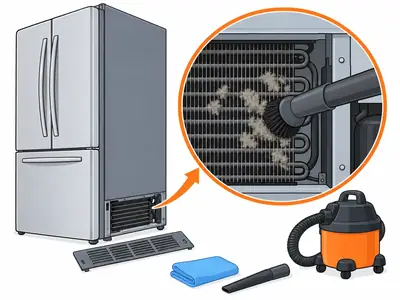 KitchenHow to Clean Refrigerator CoilsLearn how to clean refrigerator coils with a brush and vacuum. Find the coils, unplug the fridge and clean them safely to cut noise and keep food cold.
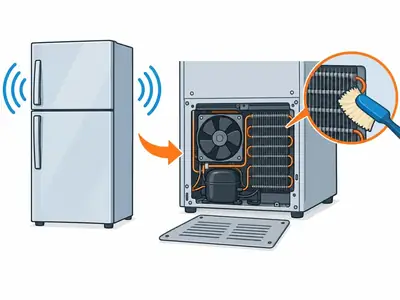 KitchenRefrigerator Making Noise: What It Means and What to FixRefrigerator making noise? Find out which sounds are normal and which point to dirty coils, a fan problem or a failing compressor. Steps and when to call a pro.
 KitchenRefrigerator Running Constantly: What It MeansA refrigerator running constantly is usually dirty coils, a weak door seal or a hot location, and sometimes a real fault. Check the free fixes first.
 KitchenWashing Machine Maintenance Checklist: Every Few MonthsA washing machine maintenance checklist: clean the filter and gasket, check the hoses, level the machine and run cleaning cycles before faults start.
 KitchenHow to Clean a Refrigerator Drain PanLearn how to clean a refrigerator drain pan: unplug the fridge, slide out the pan, wash and dry it and clear the drain tube to stop smells and water leaks.