
Refrigerator Making Noise: What It Means and What to Fix
Part of: Appliances
- Difficulty
- Easy to medium
- Time
- 20 to 60 minutes
- Tools
- Vacuum with brush, coil brush, flashlight, level, screwdriver, towel
- Call a pro if
- the fridge is not cooling, the compressor is loud or clicks on and off in short cycles, there is a burning smell or you hear grinding that does not stop
In this guide
- Power off first
A refrigerator making noise can be harmless or a warning. Clicks, hums and gurgles are normal. Loud rattling, grinding or squealing deserves a look. Here is how to tell the difference and what to try first.
This guide is part of our wider guide to appliance problems.
Normal sounds
- A low hum when the compressor runs.
- A click when it starts or stops.
- Gurgling as refrigerant moves.
- A soft pop or crack from the plastic parts as they warm and cool.
- Water dripping into the defrost pan.
- A fan whoosh.
Step by step: find the noise
1. Locate the sound. Stand near the back, the bottom and the inside. Is it inside the freezer, behind the panel or at the bottom rear?
2. Check that the fridge is level. A fridge that rocks can rattle. Adjust the front feet so it sits firmly and tilts slightly backward so the door closes by itself.
3. Check for items touching the wall or cabinet. Move the fridge slightly away so it does not touch.
4. Check the contents. Rattling bottles, loose shelves or ice buildup can make noise. Reposition them.
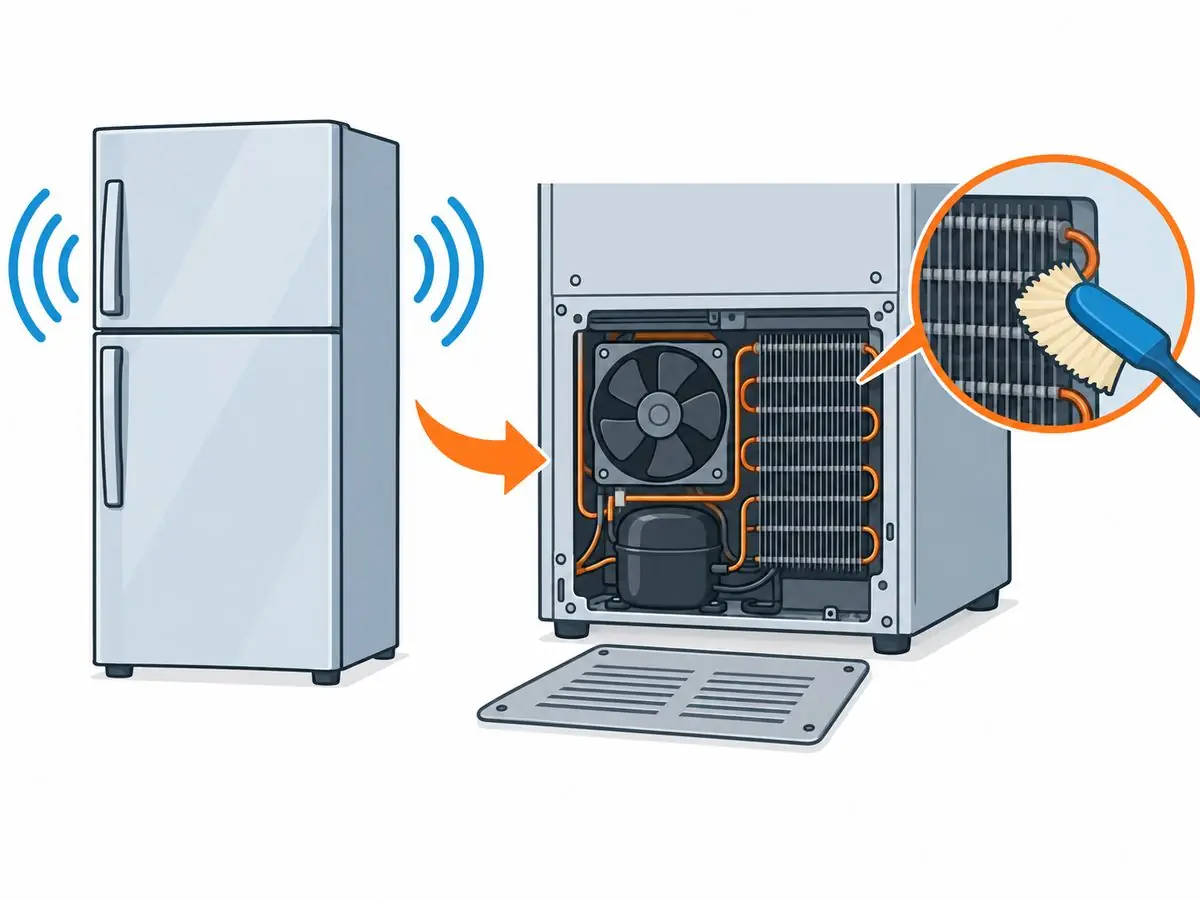
5. Clean the condenser coils. Unplug the fridge. Find the coils at the back or under the front grille. Vacuum dust with a brush and use a coil brush for the gaps. Dirty coils make the compressor run longer and louder.
6. Check the drain pan. A loose pan can rattle. Clean it and set it back.
7. Listen to the evaporator fan in the freezer. Squealing or chirping can mean ice on the fan blade or a failing motor. Defrosting the freezer by unplugging it for a day can clear the ice.
8. Check the condenser fan at the bottom rear. Remove dust and debris that touches the blades.
When the noise is serious
Loud buzzing or clicking, a compressor that starts and stops over and over or a grinding noise often signals a failing part. Refrigerators hold refrigerant and have sealed parts. Repairs are for a technician.
Prevent noise
Vacuum the coils every six months, keep the fridge level and do not overload shelves. If the freezer builds frost, check that the door seals shut.
Keep a short sound log
Note when the noise happens: only when the compressor runs, only after the ice maker fills, or all the time. Note whether it is a buzz, a squeal, a rattle or a knock. Also note if food is still cold. If the fridge is cooling well and the noise is mild, you can usually wait and monitor. If the fridge is warm, or the sound is new and loud, call a technician soon to protect your food.
Extra checks for the freezer fan
If the noise comes from the freezer and gets louder when the door opens, the evaporator fan is the likely source. Frost build-up around the fan can also point to a defrost problem, such as a failed heater or sensor. Unplugging the fridge for a day to thaw it is a quick test. If the noise and frost return within a few weeks, ask a technician to check the defrost system.
Record a short video of the noise on your phone, so a technician can hear it.
Related guides
- Microwave Sparking: What to Do and What It Means
- Refrigerator Door Seal Not Sealing: How to Test and Fix the Gasket
- Refrigerator Water Dispenser Not Working: Causes and Fixes
- How to Clean a Refrigerator Inside and Out Without Damaging It
- How to Level a Refrigerator
FAQ
Why does my fridge buzz at night?
The compressor or the ice maker. Buzzing from a water valve is common.
Is a loud fridge about to fail?
Not always. Dirty coils are a common cause.
How often should I clean the coils?
Twice a year, or more with pets.
Should I unplug a noisy fridge?
Only to clean it. Keep food cold, and move it to a cooler if you need more than a few hours.
More from this topic
- Refrigerator Running Constantly: What It Means: A refrigerator running constantly is usually dirty coils, a weak door seal or a hot location, and sometimes a...
- How to Clean Refrigerator Coils: Learn how to clean refrigerator coils with a brush and vacuum. Find the coils, unplug the fridge and clean...
- Refrigerator Maintenance Checklist: Twice a Year: A refrigerator maintenance checklist: clean the coils, check the seals, set the right temperatures, clear the...
- Refrigerator Not Cooling but Freezer Works? 6 Fixes: Refrigerator not cooling but freezer works? Check airflow vents, frost buildup, the fan and the temperature...
- When to Replace Your Refrigerator: The Signs: When to replace your refrigerator: age past ten years, a failing compressor, rising energy use and repeated...
 KitchenRefrigerator Running Constantly: What It MeansA refrigerator running constantly is usually dirty coils, a weak door seal or a hot location, and sometimes a real fault. Check the free fixes first.
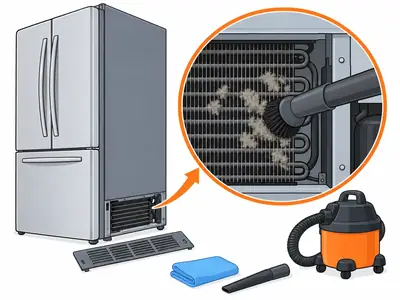 KitchenHow to Clean Refrigerator CoilsLearn how to clean refrigerator coils with a brush and vacuum. Find the coils, unplug the fridge and clean them safely to cut noise and keep food cold.
 KitchenRefrigerator Maintenance Checklist: Twice a YearA refrigerator maintenance checklist: clean the coils, check the seals, set the right temperatures, clear the drain and change the water filter on time.
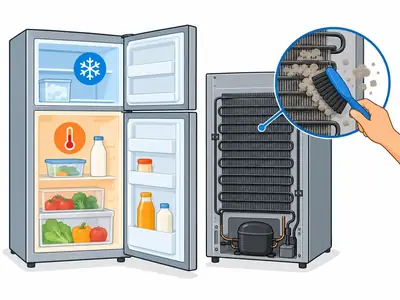 KitchenRefrigerator Not Cooling but Freezer Works? 6 FixesRefrigerator not cooling but freezer works? Check airflow vents, frost buildup, the fan and the temperature setting before you call a repair tech.
 Cost GuidesWhen to Replace Your Refrigerator: The SignsWhen to replace your refrigerator: age past ten years, a failing compressor, rising energy use and repeated repairs. The signs, in decision order.