
Refrigerator Not Cooling but Freezer Works? 6 Fixes
Part of: Appliances
- Difficulty
- Easy to moderate
- Time
- 30 minutes to 1 day (defrost time)
- Tools
- Appliance thermometer, towels, flashlight, screwdriver, hair dryer or fan
- Call a pro if
- The fan or compressor makes a loud noise, frost returns within days, the unit smells of burning, or the fridge section stays above 40 degrees F after you fix airflow.
In this guide
- Step 1: Check the temperature and the real temperature
- Step 2: Move food away from the vents
- Step 3: Check the damper and the door seals
- Step 4: Look for frost on the back wall of the freezer
- Step 5: Listen for the evaporator fan
- Step 6: Clean the condenser coils
- About the food
- Related guides
- FAQ
- Sources
- When to call a pro
- Power off first
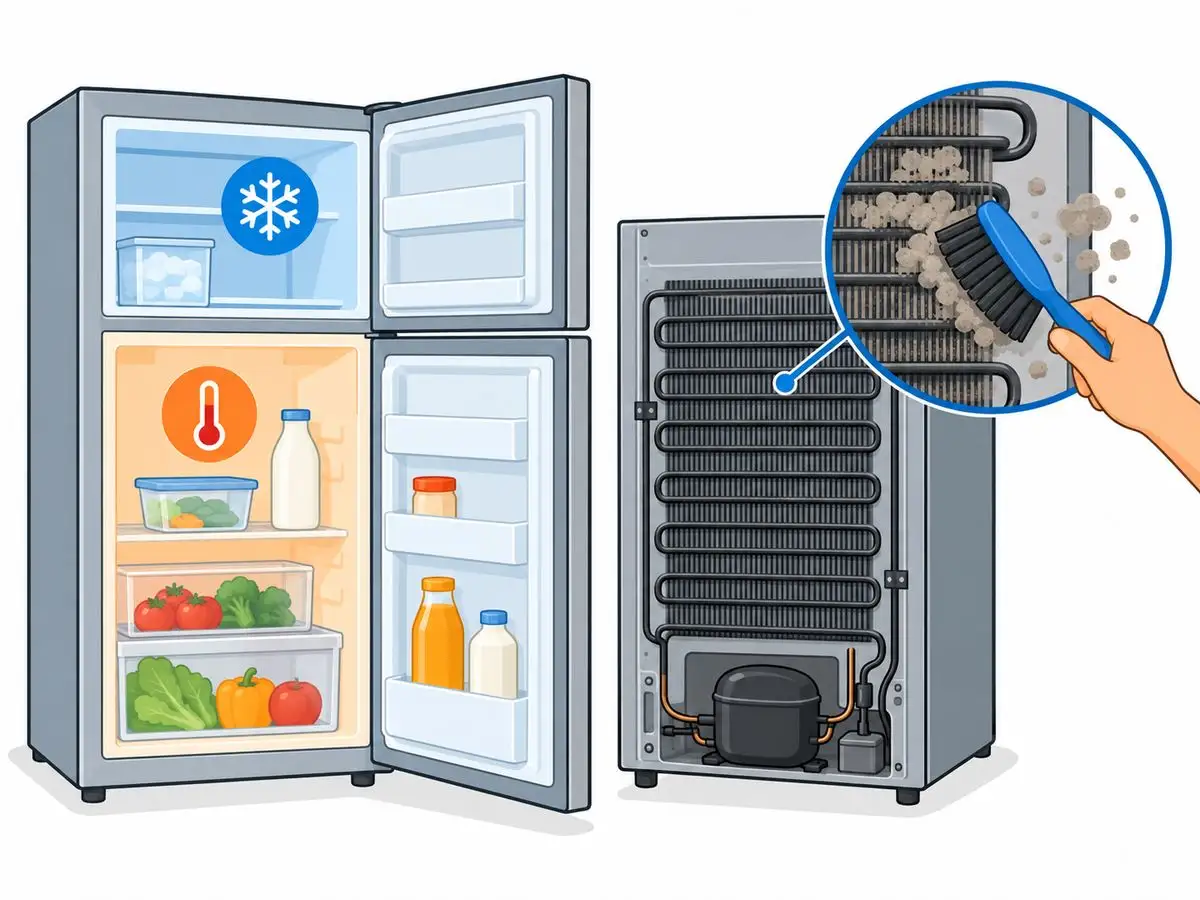
If your refrigerator not cooling but freezer works, the problem is almost always airflow. In most models, the freezer makes the cold air, and a fan or a damper sends some of it into the fresh food section. When that path is blocked or the fan stops, the freezer stays cold and the fridge warms up. The checks below start with the easiest fix.
This guide is part of our wider guide to appliance problems.
Step 1: Check the temperature and the real temperature
Put an appliance thermometer in a glass of water on the middle shelf. Wait five hours, then read it. The U.S. Department of Agriculture says to keep the refrigerator at 40 degrees F or colder and the freezer at 0 degrees F or colder. Set the control to a colder setting if the reading is high, and check again the next day.
Step 2: Move food away from the vents
Look inside the fridge for small vents, usually at the back wall or near the top. If boxes or bags are pressed against them, cold air cannot flow. Move food at least an inch away. Do not overpack the shelves.
Step 3: Check the damper and the door seals
Some models have a small flap (a damper) that opens to let air into the fridge. If it is stuck, you may see ice around it. Close the doors and look at the gaskets (door seals). A dollar bill closed in the door should resist being pulled out. If a seal is torn or loose, warm air leaks in. Wipe a dirty seal with warm soapy water.
Step 4: Look for frost on the back wall of the freezer
Empty the freezer shelves and look at the back panel. A thick layer of frost often means the defrost system has failed. The coil behind the panel freezes over and blocks air to the fridge.
You can do a manual defrost to get the fridge working again:
1. Move food to a cooler with ice. Check the safety note below.
2. Unplug the refrigerator and leave the doors open.
3. Put towels on the floor and a shallow pan under the freezer door.
4. Wait 8 to 24 hours until all ice is gone. A fan blowing into the cabinet speeds this up. Do not use a heat gun or open flame.
5. Dry the inside, plug it in, and wait several hours for the temperature to drop.
If the frost returns within a few weeks, a part in the defrost system has failed. That means a heater, a sensor or a control board. Parts are usually specific to the model, and a pro should diagnose them.
Step 5: Listen for the evaporator fan
Unplug the fridge, then remove the freezer shelves and the back panel (usually a few screws). With the panel removed, you can see the fan. Spin the blade by hand. If it sticks or is covered in ice, the motor may be bad. Put the panel back on, plug the fridge in, hold the door switch in and listen for the fan. A fan that does not spin needs replacement. Never run the fridge with the back panel off and your hands near the fan. This is a common part, but read the model number carefully.
Step 6: Clean the condenser coils
Dirty coils make the whole system work harder. They are usually under the front grille or at the back. Pull the plug, then vacuum the dust with a brush attachment. This helps cooling in general, even if it is not the cause of your problem.
About the food
The USDA advises that perishable food should not be left out for more than 2 hours at room temperature. If the fridge section has been above 40 degrees F for longer than that, throw away milk, meat, cooked leftovers and other perishable items. Keep the freezer closed to keep food frozen.
Related guides
- How to Replace a Refrigerator Light Bulb
- Refrigerator Leaking Water on the Floor: Causes and Fixes
- Refrigerator Temperature Settings: How to Check and Adjust
- Freezer Frost Buildup: Causes and How to Fix It
- How to Clean a Refrigerator Inside and Out Without Damaging It
- How to Replace a Refrigerator Water Filter
FAQ
How long does a refrigerator take to cool after I fix it?
Allow 4 to 8 hours to reach a safe temperature. A full defrost can take a day to settle.
Why does my fridge warm up when the freezer is very cold?
The fan or damper may send too little air to the fridge. Try raising the freezer temperature a little and moving food away from the vents.
Is it worth fixing an older refrigerator?
Ask for a written quote and compare it to the age of the unit. See DIY vs hiring a pro for a way to decide.
Sources
More from this topic
- Refrigerator Leaking Water on the Floor: Causes and Fixes: Refrigerator leaking water on the floor? Check the defrost drain, water line, filter and drain pan to find...
- How to Defrost a Freezer Safely and Quickly: Learn how to defrost a freezer safely: empty and unplug it, let the ice melt with towels and pans, clean the...
- Refrigerator Water Dispenser Not Working: Causes and Fixes: Refrigerator water dispenser not working? Check the water supply, the filter, the freezing line and the...
- Refrigerator Door Seal Not Sealing: Refrigerator door seal not sealing? Learn the dollar bill test, how to clean and reshape a gasket, adjust the...
- Refrigerator Making Noise: What It Means and What to Fix: Refrigerator making noise? Find out which sounds are normal and which point to dirty coils, a fan problem or...
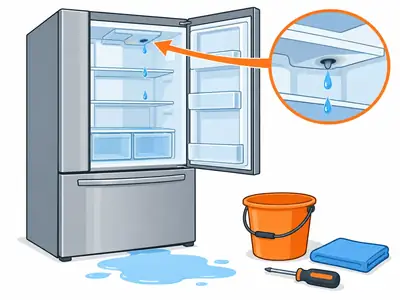 KitchenRefrigerator Leaking Water on the Floor: Causes and FixesRefrigerator leaking water on the floor? Check the defrost drain, water line, filter and drain pan to find the cause and fix it step by step.
 KitchenHow to Defrost a Freezer Safely and QuicklyLearn how to defrost a freezer safely: empty and unplug it, let the ice melt with towels and pans, clean the inside, dry it and restart the freezer correctly.
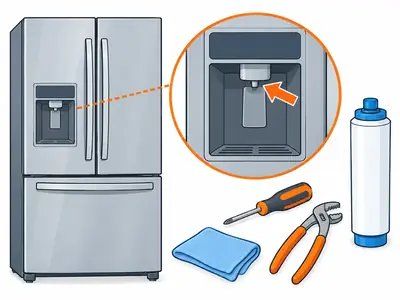 KitchenRefrigerator Water Dispenser Not Working: Causes and FixesRefrigerator water dispenser not working? Check the water supply, the filter, the freezing line and the dispenser switch. Simple steps to restore the flow.
 KitchenRefrigerator Door Seal Not SealingRefrigerator door seal not sealing? Learn the dollar bill test, how to clean and reshape a gasket, adjust the door and replace the seal to stop frost.
 KitchenRefrigerator Making Noise: What It Means and What to FixRefrigerator making noise? Find out which sounds are normal and which point to dirty coils, a fan problem or a failing compressor. Steps and when to call a pro.