
Refrigerator Water Dispenser Not Working: Causes and Fixes
Part of: Appliances
- Difficulty
- Easy to medium
- Time
- 20 minutes to 2 hours
- Tools
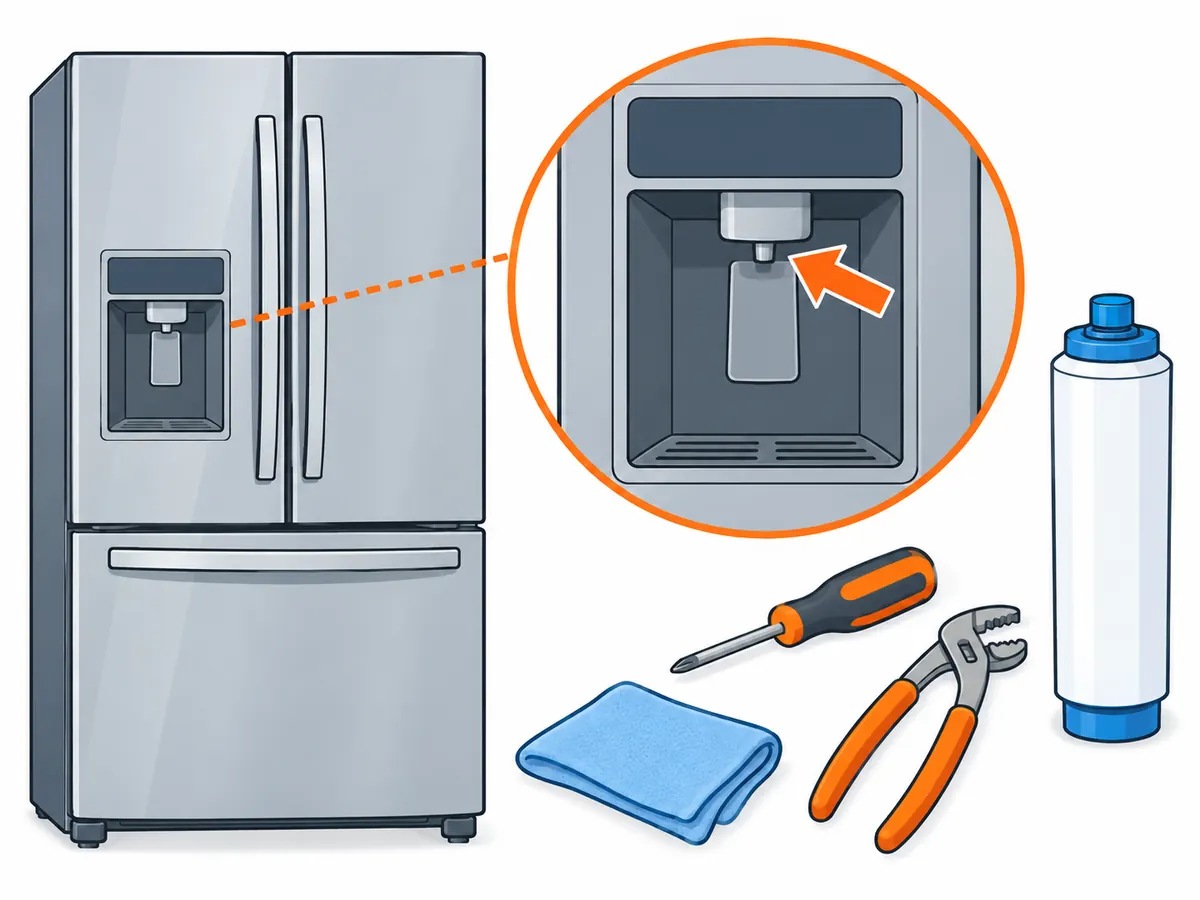
- Screwdriver, towels, bucket or bowl, flashlight, replacement filter if needed
- Call a pro if
- the water inlet valve has failed, the water line leaks inside the wall, or the dispenser has electrical faults
In this guide
- Power off first
- Water off first
You press the lever and nothing comes out, or the stream is slow and sputters. A refrigerator water dispenser not working is often caused by a small, easy problem such as a clogged filter or a closed valve. This guide covers the most common causes and the simple fixes.
This guide is part of our wider guide to appliance problems.
Start with the simple checks
1. Check the dispenser lock. Many fridges have a lock button that turns off the dispenser. Look for a lock light on the panel.
2. Check the door. The dispenser will not work if the door is not fully closed.
3. Check the water supply valve. Find the small valve on the water line behind or under the fridge, or under the nearby sink. Make sure it is fully open.
4. Check the line. Pull the fridge out gently and look at the plastic or braided line. Make sure it is not kinked or crushed. Do not pull the fridge too far, so you do not strain the line.
5. Wait. A newly installed fridge can take several hours to fill the tank. Run the dispenser for a minute to push out air.
Replace the water filter
A clogged water filter is the top cause of slow or no flow. Most filters need replacement every six months. Turn the old filter and remove it, put in the new one and run about two gallons through the dispenser to clear air and carbon dust. See How to replace a refrigerator water filter for steps. As a test, remove the filter and install the bypass cap, if your fridge came with one. If water flows, the filter was the problem.
A frozen water line
If the freezer is too cold, the water line can freeze. Signs include no water, slow water and ice that looks odd. Check the freezer temperature, which should be near 0 degrees Fahrenheit. A door that does not close can let warm air in and cause frost. See Freezer frost buildup: how to fix. Let the fridge sit for a few hours and see whether the flow returns. Do not use a flame or a heat gun on the line.
The inlet valve
A water inlet valve at the back of the fridge opens when the dispenser or the ice maker asks for water. If it fails, no water gets through. Signs are no water at all and an ice maker that also stopped. Testing the valve involves disconnecting the power and the water, and testing the coil with a multimeter. If you are not sure, call a service person.
Low water pressure
Dispensers need decent house water pressure. If the pressure is low, the flow will be slow. Check other taps. See How to fix low water pressure in one faucet. A partly closed valve or a clogged line can also reduce flow. See Ice maker not working: what to check if the ice maker is also not working.
Dispenser switch or control
If the water valve and the filter are fine, the dispenser lever switch or the control board may have failed. When you press the lever, you may hear a click or a hum if the valve opens. If you hear nothing, the switch may be at fault. This usually needs a repair person.
Prevention
Change the filter on schedule. Keep the freezer cold, but not extremely cold. Check the line behind the fridge when you clean. Leave a small gap behind the fridge so the line does not kink. Use a water line made for the fridge.
Signs that point to each cause
If the ice maker and the water both stopped, the inlet valve or the supply is the likely cause. If only the water stopped and the ice still works, the dispenser switch or a frozen dispenser line is more likely. If water comes out slowly and then stops, the filter is clogged. If the water tastes strange or comes out cloudy, replace the filter and flush it. If water leaks inside the fridge or onto the floor, turn off the supply valve and call for service.
What to do while it is broken
You can still fill a pitcher from the kitchen faucet. Keep the fridge door closed as much as you can, and do not pry at the dispenser. Do not run the dispenser dry for long periods, since the valve and the pump can wear. After any repair or filter change, run the dispenser for a minute to push out air, then check around the fridge for drips the next day.
Related guides
- How to Replace a Refrigerator Light Bulb
- Microwave Turntable Not Spinning: Causes and Easy Fixes
- Refrigerator Leaking Water on the Floor: Causes and Fixes
- Refrigerator Not Cooling but Freezer Works? 6 Fixes to Try First
- Refrigerator Making Noise: What It Means and What to Fix
- How to Clean a Refrigerator Inside and Out Without Damaging It
FAQ
Why is the water slow?
A clogged filter or low water pressure is most likely.
Why does the dispenser make noise but no water?
The inlet valve may be working but the line is blocked or frozen.
Do I need to flush a new filter?
Yes. Run water through it as the manual says.
How long does a fridge water filter last?
About six months for most models. Follow your manual.
More from this topic
- Refrigerator Leaking Water on the Floor: Causes and Fixes: Refrigerator leaking water on the floor? Check the defrost drain, water line, filter and drain pan to find...
- Ice Maker Not Working: What to Check: Ice maker not working? Check the freezer temperature, the water line, the fill tube and the filter. Easy...
- How to Replace a Refrigerator Light Bulb: Refrigerator light not working? Learn how to replace a refrigerator light bulb safely, find the right type...
- Refrigerator Not Cooling but Freezer Works? 6 Fixes: Refrigerator not cooling but freezer works? Check airflow vents, frost buildup, the fan and the temperature...
- How to Replace a Refrigerator Water Filter: How to replace a refrigerator water filter in five minutes: find the model, twist the old one out and flush...
 KitchenRefrigerator Leaking Water on the Floor: Causes and FixesRefrigerator leaking water on the floor? Check the defrost drain, water line, filter and drain pan to find the cause and fix it step by step.
 KitchenIce Maker Not Working: What to CheckIce maker not working? Check the freezer temperature, the water line, the fill tube and the filter. Easy steps, tools and when to call a technician.
 KitchenHow to Replace a Refrigerator Light BulbRefrigerator light not working? Learn how to replace a refrigerator light bulb safely, find the right type and check the door switch.
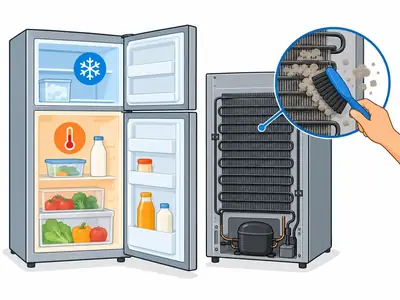 KitchenRefrigerator Not Cooling but Freezer Works? 6 FixesRefrigerator not cooling but freezer works? Check airflow vents, frost buildup, the fan and the temperature setting before you call a repair tech.
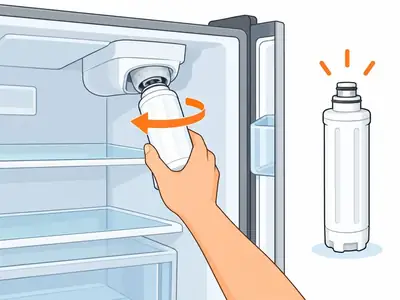 KitchenHow to Replace a Refrigerator Water FilterHow to replace a refrigerator water filter in five minutes: find the model, twist the old one out and flush the new one. Steps and how often to change it.