
Sink Drain Smells Like Sewage: Causes and What to Do
Part of: Basic plumbing
- Difficulty
- Easy to moderate
- Time
- 20 to 40 minutes
- Cost
- Cleaning and flushing are nearly free. A plumber is needed only for a vent or sewer line problem, so ask for local quotes.
- Tools
- Bucket, baking soda, white vinegar, rubber gloves, flashlight, old toothbrush
- Call a pro if
- The smell is in every drain, you hear gurgling from several fixtures, or you smell sewer gas that does not go away.
In this guide
- Gas safety
- Chemical safety
If your sink drain smells like sewage, it is almost always one of three things: a dry trap, a dirty drain or a vent problem. The good news is that the first two are easy to fix at home. The third is a job for a plumber.
This guide is part of our wider guide to clogs and slow drains.
What causes a sewage smell from a sink
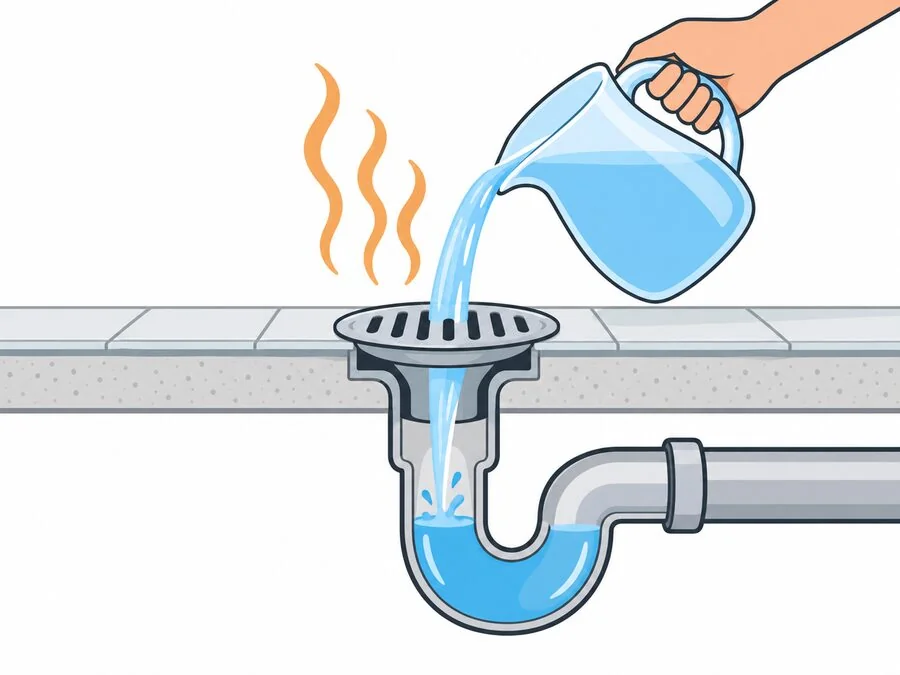
Every sink has a curved pipe called a P-trap. It holds a small plug of water that blocks sewer gas from rising. When that water dries out or gets pushed away, gas can come up through the drain. Food and grease inside the pipe can also rot and smell like sewage. Less often, a blocked vent or a damaged sewer line is the cause.
Step 1: Run the water
If the sink has not been used for weeks, the trap may be dry. This is common in a guest bath or a basement sink. Run water for 30 seconds. If the smell goes away, that was the cause. To prevent it, run the water once every week or two.
Step 2: Clean the drain opening
Pull out the stopper, if there is one. Hair and gunk often cling to it. Wipe it with a cloth and an old toothbrush. Scrub the inside of the drain opening as far as you can reach. The smell often comes from this film.
Step 3: Flush with baking soda and vinegar
Tip a half cup of baking soda into the drain, then chase it with a half cup of white vinegar. Give the foam ten to fifteen minutes to work, then rinse with hot water from the faucet. This will not fix a clog but it helps remove light buildup. For stubborn clogs, see how to unclog a drain.
Step 4: Check the P-trap
Put a bucket under the trap. Loosen the slip nuts by hand, remove the trap and empty it. Clean it out and rinse it. Look for cracks. Put it back, hand tighten the nuts and run the water to check for leaks. A trap that is missing, loose or installed backward will let gas through.
Step 5: Check the overflow hole
Many sinks have a small overflow hole near the top. Slime can build up behind it. Pour a little vinegar in the hole and flush with hot water.
Step 6: Think about the vent
A plumbing vent lets air into the drain so water flows freely. If it is blocked, the water in the trap can get pulled out, and gas leaks in. Signs of a vent problem include gurgling sounds, slow drains in more than one fixture and repeat smells. You can look at the roof vent from the ground for a bird nest or ice, but do not climb onto a roof to check it. Call a plumber for this.
When the smell is in every drain
If several drains smell, or toilets bubble when you use a sink, the problem may be in the main sewer line. This is not a DIY fix. Gas can be harmful, and a backup can damage floors. Call a plumber, and ventilate the area.
What not to do
- Do not pour bleach and ammonia-based or acidic cleaners together.
- Do not use a flame near a suspected gas smell.
- Do not keep using strong chemical drain cleaners on a trap. They can damage pipes.
- Do not ignore a smell that lasts for days.
Related guides
- Faucet Water Smells Like Rotten Eggs: What It Means
- Slow Bathroom Sink Drain: How to Fix It
- Replace Bathroom Sink Drain: Step by Step
- How to Replace a Pop-Up Drain Stopper in a Bathroom Sink
- How to Fix a Leaking P-Trap Under the Sink
- How to Unclog a Kitchen Sink: Clear It in Minutes
FAQ
Is a sewage smell from a sink dangerous?
Sewer gas in small amounts is mostly a nuisance, but it can cause headaches or nausea, and it should not be ignored. If the smell is strong or constant, ventilate the room and call a plumber.
Why does the smell come back after a few days?
The trap may be drying out, or the cause may be deeper in the pipe or the vent. Clean the trap and check the vent if the smell returns.
Can a garbage disposal cause the smell?
Yes. Food can stick under the rubber splash guard and rot. See our guide on how to fix a clogged garbage disposal.
More from this topic
- How to Fix a Sewer Smell in the Bathroom: How to fix a sewer smell in the bathroom: find whether a dry trap, wax ring or vent is the source and seal it...
- How to Clean a Basement Floor Drain: Learn how to clean a basement floor drain: remove the grate, clear debris, flush the trap, add water to stop...
- How to Fix a Smelly Floor Drain: Learn how to fix a smelly floor drain: find whether the trap is dry, clean the drain and trap, restore the...
- Faucet Water Smells Like Rotten Eggs: What It Means: Water smells like rotten eggs? It usually comes from the water heater's anode rod or bacteria in the supply....
- How to Replace a Dishwasher Drain Hose: Learn how to replace a dishwasher drain hose: cut the power and water, remove the old hose at both ends, fit...
 Drains and SewersHow to Fix a Sewer Smell in the BathroomHow to fix a sewer smell in the bathroom: find whether a dry trap, wax ring or vent is the source and seal it for good.
 PlumbingHow to Clean a Basement Floor DrainLearn how to clean a basement floor drain: remove the grate, clear debris, flush the trap, add water to stop sewer gas, and know when a backup needs a plumber.
 PlumbingHow to Fix a Smelly Floor DrainLearn how to fix a smelly floor drain: find whether the trap is dry, clean the drain and trap, restore the water seal and stop the sewer smell returning.
 PlumbingFaucet Water Smells Like Rotten Eggs: What It MeansWater smells like rotten eggs? It usually comes from the water heater's anode rod or bacteria in the supply. A two-glass test tells which.
 PlumbingHow to Replace a Dishwasher Drain HoseLearn how to replace a dishwasher drain hose: cut the power and water, remove the old hose at both ends, fit a new one with a high loop and test for leaks.