
Voltage Tester vs Multimeter
Part of: Tools and everyday fixes
In this guide
- Power off first
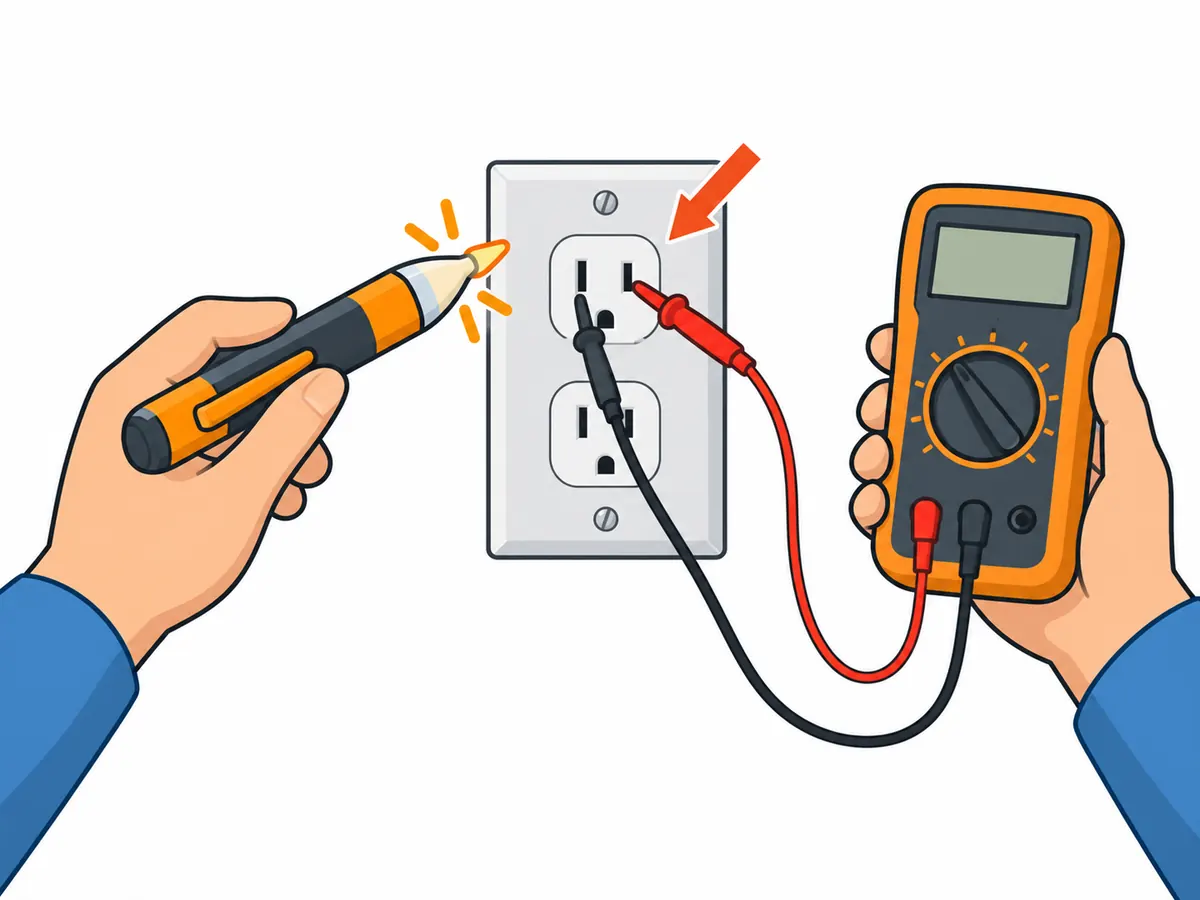
This guide covers voltage tester vs multimeter, and which one a homeowner should own first. A non-contact voltage tester and a multimeter both tell you something about electricity, but they do different jobs. The pen-style tester says whether voltage is present near a wire or outlet. The multimeter measures it and can test continuity and more. For basic home checks, many people start with the pen. These three show the range.
This guide is part of our wider guide to tools, costs and first-home setup.
How we compared these. We did not test these tools ourselves. This comparison is based on manufacturer specifications, retailer product pages and published reviews. We do not list prices because they change often and vary by store, kit and sale. Check the current price before you buy. We do not use affiliate links.
At a glance
| Klein NCVT-3P | Fluke 1AC II | Klein MM400 | |
|---|---|---|---|
| Type | Non-contact voltage tester | Non-contact voltage tester | Auto-ranging digital multimeter |
| Stated detail | 12 to 1000 V AC, flashlight, beeps faster nearer the source, IP67, CAT IV 1000 V rating | 90 to 1000 V AC or 200 to 1000 V AC, tip glows red and beeper sounds | AC/DC voltage, current, capacitance, frequency, duty cycle, diode, continuity, temperature, 600 V |
The models, one by one
Klein Tools NCVT-3P
The listing says it detects 12 to 1000 volts AC with a beeper and light, has a flashlight, auto power off and an IP67 rating. The low 12 V detection range is a plus for low-voltage circuits.
Fluke 1AC II VoltAlert
Per Fluke, the tip lights up red and a beeper sounds if voltage is present, with a 90 to 1000 V AC range on one version and 200 to 1000 V AC on another. Check which version you buy.
Klein Tools MM400
A multimeter reads values, not just yes or no. The listing shows AC and DC voltage, current, capacitance, frequency, duty cycle, diode, continuity and temperature. It has a learning curve and test leads.
How to choose
- You want to check whether an outlet or cord is live: a non-contact tester is quick.
- You need to test a battery, a switch, a fuse or a thermostat wire: a multimeter fits.
- Check the voltage range. A tester that starts at 90 V may miss low-voltage circuits.
- Buy from the maker or a known store. Safety tools should be genuine.
Which one to learn first
If you are new to electrical work, start by learning to use a non-contact tester the right way. Test it on a known live outlet so you know what a positive sounds like. Then test the circuit you want to work on. Test again after you turn off the breaker. A multimeter gives more detail, but it also gives you more ways to misread or to connect it wrongly. Use it for simple checks such as continuity on a switch or a dead battery, and read the manual before you measure voltage. If you do not feel confident, hire a licensed electrician.
Care and replacement
Check the battery before you rely on any tester. Many models have a self-test light or tone. Do not use a tester that has been dropped, cracked or soaked beyond its rating. Store it in a clean place, away from heat. Keep the test leads of a multimeter in good shape, and replace any with cracked insulation. Fuses in a multimeter protect the user, so replace them only with the type the maker lists. If a tool is more than several years old and was heavily used, think about replacing it. Safety tools are not a place to save a few dollars on an unknown brand.
Related guides
- Stud Finder Comparison: Franklin ProSensor 710, Zircon HD25 and Bosch GMS120
- Laser Level Comparison: Bosch GLL 30, Huepar 902CG and Huepar 3x360
- Cordless Impact Driver Comparison: DeWalt DCF787C2, Milwaukee 2850-22CT and Ryobi PSBID02K
- Wet-Dry Vac Comparison
FAQ
Is a non-contact tester enough to say a wire is dead?
No. Use it as a first check, then follow your safety procedure.
Do I need a multimeter at home?
Only if you do electrical or appliance troubleshooting.
What does CAT IV mean?
It is a safety category for use at the service entrance. Do not rely on it as permission to work on live wires.
Sources
Specifications as of November 2026, from these pages. Check them again for current figures.
- Klein NCVT-3 specs
- Klein NCVT-3P on Amazon
- NCVT-3PR
- Fluke 1AC II
- Fluke store page
- Klein MM400
- MM400 dealer page
More from this topic
- How to Test an Outlet With a Multimeter: Learn how to test an outlet with a multimeter, what readings to expect and which safer tools to use first....
- How to Use a Non-Contact Voltage Tester Safely: Learn how to use a non-contact voltage tester: check it on a live source first, test wires and outlets the...
- How to Clean Door Handles and Light Switches: Learn how to clean door handles and light switches: disinfect the right way, protect the finish, and hit the...
- How to Clean Skylights: Learn how to clean skylights safely: the right tools, interior and exterior methods, and how to avoid...
- How to Get Rid of Dust Mites in Your Home: Learn how to get rid of dust mites: wash bedding hot, encase mattresses, control humidity, and clean the...
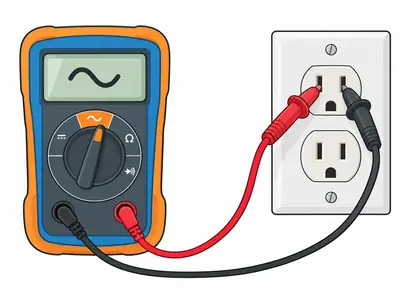 Electrical BasicsHow to Test an Outlet With a MultimeterLearn how to test an outlet with a multimeter, what readings to expect and which safer tools to use first. Safety rules and when to call an electrician.Electrical BasicsHow to Use a Non-Contact Voltage Tester SafelyLearn how to use a non-contact voltage tester: check it on a live source first, test wires and outlets the right way, and know its limits.
 Tools and BasicsHow to Clean Door Handles and Light SwitchesLearn how to clean door handles and light switches: disinfect the right way, protect the finish, and hit the spots everyone touches daily.
 Tools and BasicsHow to Clean SkylightsLearn how to clean skylights safely: the right tools, interior and exterior methods, and how to avoid scratches and streaks.
 Tools and BasicsHow to Get Rid of Dust Mites in Your HomeLearn how to get rid of dust mites: wash bedding hot, encase mattresses, control humidity, and clean the fabrics where they live.