
Dishwasher Leaving Spots on Dishes: What It Means
Part of: Appliances · Also in: The Complete Guide to Kitchen and Appliance Care at Home
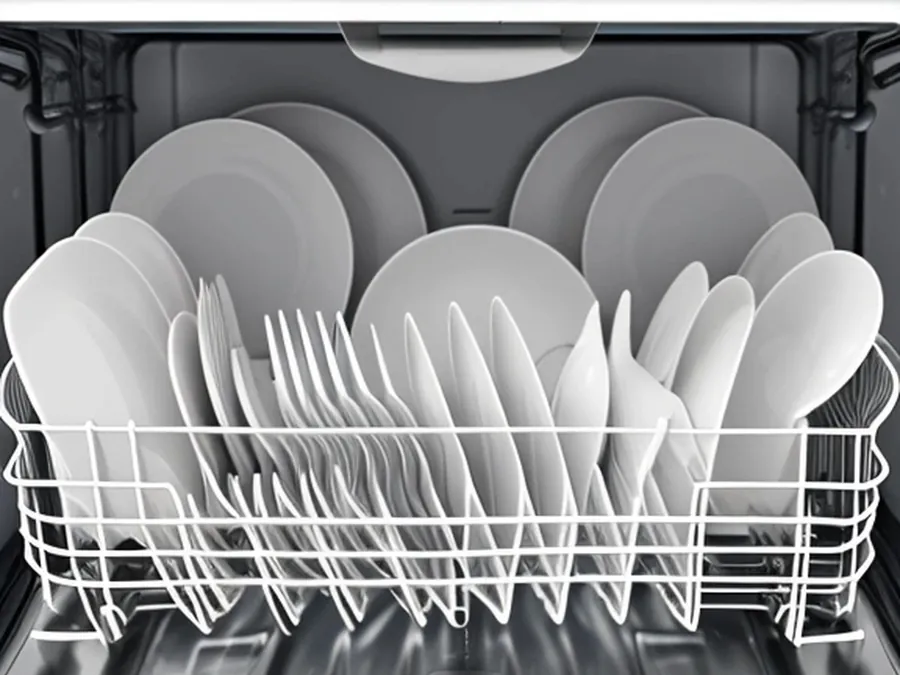
- Difficulty
- Easy
- Time
- 10 minutes plus one test wash
- Tools
- Rinse aid, white vinegar, a dishwasher thermometer if you have one
- Call a pro if
- Dishes come out gritty with sand-like particles or the water looks discolored, since that points to supply or plumbing problems beyond the machine.
In this guide
- Chemical safety
A dishwasher leaving spots on dishes looks like a machine failure and almost never is. Spots, film and cloudy glasses come from hard water, missing rinse aid, low water temperature or loading habits, and all four are cheap fixes. Here is how to tell which one you have, cheapest test first.
1. Identify the type of spot
The deposit tells you the cause.
1. White spots and film that wipe off with vinegar are hard-water mineral deposits.
2. Cloudiness that does not wipe off, especially on older glasses, is etching, which is permanent and comes from soft water plus too much detergent.
3. Gritty residue is food or supply sediment, a different problem entirely.
4. Run the vinegar wipe test on one glass before changing anything.
2. Add rinse aid and keep it full
The single most effective fix for hard-water spots.
1. Rinse aid makes water sheet off dishes instead of drying in droplets that leave minerals behind.
2. Fill the dispenser next to the detergent cup and set it to the middle setting.
3. If spots persist, turn the dispenser dial up a notch.
4. Detergents that claim built-in rinse aid rarely replace a full dispenser in hard-water areas.
3. Check your water hardness
Hard water is the root cause in most homes.
1. Spots plus soap that lathers poorly plus scale on faucets means hard water.
2. Test strips from a hardware store confirm it in a minute.
3. Moderate hardness: rinse aid and the right detergent handle it.
4. Severe hardness: a whole-home water softener is the real fix, and a plumber can size one for your household.
4. Raise the water temperature
Cool water cannot dissolve detergent or grease.
1. Water entering the machine should be about 120 degrees Fahrenheit.
2. Run the kitchen faucet until hot before starting a cycle if your heater is far away.
3. If the supply runs cool, raise the water heater to 120 degrees Fahrenheit; hotter wastes energy and risks scalds.
4. Use the machine's heated wash or sanitize option for a test load and compare.
5. Fix the loading habits
Water that cannot reach dishes cannot clean them.
1. Do not block the spray arms with tall items or overcrowd the racks.
2. Face dirty surfaces toward the spray and nest nothing.
3. Scrape plates but skip the full pre-rinse; detergent needs some soil to work against.
4. How to load a dishwasher correctly has the full layout.
6. Clean the machine itself
A dirty dishwasher makes dirty dishes.
1. Clean the filter monthly; a clogged filter recirculates debris as grit and film.
2. Check the spray arm holes for mineral plugs and clear them with a toothpick.
3. Run an empty hot cycle with a bowl of vinegar on the top rack monthly.
4. How to clean a dishwasher walks the full routine.
7. Adjust detergent for your water
The detergent itself is a variable.
1. Hard water needs more detergent; soft water needs less.
2. Too much detergent in soft water causes the permanent etching that looks like film.
3. Powder and tablet forms behave differently in hard water; if one spots, try the other.
4. Rewash etched glassware gently; vinegar removes mineral film but not etching.
Common mistakes
- Assuming the machine is broken when the rinse aid dispenser is empty.
- Pre-rinsing dishes to spotless, which leaves detergent nothing to bind to.
- Blocking the spray arm with a pan and blaming the machine.
- Using extra detergent in soft water and permanently etching glassware.
- Cleaning the filter only when the smell arrives.
FAQ
Why is my dishwasher leaving spots on my dishes?
The most common cause is hard-water minerals drying on the dishes, fixed with rinse aid. Low water temperature, overloading, a dirty filter and the wrong detergent dose for your water are the other usual causes.
How do I stop my dishwasher from leaving white spots?
Fill the rinse aid dispenser, run hot water at the sink before starting, and clean the filter. If spots persist, test your water hardness; severe hardness needs a softener or a detergent formulated for hard water.
Why are my glasses cloudy after the dishwasher?
Cloudiness that wipes off with vinegar is mineral film and is fixable. Cloudiness that does not wipe off is etching from soft water and too much detergent, and it is permanent; cut the detergent dose to stop it getting worse.
Does rinse aid really make a difference?
Yes, it is the single biggest factor in spot-free drying. It makes water sheet off instead of beading, so minerals have nothing to cling to as the dishes dry.
Related guides
- Dishwasher Leaving White Film on Glasses: Dishwasher leaving white film on glasses? Learn to tell film from etching, why hard water and detergent cause...
- Dishwasher Not Cleaning Dishes: What to Check: Dishwasher not cleaning dishes? Check the spray arms, the filter, the water temperature and how you load it....
- How to Clean a Dishwasher Spray Arm to Restore Water Flow: Learn how to clean a dishwasher spray arm: remove it, clear the clogged holes, soak off mineral scale, check...
- Dishwasher Not Draining After Replacing Garbage Disposal: Dishwasher not draining and water sits at the bottom? Clean the filter, check the drain hose, the air gap and...
- Dishwasher Not Filling With Water: What to Check: A dishwasher not filling with water is usually a closed valve, a kinked line, a stuck float or a failed inlet...
 KitchenDishwasher Leaving White Film on GlassesDishwasher leaving white film on glasses? Learn to tell film from etching, why hard water and detergent cause it, and the fixes that restore shine.
 KitchenDishwasher Not Cleaning Dishes: What to CheckDishwasher not cleaning dishes? Check the spray arms, the filter, the water temperature and how you load it. Easy steps, tools and when to call a pro.
 KitchenHow to Clean a Dishwasher Spray Arm to Restore Water FlowLearn how to clean a dishwasher spray arm: remove it, clear the clogged holes, soak off mineral scale, check that it spins and put it back for cleaner dishes.
 KitchenDishwasher Not Draining After Replacing Garbage DisposalDishwasher not draining and water sits at the bottom? Clean the filter, check the drain hose, the air gap and the garbage disposal connection. Simple steps.
 KitchenDishwasher Not Filling With Water: What to CheckA dishwasher not filling with water is usually a closed valve, a kinked line, a stuck float or a failed inlet valve. Check them in this order.