
Dishwasher Leaving White Film on Glasses
Part of: Appliances
- Difficulty
- Easy
- Time
- 20 to 60 minutes
- Tools
- White vinegar, soft cloth, rinse aid, your water hardness report
- Call a pro if
- The film will not come off with vinegar, the glasses feel rough, or every load comes out cloudy on a machine that used to clean well. Rough glass is usually etched and no repair brings it back.
In this guide
- Tell film from etching
- Understand why hard water films glass
- Check your detergent, which changed more than you think
- Use rinse aid, and fill it properly
- Run a cleaning cycle for the machine, not just the dishes
- Load so water actually reaches the glass
- Check the water temperature
- When the glasses are etched
- Quick tips
- When to stop and call a pro
- Common mistakes
- Related guides
- FAQ
- Sources
- Gas safety
- Wear protection
- Chemical safety
A dishwasher leaving white film on glasses is one of two things, and they have opposite answers. One is a film sitting on the glass that comes off. The other is damage to the glass itself that never will. Ten seconds with vinegar tells you which one you have, and that decides everything else you do.
1. Tell film from etching
1. Take one cloudy glass and rub a small patch with white vinegar on a cloth.
2. If the cloudiness clears, it is film: minerals or detergent residue sitting on the surface (Whirlpool).
3. If the patch stays cloudy, and the surface feels slightly rough, the glass is etched. The top layer of the glass is gone, and no cleaning product restores it.
4. Antique glass, feather edged crystal and hand painted china are often too delicate for a dishwasher at all. Wash those by hand.
2. Understand why hard water films glass
1. Hard water carries calcium and magnesium. Those minerals stay behind when the water dries, and they leave a white haze.
2. The harder your water, the faster the film builds. Your water supplier publishes a hardness figure, and a test strip gives you a number in minutes.
3. Above roughly 7 grains per gallon you should expect to need rinse aid and a citric acid cleaner on a schedule.
4. A water softener fixes the cause rather than the symptom, and it is worth pricing if your water is very hard.
3. Check your detergent, which changed more than you think
1. Phosphate limits on household dishwasher detergent came in during 2010, and manufacturers reformulated for the whole US market. Whirlpool notes that the change can leave a white film on dishes, glasses, plastic and even the tub.
2. Too little detergent leaves food and minerals behind. Too much leaves its own residue, and in soft water that shows up as a film within a load or two.
3. Use the amount your water hardness calls for, not the amount you have always used.
4. A gel and a powder behave differently. If you have hard water, a powder with a built in water softener often performs better than a gel.
4. Use rinse aid, and fill it properly
1. Rinse aid makes water sheet off the glass instead of forming droplets that dry into spots and film.
2. Check the dispenser next to the detergent cup. Most need refilling every few weeks, and many machines have an indicator.
3. If your dishwasher has no dispenser, a clip on rinse aid dispenser for the top rack does the same job.
4. Turn the rinse aid dose up one setting at a time if spots persist, and down if glasses feel slick.
5. Run a cleaning cycle for the machine, not just the dishes
1. A film on the glasses is often a film inside the machine coming back to visit.
2. Run an empty cycle with a cup of white vinegar upright in the top rack, or use a dishwasher cleaner made for the job.
3. Then run a second empty cycle with a quarter cup of citric acid or a lemonade mix sachet if the film is stubborn.
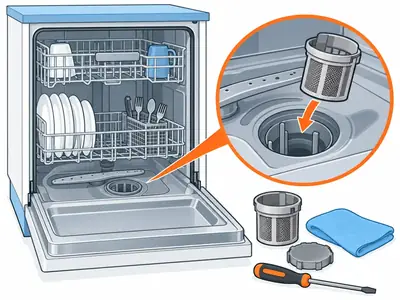
4. Clean the filter and the spray arms at the same time. See How to clean a dishwasher filter.
6. Load so water actually reaches the glass
1. Put glasses on the top rack, away from the heating element, which reduces thermal shock as well as film.
2. Do not let glasses touch each other. Contact points trap water and detergent.
3. Load cups and bowls face down and angled, not flat and nested.
4. Overloading is one of the most common reasons a dishwasher leaves residue.
7. Check the water temperature
1. A dishwasher needs hot water to dissolve detergent and rinse clean. If the supply is lukewarm, detergent survives the cycle and dries onto the glass.
2. Run the kitchen tap until it is hot before starting the dishwasher, especially if the dishwasher is far from the water heater.
3. Check the water heater setting. Most manufacturers want the water entering the dishwasher at around 120°F.
4. A dishwasher with a built in heater will do some of this itself, but it works better starting from hot water.
8. When the glasses are etched
1. Etching is permanent. Once the glass surface is roughened, nothing restores it.
2. It gets worse with soft water, too much detergent, very hot water and repeated long cycles.
3. If your glasses are etched, reduce detergent, lower the rinse temperature if your machine allows it, and stop washing your best glassware in the machine.
4. Keep the etched glasses for everyday use. They are not a health risk, they just look dull.
Quick tips
- Vinegar on a cloth is the whole diagnostic. Do that first.
- Rinse aid is cheaper than replacing glasses.
- Run a cleaning cycle monthly if your water is hard.
- Do not overload the top rack.
- Check the rinse aid indicator when you refill the salt or the detergent.
When to stop and call a pro
Stop if the film survives vinegar and the glass feels rough, because that is etching and a technician cannot undo it. Call for service if the machine no longer heats water, if the heating element has failed, or if a new dishwasher is leaving every load cloudy after the first month. Anything that points at the heating circuit is a service call, not a cleaning problem.
Common mistakes
- Adding more detergent when the glasses get cloudy, which often makes it worse.
- Skipping rinse aid and blaming the machine.
- Using vinegar and bleach in the same cycle.
- Washing crystal and antique glass in the dishwasher.
- Loading glasses touching each other.
- Assuming every white film can be removed.
Related guides
- Dishwasher leaving spots on dishes: what it means
- How to clean a dishwasher
- How to clean a dishwasher filter
- Dishwasher maintenance checklist
- Dishwasher smells: how to get rid of the odor
FAQ
Why are my glasses cloudy after the dishwasher?
Either mineral or detergent film sitting on the glass, or etching of the glass itself. Rub a patch with vinegar: if it clears it is film, if it stays cloudy it is etched.
Does vinegar really remove the film?
Yes for mineral film. Soak the glasses in a bowl of warm water with a cup of white vinegar, or run an empty vinegar cycle in the machine.
Why did this start suddenly?
Usually a detergent change, a rinse aid that ran out, a water softener that needs salt, or a drop in water temperature.
Is cloudy glass safe to drink from?
Yes. Film and etching are cosmetic. Rinse the film off for taste, but neither is a health problem.
Will a water softener fix it?
It fixes the cause if your water is hard, and it is the most reliable long term answer for a whole house with mineral film.
Sources
- Whirlpool product help, "Filming or Etching on Glassware" (checked 2026-11-28)
More from this topic
- Dishwasher Leaving Spots on Dishes: What It Means: A dishwasher leaving spots on dishes almost always means hard water, no rinse aid or low water temperature....
- Dishwasher Not Cleaning Dishes: What to Check: Dishwasher not cleaning dishes? Check the spray arms, the filter, the water temperature and how you load it....
- How to Descale an Electric Kettle: Learn how to descale an electric kettle: fill it with a mild acid solution, boil, soak, scrub the scale away...
- Dishwasher Not Draining After Replacing Garbage Disposal: Dishwasher not draining and water sits at the bottom? Clean the filter, check the drain hose, the air gap and...
- Dishwasher Not Filling With Water: What to Check: A dishwasher not filling with water is usually a closed valve, a kinked line, a stuck float or a failed inlet...
 KitchenDishwasher Leaving Spots on Dishes: What It MeansA dishwasher leaving spots on dishes almost always means hard water, no rinse aid or low water temperature. Fix it in this order, cheapest first.
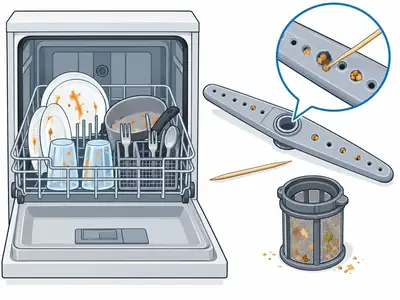 KitchenDishwasher Not Cleaning Dishes: What to CheckDishwasher not cleaning dishes? Check the spray arms, the filter, the water temperature and how you load it. Easy steps, tools and when to call a pro.
 KitchenHow to Descale an Electric KettleLearn how to descale an electric kettle: fill it with a mild acid solution, boil, soak, scrub the scale away and rinse until the taste and smell are gone.
 KitchenDishwasher Not Draining After Replacing Garbage DisposalDishwasher not draining and water sits at the bottom? Clean the filter, check the drain hose, the air gap and the garbage disposal connection. Simple steps.
 KitchenDishwasher Not Filling With Water: What to CheckA dishwasher not filling with water is usually a closed valve, a kinked line, a stuck float or a failed inlet valve. Check them in this order.