
Dishwasher Not Cleaning Dishes: What to Check
Part of: Appliances · Also in: The Complete Guide to Kitchen and Appliance Care at Home
- Difficulty
- Easy
- Time
- 30 to 60 minutes
- Tools
- Toothpick or pin, old toothbrush, white vinegar, soft cloth, thermometer, screwdriver, gloves
- Call a pro if
- water does not fill, the pump hums with no spray, water leaks from the base or a part is broken
In this guide
- Power off first
- Wear protection
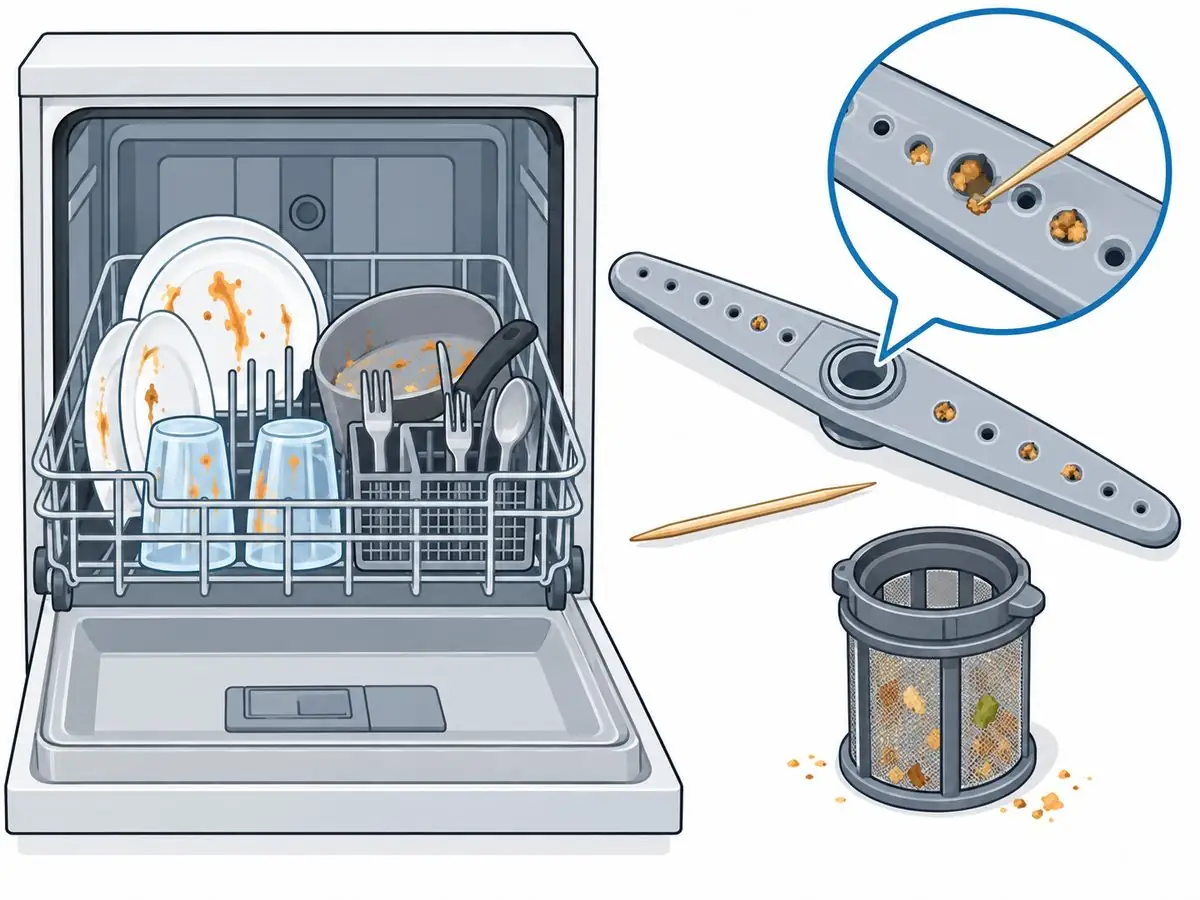
A dishwasher not cleaning dishes is often down to a clogged spray arm, a dirty filter or how it is loaded. When a dishwasher is not cleaning dishes, the problem is often small: a clogged spray arm, a dirty filter or a loading habit. This guide goes through the fixes in order, from easiest to most involved.
This guide is part of our wider guide to appliance problems.
Step by step
1. Check how you load it. Do not block the spray arms with tall dishes. Do not nest bowls. Face dirty sides toward the spray.
2. Scrape, do not rinse. Scrape large food off. Modern detergents work better with some soil to bind to.
3. Check the detergent. Use fresh detergent and measure it. Old powder clumps. Use a rinse aid if you have hard water.
4. Check the water temperature. Run the kitchen faucet until it is hot before starting a cycle. Water should reach about 120 degrees Fahrenheit at the dishwasher.
5. Clean the filter. Remove the lower rack and twist out the filter at the bottom. Rinse it under running water and brush it. Put it back firmly.
6. Clean the spray arms. Remove them if they twist off. Clear each hole with a toothpick. Rinse and put them back. The arms should spin freely.
7. Check the drain. If standing water remains, see Dishwasher not draining: standing water.
8. Run a cleaning cycle. Put a cup of white vinegar in a bowl on the top rack and run a hot cycle. This removes mineral film and grease.
9. Check the door seal. Wipe the gasket around the door to remove grime.
10. Check the inlet screen. Some models have a small screen where water enters. Mineral particles can clog it.
Hard water
White film on glasses points to hard water. Use rinse aid, and clean the machine with vinegar or a cleaner made for dishwashers. A water softener can help if your home has very hard water.
When it is a part
A weak circulation pump, a failed water inlet valve or a blocked wash arm hub can reduce cleaning. These need testing and replacement by a technician unless you are experienced.
Keep it working
Clean the filter monthly. Run a hot cycle with vinegar every few months. Run the kitchen faucet hot before you start a load.
Loading tips that make a real difference
Put plates facing the center, bowls at an angle, and cups upside down on the top rack. Put large pots and pans on the lower rack, with the dirty side toward the spray. Keep utensils with handles down, mixed so they do not nest. Do not overload the machine. Water must reach every dish, and dishes that touch each other stay dirty where they touch.
Also run the garbage disposal first if your dishwasher drains through it, so food bits in the disposal do not back up into the dishwasher.
Try a different detergent
Pods and powders work differently. Powder can clump in humid dispensers, and pods need a good dispenser flap. Try a fresh box, or switch to a detergent made for hard water if your water is hard. Clean the dispenser area so it opens fully. Use the longest or the normal cycle instead of the quick one for heavy soil.
Check the water inlet
If dishes are barely wet, the water may not be filling. Open the door mid-cycle, and look at the water level. It should reach the heating element. If it is low, the inlet valve or the float switch may be at fault. A technician can test these parts.
Related guides
- Dishwasher Spray Arm Not Spinning: Causes and Easy Fixes
- How to Clean a Dishwasher Filter to Stop Smells and Cloudy Dishes
- Dishwasher Door Latch Not Closing: How to Fix It
- How to Replace Dishwasher Rack Wheels When the Rack Sticks or Falls Off
FAQ
Why do dishes come out gritty?
A clogged filter or too little water. Clean the filter.
Should I pre-rinse?
Scrape instead. Light food soil helps the detergent work.
Why is there a film on glasses?
Hard water or too much detergent. Try rinse aid and less detergent.
How often should I clean the filter?
Once a month, or weekly with heavy use.
More from this topic
- How to Clean a Dishwasher Spray Arm to Restore Water Flow: Learn how to clean a dishwasher spray arm: remove it, clear the clogged holes, soak off mineral scale, check...
- Dishwasher Leaving Spots on Dishes: What It Means: A dishwasher leaving spots on dishes almost always means hard water, no rinse aid or low water temperature....
- Dishwasher Spray Arm Not Spinning: Causes and Easy Fixes: Dishwasher spray arm not spinning and dishes coming out dirty? Clear blocked holes, check the load, the hub...
- Dishwasher Leaking From the Door: Causes and Fixes: Dishwasher leaking from the door? Check the gasket, the load, the detergent, the spray arms and the latch....
- Dishwasher Leaving White Film on Glasses: Dishwasher leaving white film on glasses? Learn to tell film from etching, why hard water and detergent cause...
 KitchenHow to Clean a Dishwasher Spray Arm to Restore Water FlowLearn how to clean a dishwasher spray arm: remove it, clear the clogged holes, soak off mineral scale, check that it spins and put it back for cleaner dishes.
 KitchenDishwasher Leaving Spots on Dishes: What It MeansA dishwasher leaving spots on dishes almost always means hard water, no rinse aid or low water temperature. Fix it in this order, cheapest first.
 KitchenDishwasher Spray Arm Not Spinning: Causes and Easy FixesDishwasher spray arm not spinning and dishes coming out dirty? Clear blocked holes, check the load, the hub and the water pressure with these simple steps.
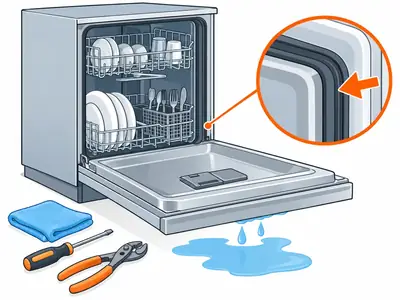 KitchenDishwasher Leaking From the Door: Causes and FixesDishwasher leaking from the door? Check the gasket, the load, the detergent, the spray arms and the latch. Simple steps to find the leak and stop it.
 KitchenDishwasher Leaving White Film on GlassesDishwasher leaving white film on glasses? Learn to tell film from etching, why hard water and detergent cause it, and the fixes that restore shine.