
Dishwasher Leaking From the Door: Causes and Fixes
Part of: Appliances
- Difficulty
- Easy to medium
- Time
- 20 minutes to 1 hour
- Tools
- Towels, flashlight, soft cloth, mild soap, screwdriver, nut driver, replacement gasket if needed
- Call a pro if
- water leaks from underneath the machine, the tub is cracked, or water reaches the wiring
In this guide
- Power off first
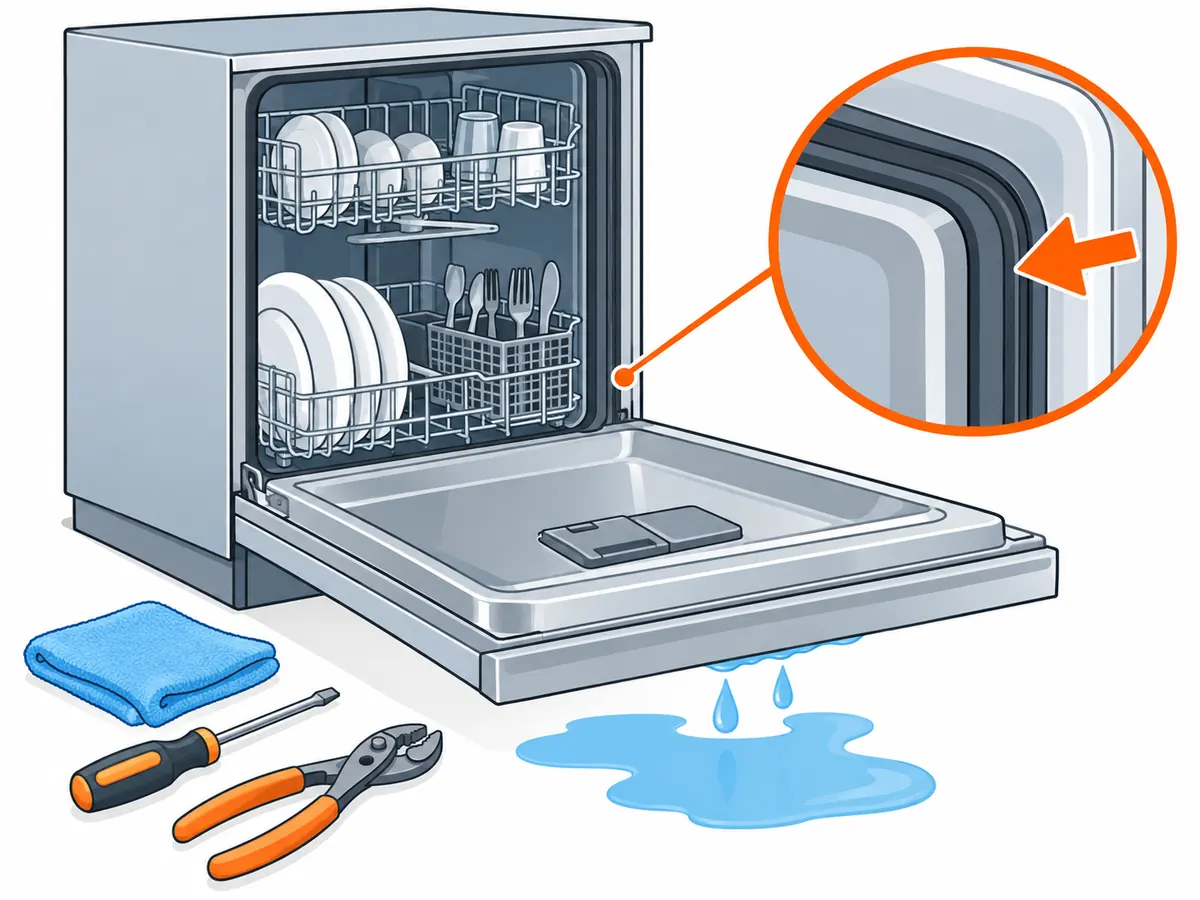
Water on the kitchen floor in front of the dishwasher is a common problem. In most cases, a dishwasher leaking from the door has a simple cause, such as a dirty gasket, too much soap or a blocked spray arm. This guide helps you find the cause and fix it, and shows when the leak is from somewhere else.
This guide is part of our wider guide to appliance problems.
Stop and dry the area
Turn off the dishwasher and wipe up the water. Water on the floor can warp wood and cause mold. Turn off the power at the breaker if water is near any electrical part. See How to find your electrical panel and label breakers.
Step by step: find the cause
1. Check the gasket. The rubber seal around the door should be soft, flat and clean. Wipe it with a damp cloth. Look for cracks, tears, flat spots and food. A dirty seal can stop the door from sealing.
2. Check the door closing. The door must latch fully. See Dishwasher door latch not closing.
3. Check the load. A tall pan, a dish or a utensil can stop the spray arm and send water at the door. Make sure the arms turn freely. Check that nothing blocks them.
4. Check the detergent. Use only dishwasher detergent, never dish soap. Too much soap or the wrong soap makes suds, and suds push water out of the door.
5. Check the water level. If there is standing water after a cycle, the drain may be blocked. See Dishwasher not cleaning dishes: what to check.
6. Check the machine's level. A dishwasher that tilts forward can leak at the door. Check with a level and adjust the feet.
7. Check the spray arm and the tub. Look for cracks in the spray arm, loose parts or missing caps.
8. Run a short cycle with a towel in front. Watch where the water appears and when.
Signs that point to each cause
A leak at the bottom corners of the door often means a worn gasket. A leak along the whole door edge suggests a door that is not closing or sagging. A leak with a lot of suds means too much or the wrong soap. A leak at the hinge side can mean a load that blocks a spray arm. A leak at the center bottom of the door can come from the door vent or the detergent dispenser. A leak that appears only late in the cycle may be a drain issue.
Replace the gasket
1. Open the door and pull the old gasket out of its groove.
2. Clean the groove.
3. Press the new gasket into the groove, starting at the top and working around. Make sure it sits flat and fully.
4. Close the door and check the fit.
5. Run a short cycle and check for leaks.
Use a gasket made for your model number.
Clean the door and the filter
Wipe the door edge, the gasket and the tub rim. Remove and rinse the filter at the bottom of the tub. A clogged filter slows draining and raises the water level. See Dishwasher smells: how to get rid of the odor for a cleaning routine.
Hard water and rinse aid
Hard water leaves scale on seals and parts, which can cause leaks. A rinse aid helps drain water from dishes and reduces spots. Clean the machine with a dishwasher cleaner every month or two. Check the door seal for scale.
Prevention
Load the machine so nothing blocks the arms. Use the right detergent in the right amount. Scrape food before loading. Clean the gasket monthly. Do not slam the door. Level the machine.
Test the repair
After you fix the gasket or the load, run a short rinse cycle with towels across the floor in front of the machine. Check after five minutes, and again at the end of the cycle. Run a full cycle with a normal load the next day. Keep a dry towel on the floor for the first few days. If the leak returns, note when it happens in the cycle, because the timing helps pinpoint the part.
When to call for service
If the leak comes from the bottom, the pump or the tub, or you see rust or cracks in the tub, call a service person. A leak that returns after you replaced the gasket and checked the soap may come from a bent door, a worn hinge or a spring that no longer holds the door tight. Those parts are under tension and are best handled by a trained repair person.
Related guides
- Dishwasher Spray Arm Not Spinning: Causes and Easy Fixes
- How to Replace Dishwasher Rack Wheels When the Rack Sticks or Falls Off
- Dishwasher Not Draining: How to Find and Fix the Clog
- How to Clean a Dishwasher Filter to Stop Smells and Cloudy Dishes
More help
If the water is coming from somewhere else, plumbing leaks sorts every common leak by location and links to the repair.
FAQ
Is a small leak a problem?
Yes. Even a small leak can damage the floor and cabinets.
Can I use dish soap in a pinch?
No. It makes suds and causes leaks.
How long do gaskets last?
Often many years, but they wear and harden.
What if the leak is from underneath?
Check the hoses and the pump, or call for service.
More from this topic
- Dishwasher Spray Arm Not Spinning: Causes and Easy Fixes: Dishwasher spray arm not spinning and dishes coming out dirty? Clear blocked holes, check the load, the hub...
- How to Replace a Dishwasher Door Gasket: Dishwasher leaking around the door? Learn how to replace a dishwasher door gasket, remove the old seal, fit...
- Refrigerator Leaking Water on the Floor: Causes and Fixes: Refrigerator leaking water on the floor? Check the defrost drain, water line, filter and drain pan to find...
- Dishwasher Not Cleaning Dishes: What to Check: Dishwasher not cleaning dishes? Check the spray arms, the filter, the water temperature and how you load it....
- How to Clean a Dishwasher Spray Arm to Restore Water Flow: Learn how to clean a dishwasher spray arm: remove it, clear the clogged holes, soak off mineral scale, check...
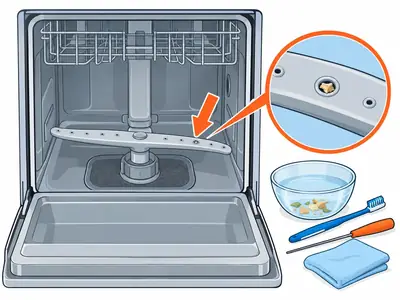 KitchenDishwasher Spray Arm Not Spinning: Causes and Easy FixesDishwasher spray arm not spinning and dishes coming out dirty? Clear blocked holes, check the load, the hub and the water pressure with these simple steps.
 KitchenHow to Replace a Dishwasher Door GasketDishwasher leaking around the door? Learn how to replace a dishwasher door gasket, remove the old seal, fit the new one and test for leaks in minutes.
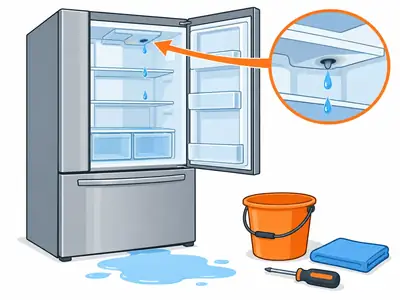 KitchenRefrigerator Leaking Water on the Floor: Causes and FixesRefrigerator leaking water on the floor? Check the defrost drain, water line, filter and drain pan to find the cause and fix it step by step.
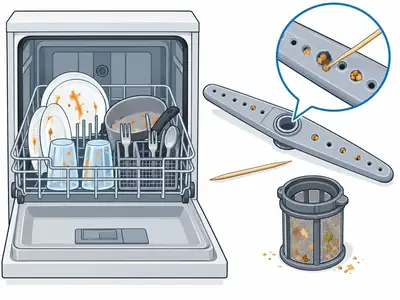 KitchenDishwasher Not Cleaning Dishes: What to CheckDishwasher not cleaning dishes? Check the spray arms, the filter, the water temperature and how you load it. Easy steps, tools and when to call a pro.
 KitchenHow to Clean a Dishwasher Spray Arm to Restore Water FlowLearn how to clean a dishwasher spray arm: remove it, clear the clogged holes, soak off mineral scale, check that it spins and put it back for cleaner dishes.