
How to Load a Dishwasher Correctly for Cleaner Dishes
Part of: Appliances
- Difficulty
- Easy
- Time
- 5 to 10 minutes
- Tools
- Dishwasher, rubber spatula, soft brush, dishwasher safe items
- Call a pro if
- Dishes stay dirty with a clean filter and a correctly loaded rack, which points to a spray arm, pump or heating fault.
In this guide
Dishwashers clean by spraying water, so the water has to reach every dish. Poor loading blocks spray and leaves food behind, even in a good machine. A few habits make a big difference. How to load a dishwasher correctly starts with scraping rather than rinsing, since modern detergents need some food soil to work.
1. Scrape, do not rinse
1. Scrape big food scraps into the trash or compost.
2. You do not need to rinse most dishes, since modern detergents work on food residue.
3. Remove bones, seeds, toothpicks and anything hard that could jam the pump.
4. Soak very dry baked on food briefly before loading.
2. Check the filter and spray arms
1. Look at the filter at the bottom of the tub and clean it if it is dirty.
2. Spin the lower spray arm by hand to make sure it moves freely.
3. Check that spray arm holes are not clogged.
4. Keep the arms clear when you load.
3. Load the bottom rack
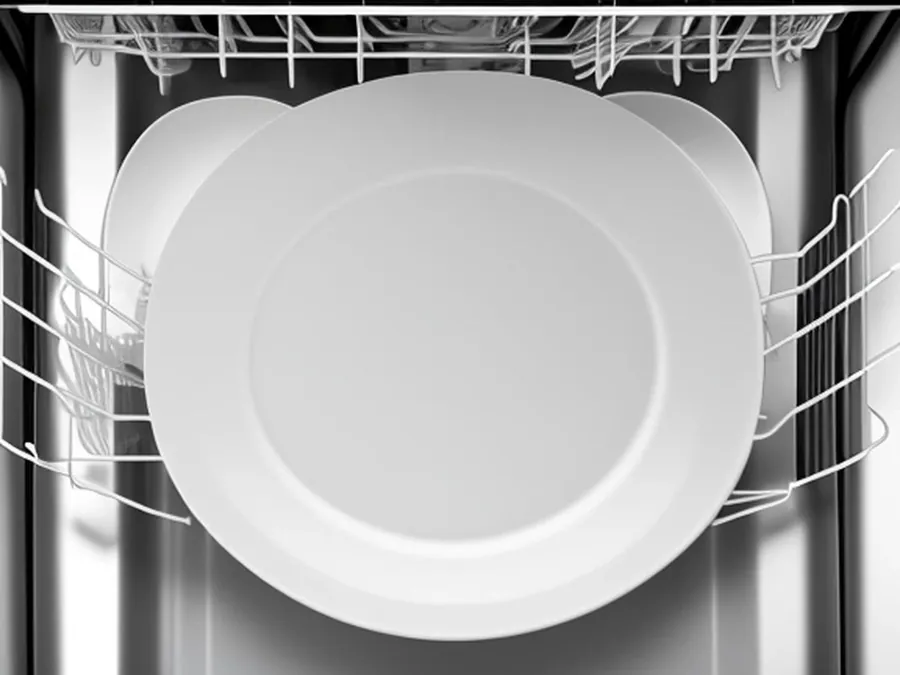
1. Put plates, bowls and pots here, facing the center and the spray.
2. Angle bowls slightly so water runs off them.
3. Space the dishes so water can pass between them.
4. Put large items on the sides and back so they do not block the detergent door.
4. Load the top rack
1. Place cups, glasses and small bowls upside down so they do not hold water.
2. Tilt them slightly if you can.
3. Put plastic items on the top rack, away from the heating element.
4. Make sure glasses do not touch each other and chip.
5. Handle the silverware basket
1. Place forks and spoons with the handle down so the eating end gets cleaned.
2. Mix the types so pieces do not nest together.
3. Put knives blade down, or lay them flat in a top tray.
4. Keep small items from falling through the basket.
6. Add detergent properly
1. Use the amount your detergent recommends.
2. Put it in the dispenser cup and close the lid.
3. Fill the rinse aid reservoir if your machine has one.
4. Do not use hand soap, which creates too many suds.
7. Do not overload
1. Leave a gap between dishes so water reaches every surface.
2. Do not stack bowls inside each other.
3. Skip large items that block the spray arm.
4. Wash oversized pans by hand.
8. Choose the right cycle and unload carefully
1. Choose a normal cycle for everyday dishes and heavier cycles for baked on food.
2. Let the dry cycle finish before you open the door.
3. Unload the bottom rack first so water on top does not drip onto dry dishes.
4. Wipe the filter and door seal weekly.
When to stop and call a pro
If dishes still come out dirty after you load well, stop adding more detergent. Check the filter, the spray arms and the water temperature first. A dishwasher needs hot water to dissolve detergent, so run the kitchen faucet until it is hot before you start the cycle. When the arms spin freely, the filter is clean and the water runs hot, the pump or the inlet valve may be failing. At that point a service visit is a better use of time than running more cycles. Also check that the dispenser door opens fully during the wash.
Related guides
- Dishwasher not cleaning dishes: what to check
- Dishwasher spray arm not spinning
- How to clean a dishwasher filter
- Dishwasher Leaking From the Door: Causes and Fixes
- Dishwasher Leaving Spots on Dishes: What It Means
- How to Clean a Dishwasher So It Cleans Like New
Common mistakes
- Pre rinsing everything under hot water.
- Blocking the lower spray arm with a tall pan.
- Nesting bowls and spoons.
- Putting dishes in with food chunks on them.
- Using too much or too little detergent.
FAQ
Should I rinse dishes before loading?
Scrape them, but you rarely need to rinse. Detergent needs some food to work on.
Which items should never go in a dishwasher?
Cast iron, wood, some nonstick pans, fine china with gold trim and sharp knives are best washed by hand.
Why are my glasses cloudy?
Hard water, too much detergent or too little rinse aid are the usual causes.
Where do plastics go?
On the top rack, away from the heating element.
More from this topic
- How to Replace a Dishwasher Detergent Dispenser: Learn how to replace a dishwasher detergent dispenser: unplug the unit, remove the inner door panel, swap the...
- How to Clean a Dishwasher Filter to Stop Smells: Learn how to clean a dishwasher filter in minutes: find it, remove it, rinse away food debris, scrub gently,...
- How to Replace Dishwasher Rack Wheels: Learn how to replace dishwasher rack wheels. Remove the rack, pop off the broken wheels, snap in new ones and...
- How to Clean a Dishwasher Spray Arm to Restore Water Flow: Learn how to clean a dishwasher spray arm: remove it, clear the clogged holes, soak off mineral scale, check...
- How to Clean an Oven Naturally With Baking Soda and Vinegar: Learn how to clean an oven naturally using baking soda paste and vinegar: wipe out grease, handle racks and...
 KitchenHow to Replace a Dishwasher Detergent DispenserLearn how to replace a dishwasher detergent dispenser: unplug the unit, remove the inner door panel, swap the dispenser and check that the door opens on time.
 KitchenHow to Clean a Dishwasher Filter to Stop SmellsLearn how to clean a dishwasher filter in minutes: find it, remove it, rinse away food debris, scrub gently, and put it back so dishes come out clean again.
 KitchenHow to Replace Dishwasher Rack WheelsLearn how to replace dishwasher rack wheels. Remove the rack, pop off the broken wheels, snap in new ones and make the rack roll smoothly again.
 KitchenHow to Clean a Dishwasher Spray Arm to Restore Water FlowLearn how to clean a dishwasher spray arm: remove it, clear the clogged holes, soak off mineral scale, check that it spins and put it back for cleaner dishes.
 KitchenHow to Clean an Oven Naturally With Baking Soda and VinegarLearn how to clean an oven naturally using baking soda paste and vinegar: wipe out grease, handle racks and glass, and skip harsh fumes safely.