
How to Check for Toilet Leaks: The Dye Test
Part of: Basic plumbing
- Difficulty
- Easy
- Time
- 20 minutes plus a quiet hour
- Tools
- Food coloring or dye tablets, a flashlight, dry paper towels, a wrench
- Call a pro if
- Water pools at the toilet base after flushing, since a failed wax ring leaks into the floor below and only gets worse.
In this guide
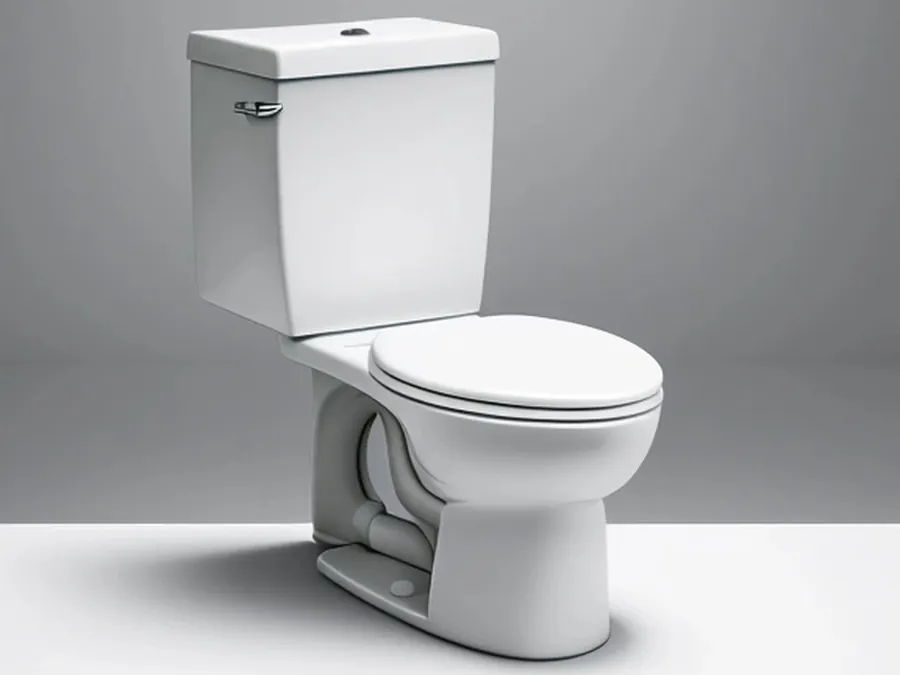
A toilet can leak hundreds of gallons a month without making a sound you would notice, which is why it tops the list of hidden water wasters. How to check for toilet leaks takes one food coloring test and three visual checks, and together they find every common leak point. Here is the full routine.
1. Run the food coloring test
The classic, because it works.
1. Lift the tank lid and add several drops of food coloring, enough to tint the water clearly.
2. Do not flush; wait fifteen to thirty minutes.
3. Color appearing in the bowl means the flapper is leaking tank water past the seal.
4. No color means the tank seal is sound; move to the other checks.
2. Fix what the dye test finds
The flapper is almost always the answer.
1. A leaking flapper usually needs cleaning or a two-minute, no-tool replacement.
2. Check the chain: too short holds the flapper open, too tangled does the same.
3. If a new flapper still leaks, the flush valve seat may be rough; a seat scrub or replacement seat fixes it.
4. How to fix a running toilet covers the full repair order.
3. Check the water level and overflow tube
The silent overfill leak.
1. The water line should sit about an inch below the top of the overflow tube.
2. Water trickling into the overflow means the fill valve never stops, a leak that runs all day.
3. Adjust the float down, or replace the valve if it will not hold.
4. Toilet tank not filling covers the opposite failure, and the same parts.
4. Inspect the supply line and connections
Small drips, big floor damage.
1. Run a dry paper towel along the shutoff valve, the supply line and the tank connection.
2. Any damp spot marks a weep; snug the connection a quarter turn and retest.
3. Cracked or bulging supply lines get replaced, not tightened.
4. Check again after a day; slow weeps take time to show on a towel.
5. Check for base leaks after flushing
The leak that ruins floors.
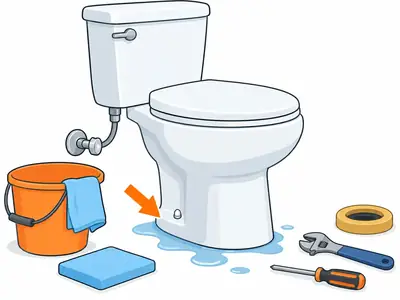
1. Flush, then watch and feel around the toilet base with a dry towel.
2. Any moisture around the base after flushing points to a failed wax ring.
3. A toilet that rocks at all will break its wax seal; how to fix a wobbly toilet addresses the movement first.
4. Wax ring replacement means pulling the toilet; doable DIY, but heavy and fiddly.
6. Confirm with your water meter
The outside check that catches everything.
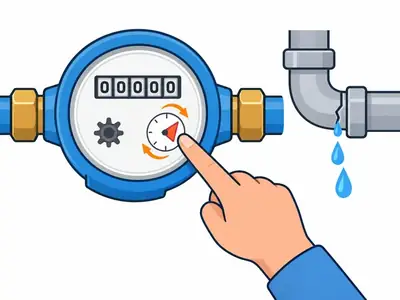
1. Turn off all water in the house and watch the meter's leak indicator for two minutes.
2. Any movement with everything off means a leak somewhere; how to read your water meter walks the full test.
3. If the toilet checks pass but the meter moves, the leak is elsewhere in the system.
4. A monthly meter check turns leak-hunting into a habit instead of a bill shock.
7. Know what the leaks cost
Motivation in gallons.
1. A slow flapper leak wastes up to two hundred gallons a day.
2. An overflow trickle wastes more, running nonstop.
3. Both show up on the water bill long before you hear or see them; high water bill but no visible leak starts the hunt.
4. A five-dollar flapper is the cheapest water-saving repair in the house.
Common mistakes
- Flushing during the dye test and invalidating it.
- Replacing the fill valve when a two-dollar flapper was the leak.
- Snugging a corroded supply connection until it snaps.
- Ignoring a toilet that rocks, which always ends at the wax ring.
- Checking once and never again; flappers age out every few years.
Related guides
- How to Fix a Toilet That Keeps Clogging: Find the Real Cause
- How to Replace a Toilet Supply Line That Leaks or Is Old
- How to Fix a Toilet That Won't Fill
- How to Replace a Toilet Flapper in 15 Minutes
- How to Install a Toilet: Set, Seal and Connect
- Replace Toilet Wax Ring and Stop Base Leaks
FAQ
How do you check if a toilet is leaking?
Put food coloring in the tank and wait fifteen to thirty minutes without flushing. Color in the bowl means the flapper leaks. Then check the water level against the overflow tube and feel the supply connections and base with a dry towel.
Why does my toilet leak into the bowl?
Almost always a worn flapper that no longer seals the flush valve. Clean it or replace it; if a new flapper still leaks, the flush valve seat needs a scrub or a replacement ring.
How much water does a leaking toilet waste?
A slow flapper leak can waste up to two hundred gallons a day, and a fill valve trickling into the overflow wastes more. Both run silently, which is why they show up as a bill before a sound.
Is a toilet base leak serious?
Yes. Water at the base after flushing means a failed wax ring leaking into the floor structure below. Stop using the toilet until it is resealed, and check the ceiling underneath for stains.
More from this topic
- High Water Bill but No Visible Leak: Where to Look: High water bill but no visible leak? It usually means a running toilet, a hidden service-line leak or an...
- How to Read Your Water Meter: Dials, Leak Tests and Bills: How to read your water meter: find it, read the dial or display, run the leak test, and use it to catch the...
- Plumbing Leaks: How to Find and Fix the Most Common Ones: Plumbing leaks start small. Learn how to find where the water comes from, when to shut it off, and which...
- How to Find a Water Leak in Your House: How to find a water leak in your house: read the water meter, check toilets and fixtures, look for stains and...
- Toilet Leaking at the Base: How to Find the Cause and Fix It: Toilet leaking at the base? Tighten the closet bolts, check the supply line and tank bolts, and replace the...
 PlumbingHigh Water Bill but No Visible Leak: Where to LookHigh water bill but no visible leak? It usually means a running toilet, a hidden service-line leak or an irrigation fault. The meter test finds it.
 PlumbingHow to Read Your Water Meter: Dials, Leak Tests and BillsHow to read your water meter: find it, read the dial or display, run the leak test, and use it to catch the leaks your bill never explains.
 PlumbingPlumbing Leaks: How to Find and Fix the Most Common OnesPlumbing leaks start small. Learn how to find where the water comes from, when to shut it off, and which guide fixes each common leak around the house.
 PlumbingHow to Find a Water Leak in Your HouseHow to find a water leak in your house: read the water meter, check toilets and fixtures, look for stains and learn when to shut off the water.
 BathroomToilet Leaking at the Base: How to Find the Cause and Fix ItToilet leaking at the base? Tighten the closet bolts, check the supply line and tank bolts, and replace the wax ring if water still seeps out. Clear steps.