
How to Fix a Running Toilet: 5 Easy Repairs
Part of: Basic plumbing
- Difficulty
- Easy
- Time
- 15 to 45 minutes
- Tools
- Adjustable pliers, replacement flapper or fill valve, food coloring, sponge, bucket
- Call a pro if
- Water leaks from the base or tank bolts, or the toilet keeps running after you replace the flapper and fill valve.
In this guide
- Water off first
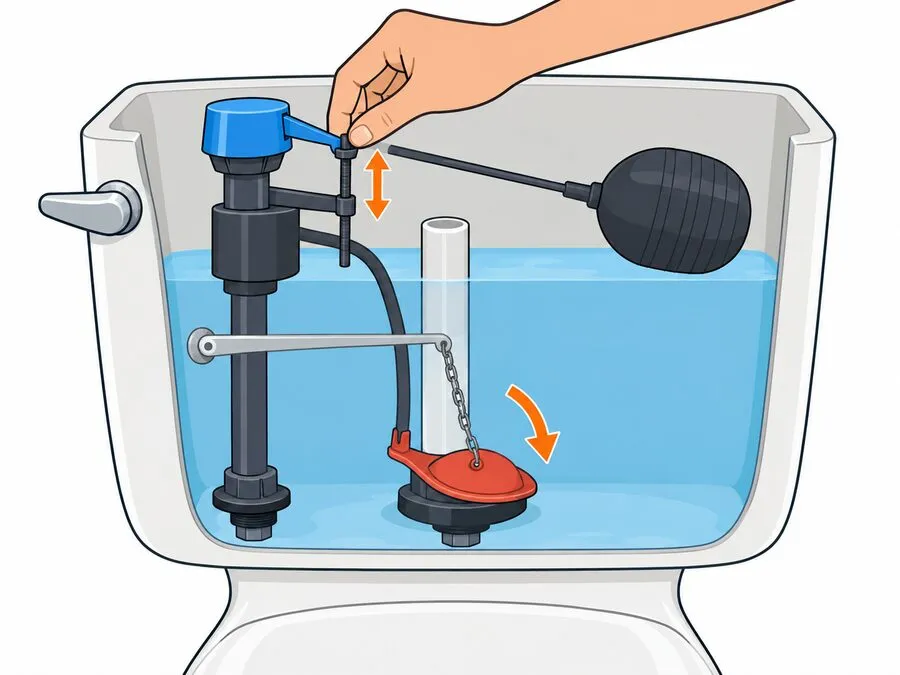
This guide shows how to fix a running toilet in the order that finds the cause fastest. A toilet that keeps running wastes water all day and can add real money to your bill. The good news is that this is one of the easiest repairs in a house. Almost every case comes down to one of five small parts inside the tank, and most cost less than a few dollars.
Start with a quick test
Take the lid off the tank and put a few drops of food coloring in the water. Do not flush. Wait 15 minutes. When the bowl turns the color of the dye, water is slipping past the flapper, which is the soft rubber stopper that seals the flush opening. If the bowl stays clear but you still hear water running, the problem is higher up, usually the fill valve or the water level.
Fix 1: Adjust the chain
The chain connects the flush handle to the flapper. If it is too tight, the flapper cannot close fully. If it is too loose, it can get caught under the flapper. You want about half an inch of slack. Hook the chain onto another hole in the lever arm, or onto a different link, until the slack is right.
Fix 2: Replace the flapper
Flappers wear out in a few years. They get soft, warped or covered in mineral buildup. Turn off the water at the valve behind the toilet, flush to empty the tank, and unhook the old flapper from the two small posts on the sides of the overflow tube. Take it to the store so you can match it. Many toilets use a standard 2 inch or 3 inch flapper, and the size is usually marked on the old one. Clip the new one on, reattach the chain with a little slack, turn the water on and test.
Fix 3: Lower the water level
If the water rises above the top of the overflow tube, it drains down the tube all the time. Aim for a water level roughly an inch under the top of the overflow tube. Most fill valves have an adjustment screw or a clip on the rod. Turn it so the float sits lower, then flush and check again.
Fix 4: Check the float
On older toilets a ball float on a metal arm shuts off the water. If the ball has a leak or the arm is bent, it never shuts the valve. Bend the arm gently down, or replace the ball. On newer toilets the float is a cup that slides up a rod. Make sure it moves freely and is not rubbing on the side of the tank.
Fix 5: Replace the fill valve
If nothing above helps, the fill valve itself may be worn. A kit is cheap and comes with instructions. Shut off the water, empty the tank, unscrew the supply line and the large nut under the tank, then lift out the old valve. Drop the new one in at the same height, tighten the nuts by hand plus a quarter turn, and reconnect the line. Do not overtighten plastic parts because they crack.
Common mistakes
- Jiggling the handle again and again instead of finding the cause.
- Buying a flapper without checking the size.
- Overtightening plastic nuts.
- Forgetting to turn the water back on slowly to check for leaks.
When to call a plumber
If water is leaking onto the floor from the base of the toilet, if the tank is cracked, or if you replaced the flapper and fill valve and it still runs, call a plumber. The problem may be the flush valve seat or a seal that needs more work.
Safety and cost
You do not need special tools for most of this. A flapper kit usually costs a few dollars, and a fill valve kit is not much more. Wipe the area dry when you finish and check again the next morning. If the water meter or bill keeps climbing, something is still leaking.
More help
Not sure this is the right repair? Our toilet problems guide lists each symptom and the guide that fixes it.
Related guides
- Low Water Level Toilet Bowl: How to Fix It
- Toilet Flushes Weakly: How to Fix It
- Toilet Fills Slowly: Causes and Simple Fixes
- Toilet Keeps Running After Flush: Check the Fill Tube First
- How to Fix a Toilet That Won't Fill
- How to Fix a Running Water Meter When Nothing Is On
FAQ
How do I know if the flapper is the problem?
The dye test from Step 1 tells you where the leak is: color in the bowl means the flapper, a clear bowl means look at the fill valve.
Why does my toilet run for a few seconds every so often?
That is usually a slow leak past the flapper. The tank slowly drains, and the fill valve tops it up. Replacing the flapper normally ends it.
Can a running toilet raise my water bill?
Yes. A toilet that runs all day can waste a lot of water over a month. Check your water meter if your bill jumps.
More from this topic
- How to Replace a Toilet Flapper in 15 Minutes: Learn how to replace a toilet flapper: shut off the water, match the new flapper to the old one, attach it...
- How to Fix a Shower That Drips: Learn how to fix a shower that drips: tell a head drip from a valve drip, clean or replace the head washer...
- How to Quiet a Toilet Fill Valve: Learn how to quiet a toilet fill valve by adjusting the flow, clearing grit and checking pressure, and when...
- How to Unclog a Toilet: Plunger, Hot Water and Auger: Learn how to unclog a toilet with a flange plunger, hot water and soap, or a toilet auger, plus what to avoid...
- Toilet Problems: How to Diagnose: Common toilet problems explained by symptom: running, clogged, weak flush, slow fill, leaks and wobbling,...
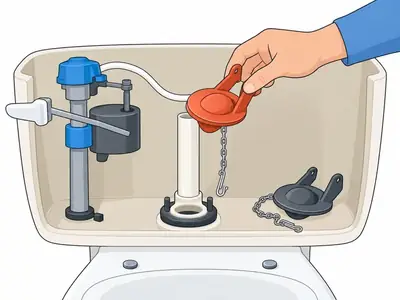 PlumbingHow to Replace a Toilet Flapper in 15 MinutesLearn how to replace a toilet flapper: shut off the water, match the new flapper to the old one, attach it and test for leaks in 15 minutes.
 PlumbingHow to Fix a Shower That DripsLearn how to fix a shower that drips: tell a head drip from a valve drip, clean or replace the head washer and replace the cartridge when the valve leaks.
 PlumbingHow to Quiet a Toilet Fill ValveLearn how to quiet a toilet fill valve by adjusting the flow, clearing grit and checking pressure, and when the valve just needs replacing.
 PlumbingHow to Unclog a Toilet: Plunger, Hot Water and AugerLearn how to unclog a toilet with a flange plunger, hot water and soap, or a toilet auger, plus what to avoid and when to call a plumber.
 PlumbingToilet Problems: How to DiagnoseCommon toilet problems explained by symptom: running, clogged, weak flush, slow fill, leaks and wobbling, with links to the full fix for each one.