
Toilet Fills Slowly: Causes and Simple Fixes
Part of: Basic plumbing
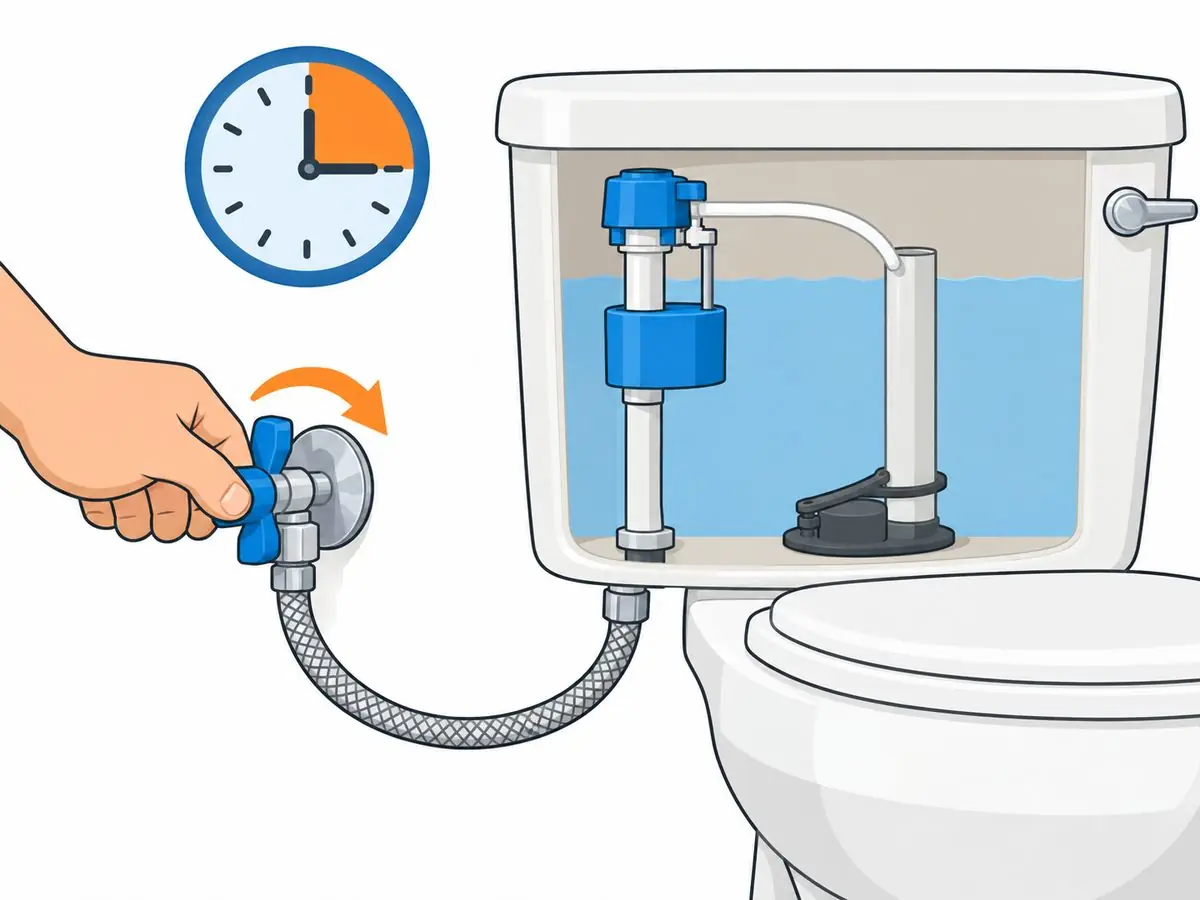
- Difficulty
- Easy to medium
- Time
- the refill with a clock. Flush, then count how long the fill valve runs until it shuts off. Next, open the shutoff valve fully and flush again. If the time changes a lot, the valve was partly closed. If it stays the same, the restriction is in the fill valve or the supply line. Hold a small cup under the supply line when you disconnect it at the tank end, turn the valve on for a second and see how strong the stream is. A strong stream means the supply is fine, and the fill valve is the problem. A weak stream means the shutoff valve, the line or the house supply is the problem.
- Tools
- Bucket, towel, adjustable pliers, small brush, flashlight, vinegar, toothpick
- Call a pro if
- other fixtures also have weak flow, the supply valve leaks, or water pressure is low in the whole house
In this guide
- Water off first
- Chemical safety
When a toilet fills slowly after a flush, you wait minutes for the tank to refill, or you hear a weak trickle instead of a steady rush. The toilet still works, but a slow refill is a sign that something is partly blocked or set wrong. Most causes are easy to fix with basic tools and a little patience.
Why a toilet refills slowly
After you flush, the fill valve opens and water flows into the tank and down the fill tube to the bowl. Anything that restricts that flow slows the refill. The usual causes are a partly closed supply valve, a clogged fill valve, a kinked supply line, mineral buildup, or low household water pressure.
Step by step
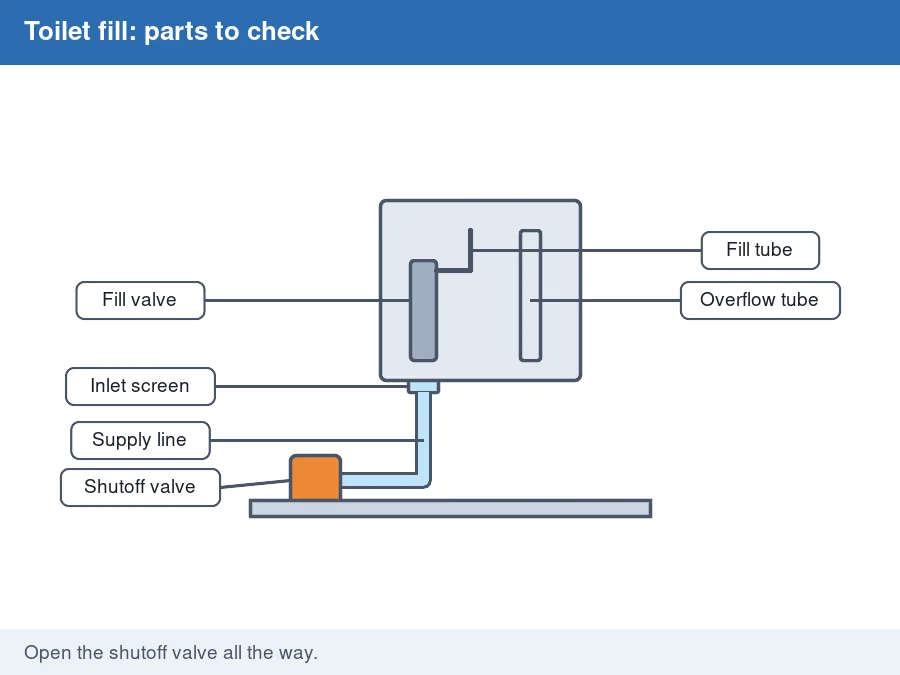
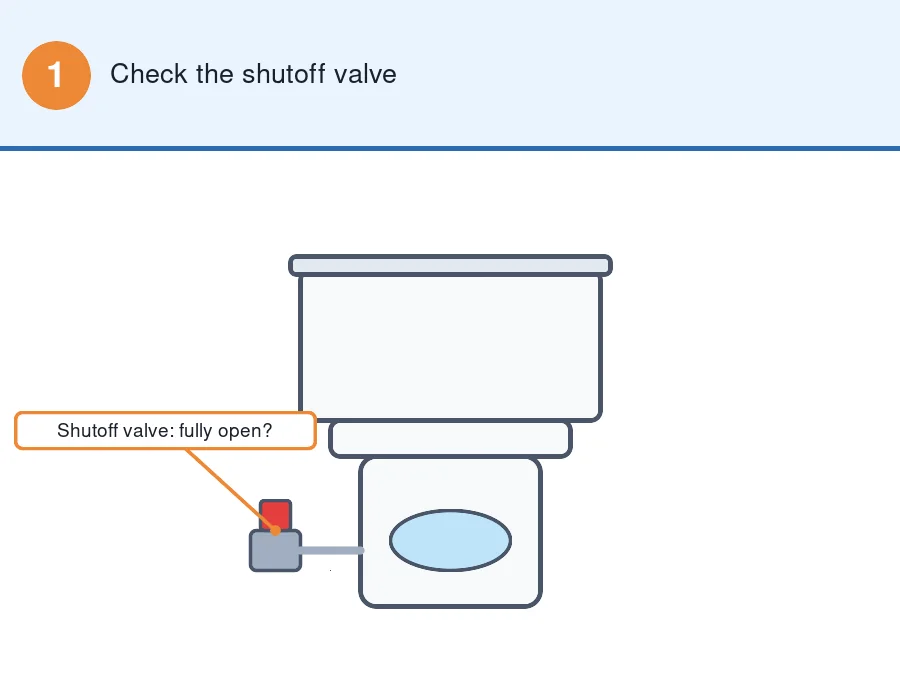
1. Check the shutoff valve on the wall or floor behind the toilet. It should be fully open. Turn it counterclockwise until it stops. A valve that is only partly open is a very common cause.
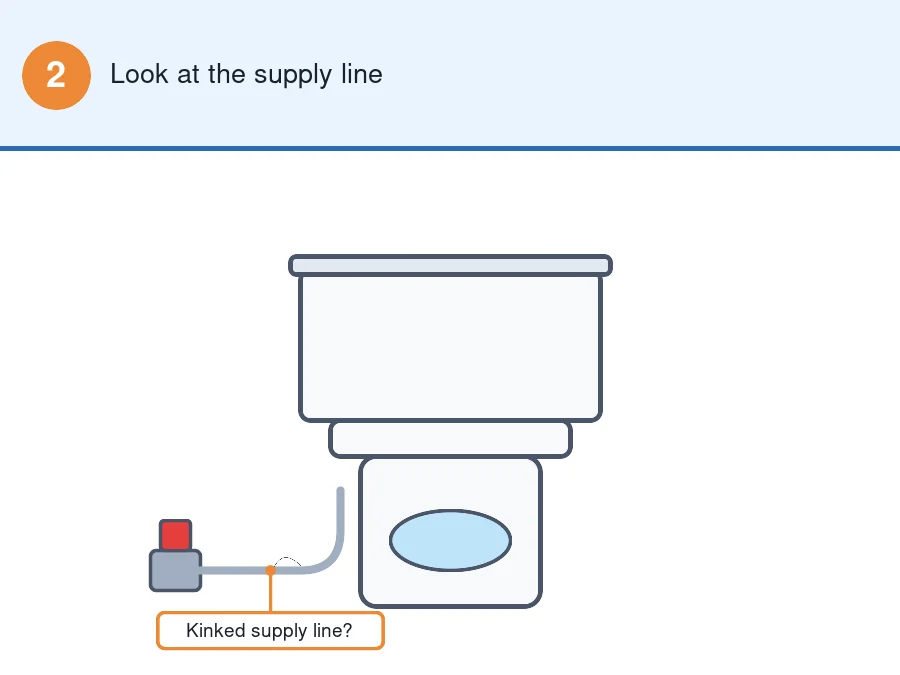
2. Look at the supply line. Check the flexible hose between the valve and the tank for kinks or sharp bends. Straighten it gently.
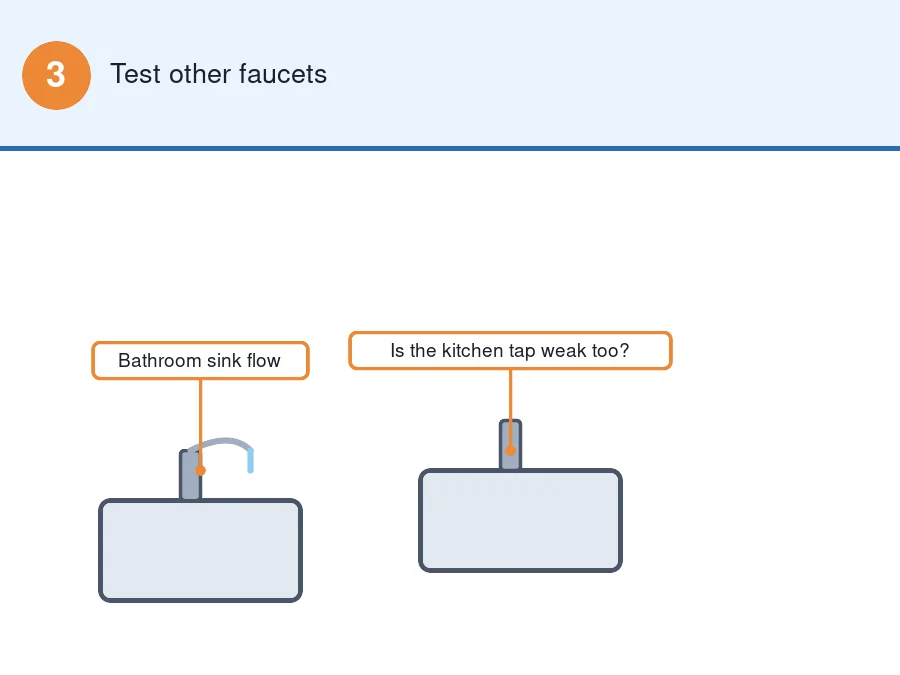
3. Test other faucets. Run the bathroom sink and the shower. If flow is weak everywhere, the issue is the house supply, not the toilet. Check the main valve and see How to shut off the water main to find it.
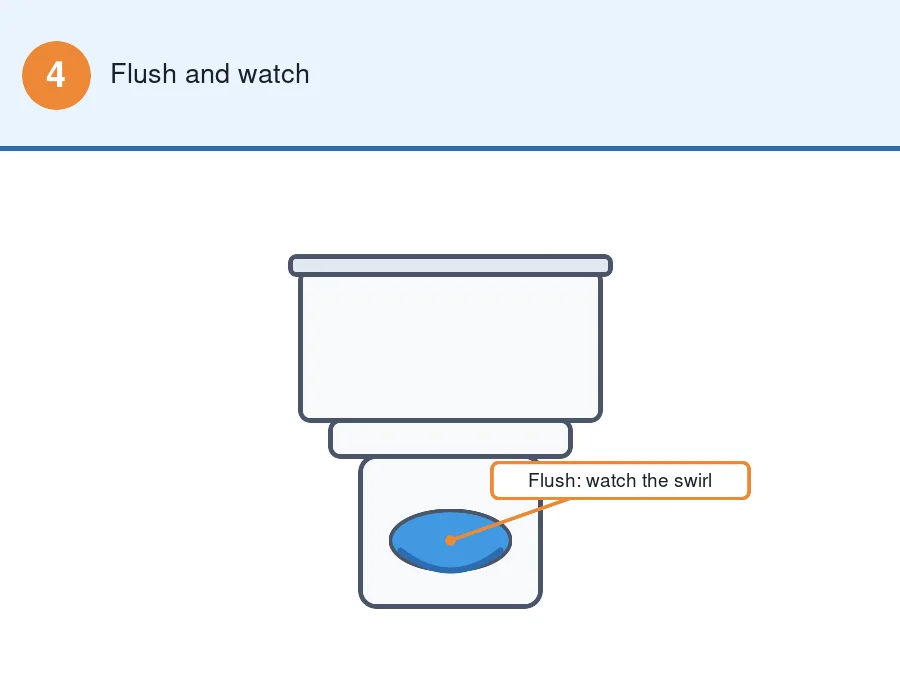
4. Flush and watch. Remove the tank lid and flush. See if the fill valve starts right away and how much water comes out.
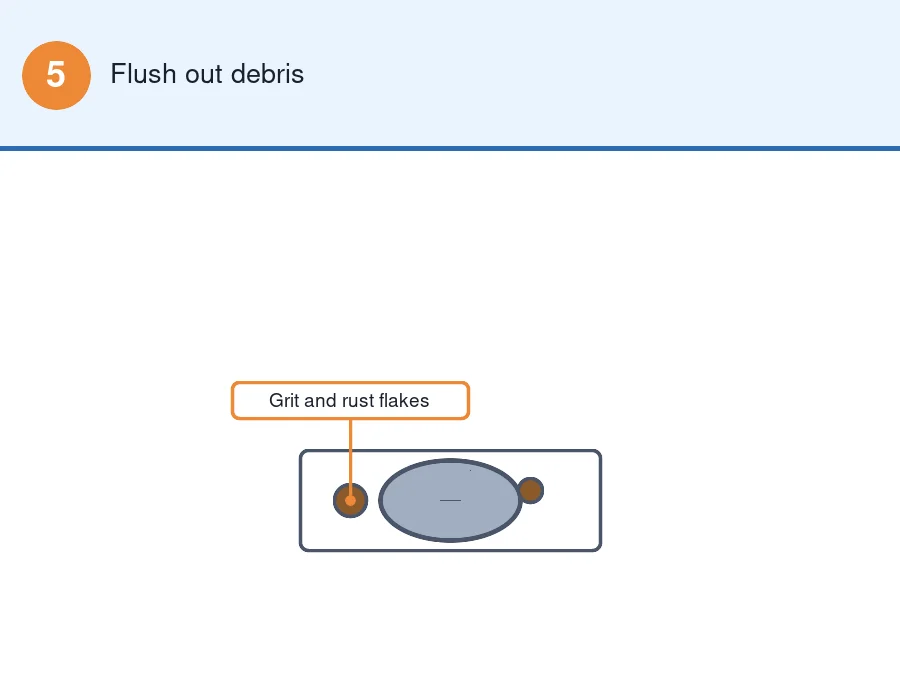
5. Flush out debris. Turn off the supply valve. Hold a cup over the fill valve on a float cup model, then briefly open the supply valve to flush sediment out. Do this with a towel ready because water can splash. On some valves, you twist off the cap first. Check the instructions for your model.
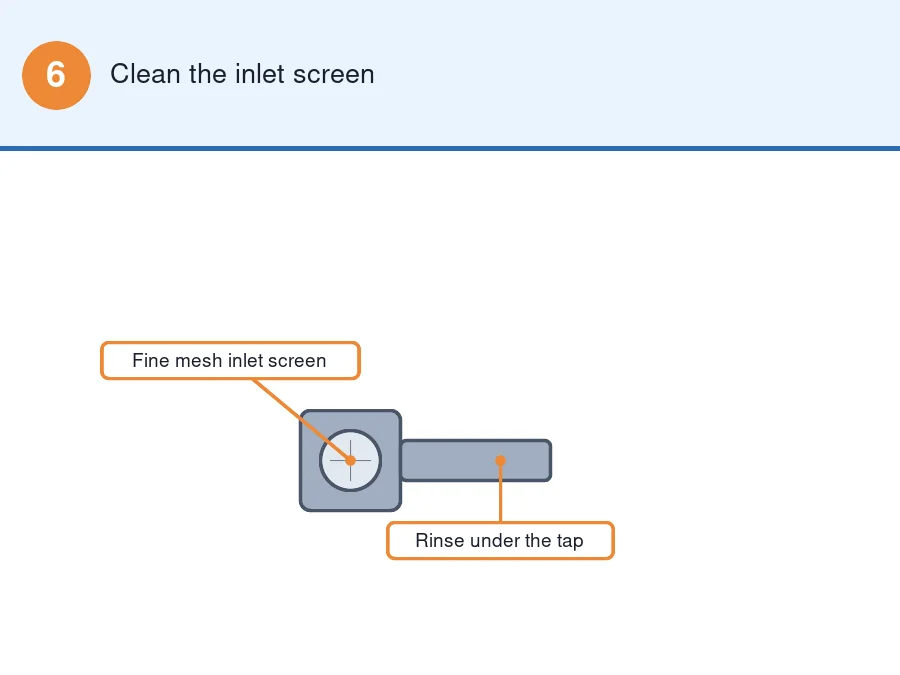
6. Clean the inlet screen. Some supply lines have a small filter screen at the connection. Disconnect the line at the toilet end with the water off, rinse the screen and reconnect it hand tight, then a small turn with pliers.
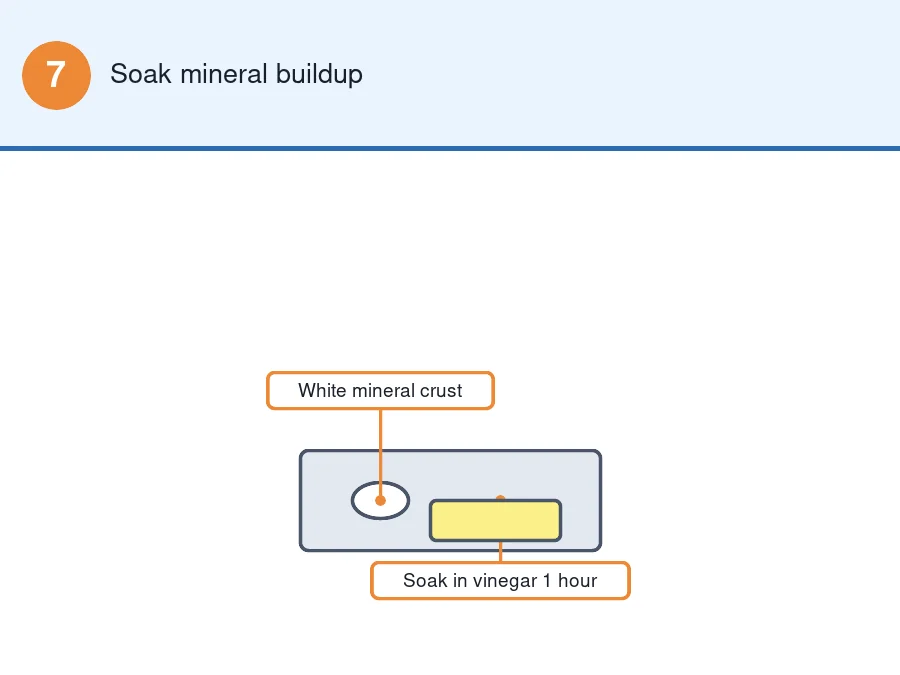
7. Soak mineral buildup. If the fill valve has crusty deposits, soak the removable parts in vinegar for about an hour and rinse.
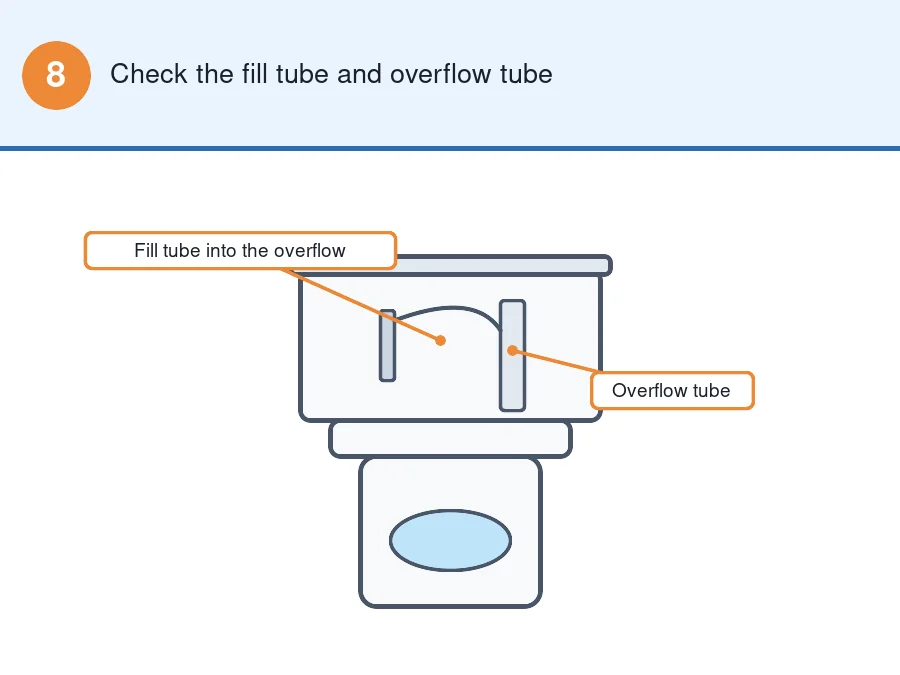
8. Check the fill tube and overflow tube as in Toilet keeps running after flush.
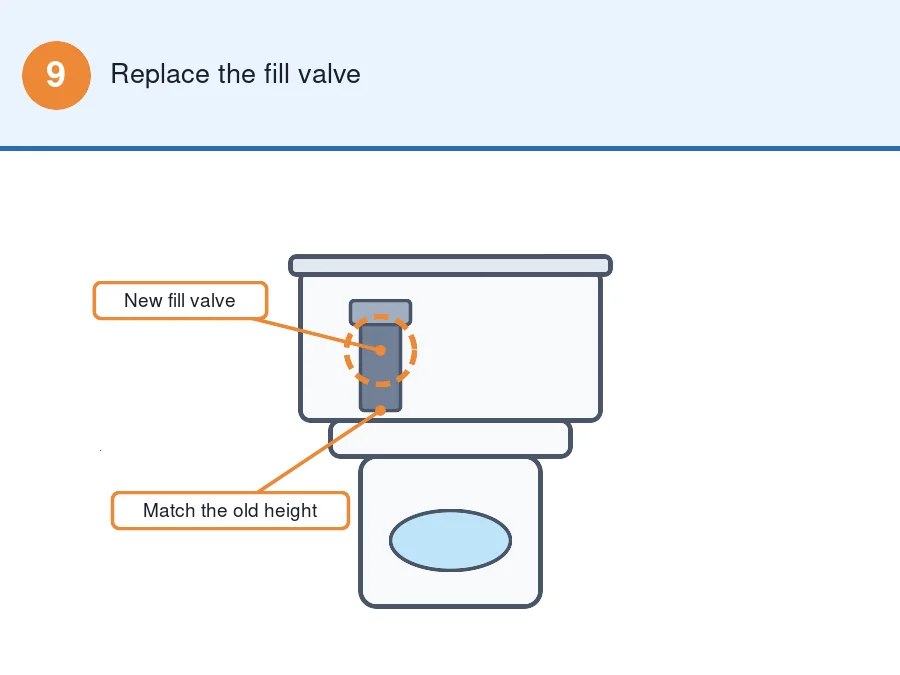
9. Replace the fill valve if cleaning does not help. A fill valve is a common and simple part to swap.
Clues that point to the cause
- Hissing and slow refill: a worn fill valve.
- Gurgling in other drains: a venting or drain problem, not a refill problem.
- Slow refill only after months in a house with hard water: mineral buildup.
- Rust-colored water in the tank: old pipes or sediment, and a plumber may help.
Rim jets are different
The openings under the rim wash the bowl. If they clog, the flush weakens but the tank refill is normal. For that, read Toilet flushes weakly: how to fix it.
A quick way to tell where the problem is
Time the refill with a clock. Flush, then count how long the fill valve runs until it shuts off. Next, open the shutoff valve fully and flush again. If the time changes a lot, the valve was partly closed. If it stays the same, the restriction is in the fill valve or the supply line. Hold a small cup under the supply line when you disconnect it at the tank end, turn the valve on for a second and see how strong the stream is. A strong stream means the supply is fine, and the fill valve is the problem. A weak stream means the shutoff valve, the line or the house supply is the problem.
Older homes and hard water
Houses with older galvanized pipes can have rust and scale inside the pipes. Small flakes reach the fill valve and clog it. Houses with hard water can build up scale on the valve parts. Rinsing the valve now and then, and replacing it when it wears, keeps the refill steady. If you see brown water at several faucets, a plumber should check the pipes.
Test and watch
After repairs, flush three times and time the refill. A normal tank refills in about one to two minutes on most toilets, though it varies. Check connections for drips with a dry paper towel. Look again the next day.
More help
Not sure this is the right repair? Our toilet problems guide lists each symptom and the guide that fixes it.
Related guides
- How to Fix a Running Toilet: 5 Easy Repairs
- How to Replace a Toilet Flapper in 15 Minutes
- Toilet Leaking at the Base: How to Find the Cause and Fix It
- How to Clean a Toilet Tank
- Toilet Tank Sweating: How to Stop Condensation
FAQ
Why does the toilet make a noise while filling slowly?
A partly blocked or worn fill valve often whistles or hisses.
Can low water pressure slow a toilet?
Yes. If every fixture is weak, the cause is the house supply or the main valve.
Do I need a plumber?
Not usually. Call one if the valve leaks, pressure is low everywhere, or you cannot find the cause.
How often should fill valves be replaced?
They last many years, but replace one when it hisses, leaks or refills poorly after cleaning.
More from this topic
- Low Water Level Toilet Bowl: How to Fix It: Toilet bowl water too low or dropping? Check the fill tube, vent, trap and tank for a low water level toilet...
- How to Replace a Toilet Fill Valve: How to replace a toilet fill valve in about 45 minutes. Step-by-step guide with tools, how to set the water...
- How to Install a Bidet Seat on Your Toilet Step by Step: Learn how to install a bidet seat on a standard toilet. Check the fit, shut off the water, add a T-adapter...
- How to Replace a Toilet Seat: A Simple Step by Step Guide: Learn how to replace a toilet seat in 15 minutes. Measure the bowl, remove old bolts, fit the new seat and...
- Toilet Keeps Running After Flush: Check the Fill Tube First: Toilet keeps running after flush? Check the fill tube, overflow tube, water level and flapper in minutes....
 BathroomLow Water Level Toilet Bowl: How to Fix ItToilet bowl water too low or dropping? Check the fill tube, vent, trap and tank for a low water level toilet bowl, and fix it step by step.
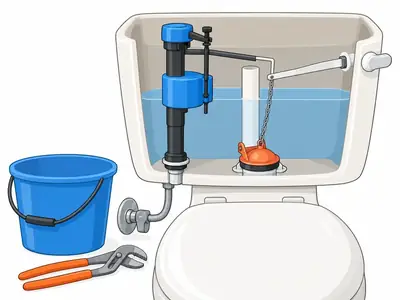 BathroomHow to Replace a Toilet Fill ValveHow to replace a toilet fill valve in about 45 minutes. Step-by-step guide with tools, how to set the water level, and when to call a plumber.
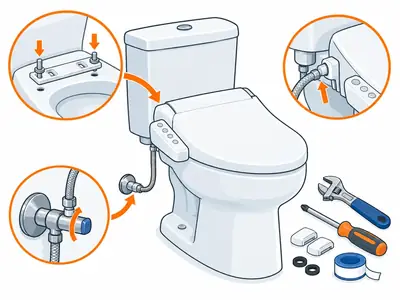 BathroomHow to Install a Bidet Seat on Your Toilet Step by StepLearn how to install a bidet seat on a standard toilet. Check the fit, shut off the water, add a T-adapter and mount the seat with simple steps and no tools.
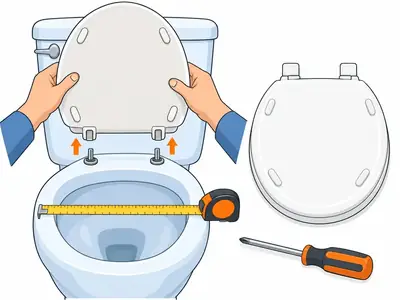 BathroomHow to Replace a Toilet Seat: A Simple Step by Step GuideLearn how to replace a toilet seat in 15 minutes. Measure the bowl, remove old bolts, fit the new seat and tighten it so it does not slide. Easy steps.
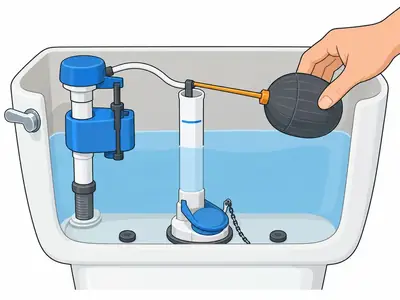 BathroomToilet Keeps Running After Flush: Check the Fill Tube FirstToilet keeps running after flush? Check the fill tube, overflow tube, water level and flapper in minutes. Simple steps, tools and when to call a plumber.