
Toilet Tank Sweating: How to Stop Condensation
Part of: Basic plumbing
- Difficulty
- Easy to medium
- Time
- 15 minutes to 1 hour
- Tools
- Dry towel, food coloring, tank insulation kit (liner), screwdriver, adjustable wrench, bucket
- Call a pro if
- the floor stays wet after you rule out condensation, the water leaks from a bolt or supply line, or you see rot or staining around the base
In this guide
- Water off first
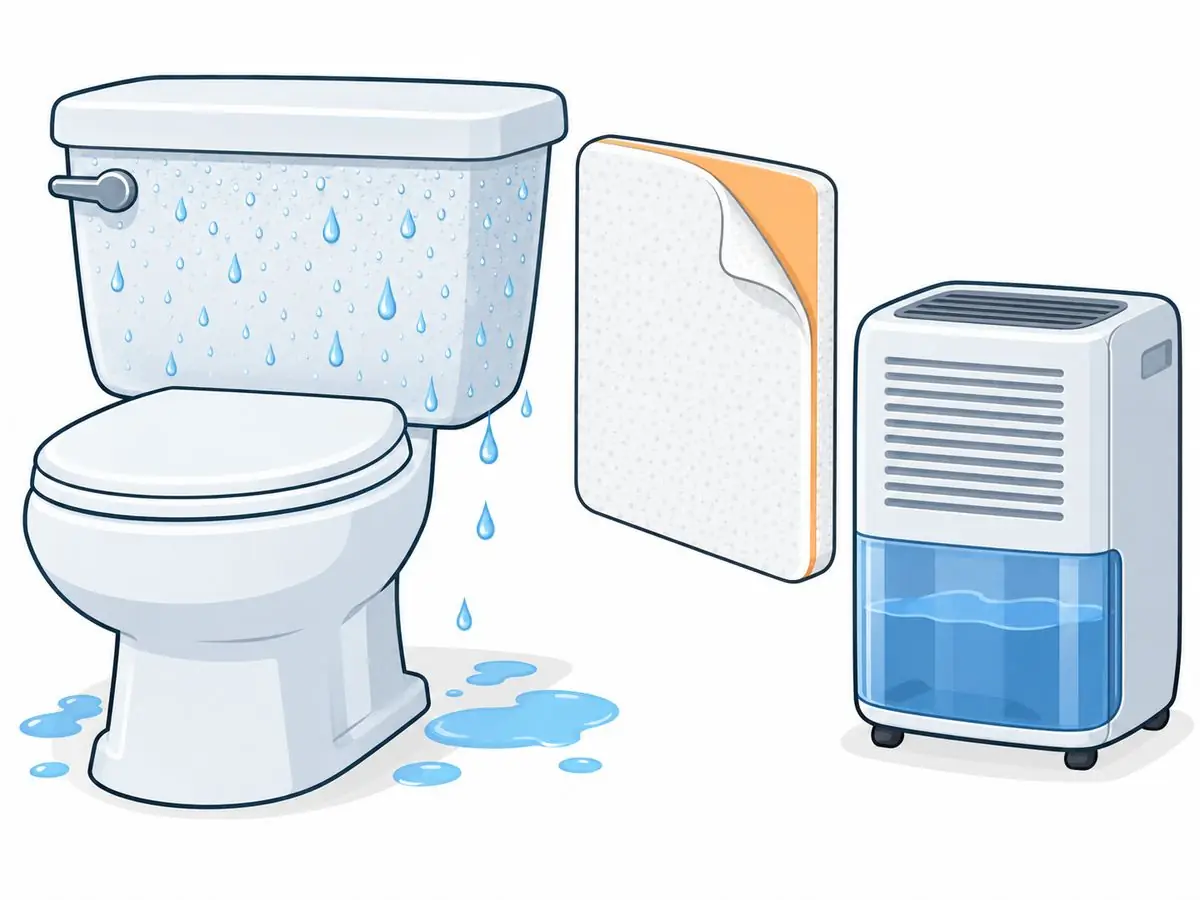
A toilet tank sweating in summer is common. Cold water inside meets warm, humid air outside, and moisture forms on the porcelain and drips to the floor. It is annoying, but you can usually reduce it with a few simple steps.
Is it condensation or a leak?
First, tell the two apart. Dry the tank with a towel. Wait an hour. If beads form over the whole outside surface, it is condensation. If water appears only at one point, such as a bolt, a supply line or the base, it is a leak.
To see whether the tank leaks into the bowl, add a few drops of food coloring to the tank water. Wait 15 minutes without flushing. If color shows in the bowl, the flapper leaks. See How to replace a toilet flapper.
Step by step: reduce sweating
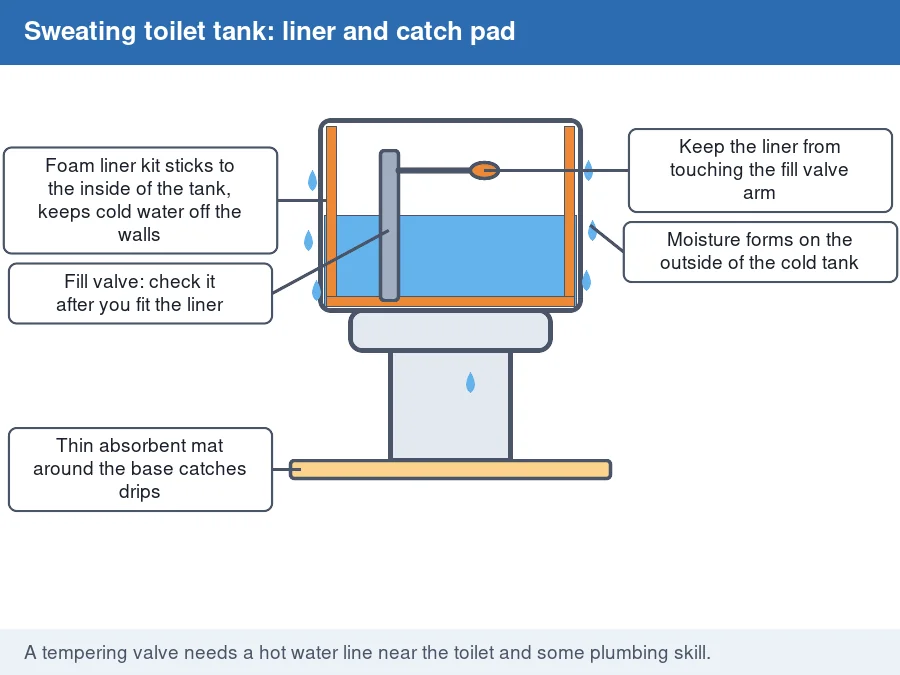
1. Lower the humidity. Run the bathroom fan during and after showers. Keep the door open or run a small dehumidifier in humid weather. Bathroom fan not working or very loud helps if your fan is weak.
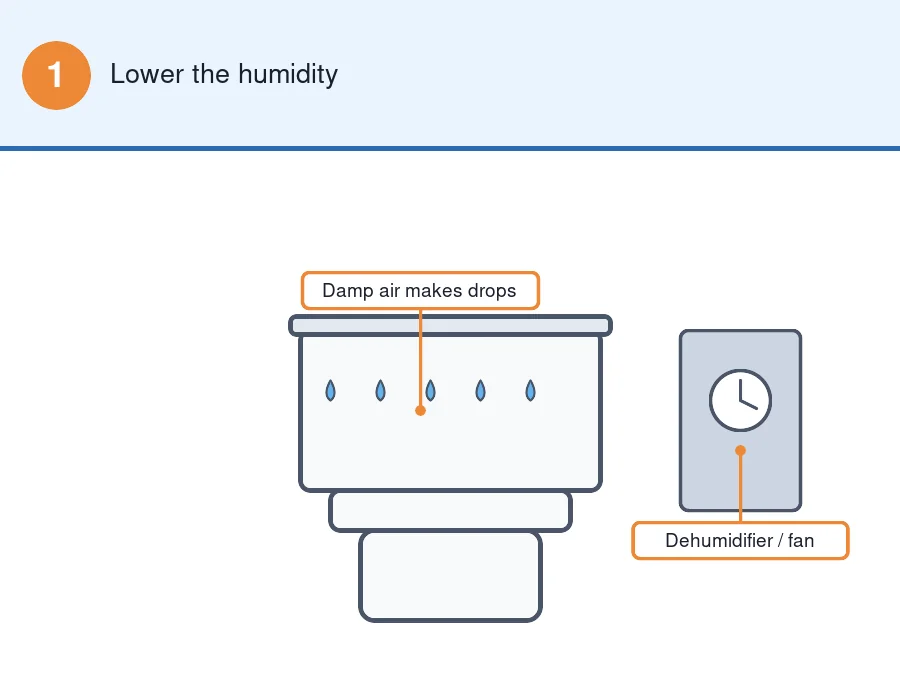
2. Wipe up and monitor. Dry the tank and floor to see how fast moisture returns.
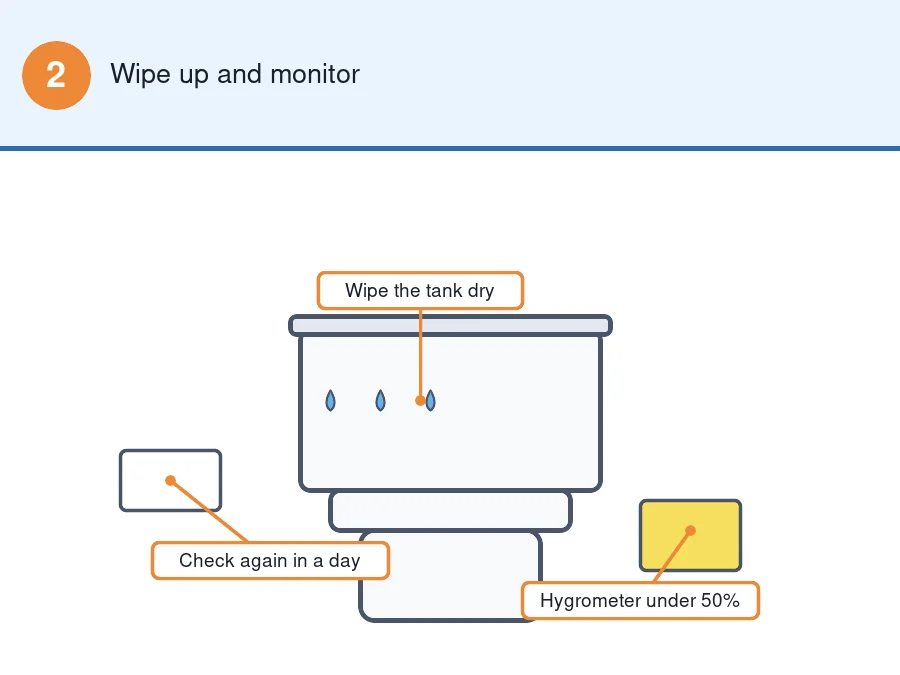
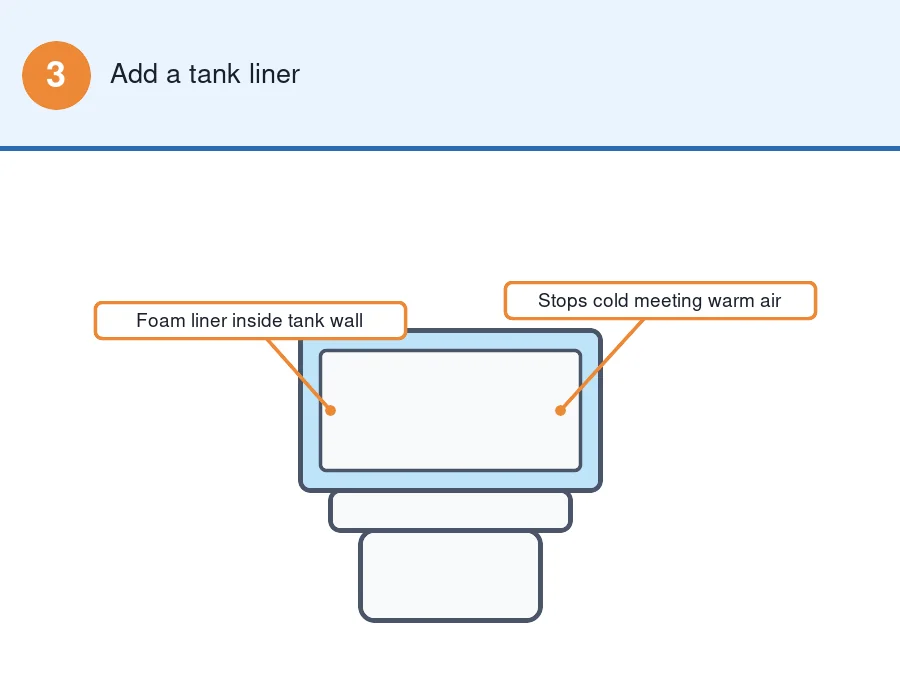
3. Add a tank liner. A foam liner kit sticks to the inside of the tank and keeps cold water away from the porcelain. Turn off the water, flush to empty the tank, dry the inside well, and press the foam panels into place. Follow the kit instructions and do not block the flapper or float.
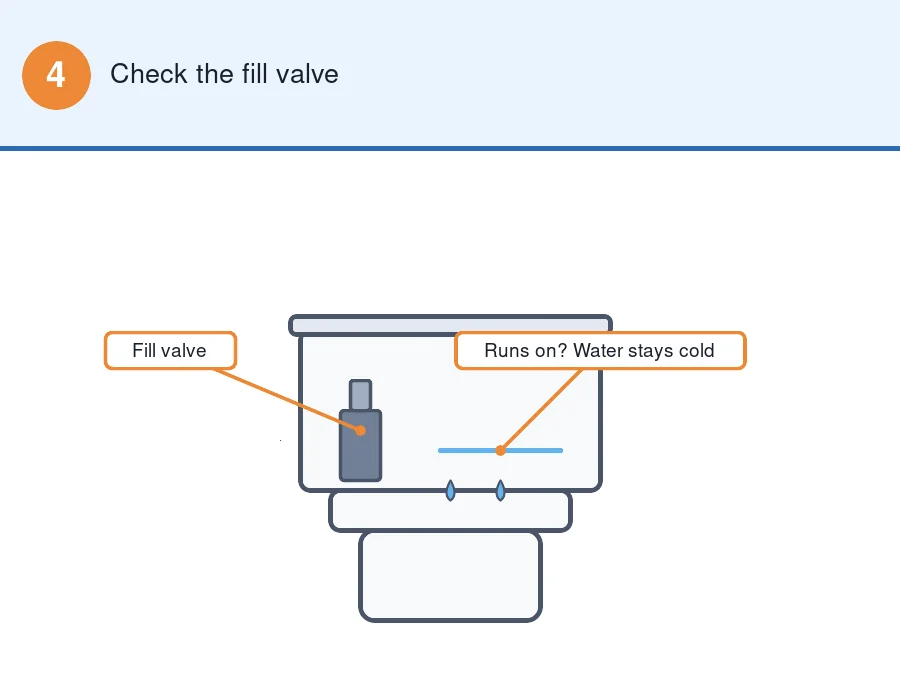
4. Check the fill valve. Make sure the new liner does not touch the fill valve arm.
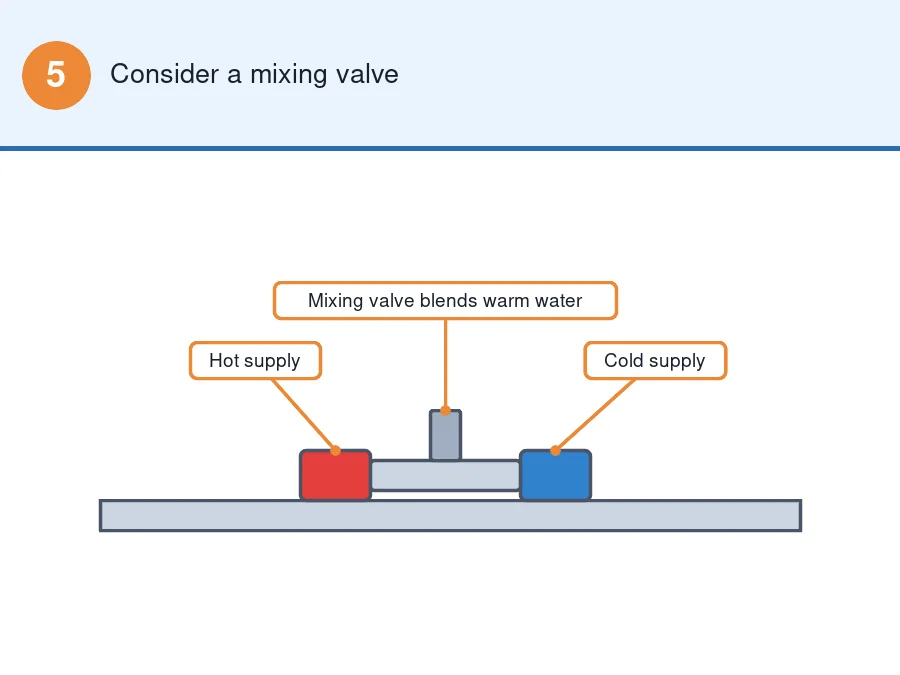
5. Consider a mixing valve. A tempering (anti-sweat) valve mixes a little hot water into the tank so the water is not so cold. This requires a hot water line near the toilet, and installation takes some plumbing skill. If you are unsure, hire a plumber.
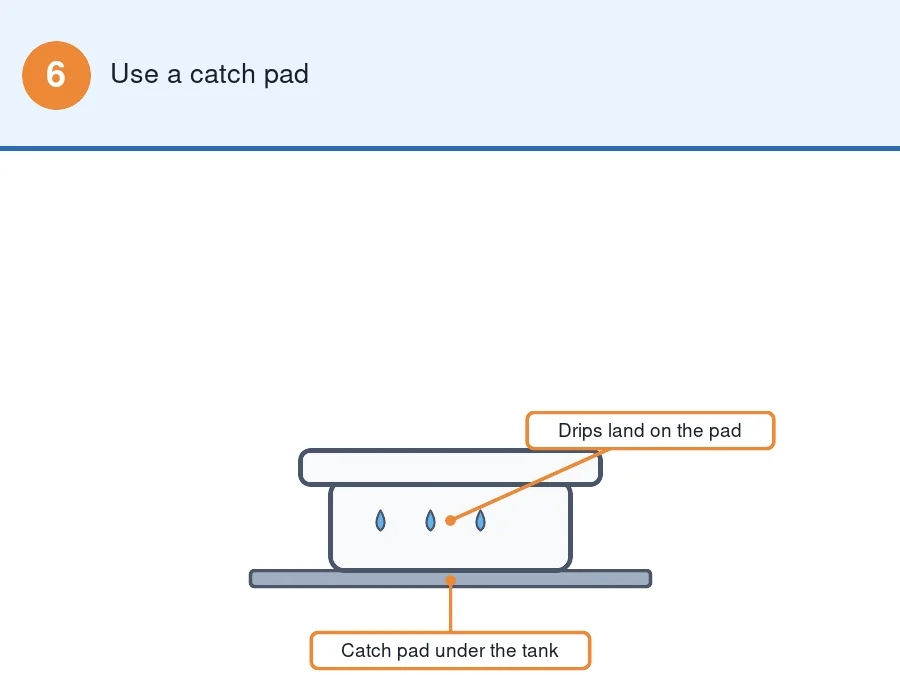
6. Use a catch pad. A thin absorbent mat around the base catches drips while you try fixes.
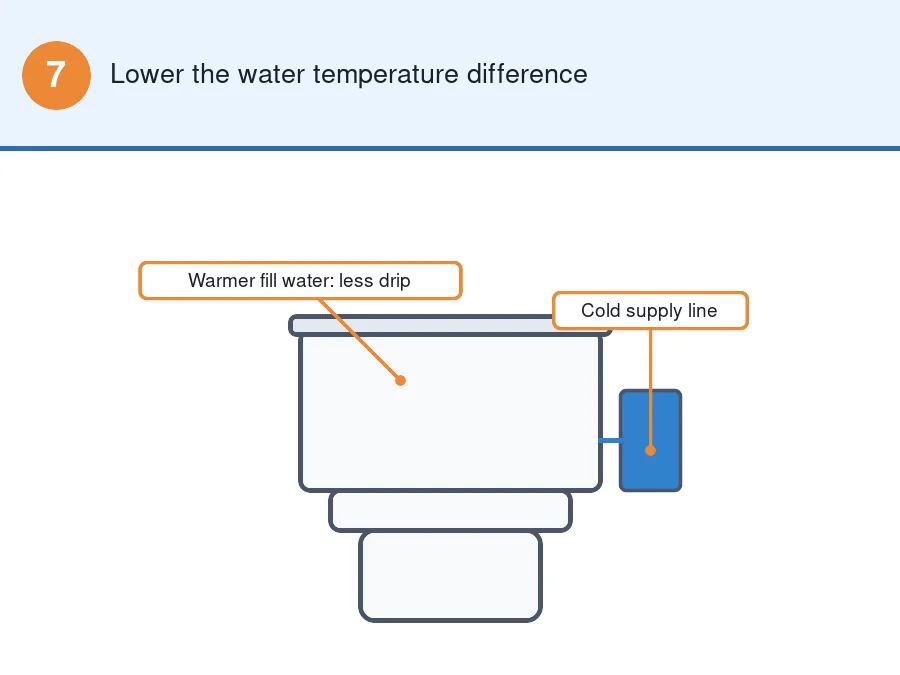
7. Lower the water temperature difference. A slightly warmer house or less cold incoming water helps. Do not turn up your water heater beyond a safe setting.
Other causes
- A running toilet keeps cold water entering the tank. See How to fix a running toilet.
- A poorly ventilated bathroom.
- An uninsulated cold supply line.
Which fix gives the best results
For most homes, the combination of a bathroom fan, a tank liner and lower humidity solves the problem. A liner works quickly but may peel in a wet tank if the surface was not dry. A mixing valve costs more and takes plumbing work, but it removes the cause. If you plan to remodel the bathroom, ask the plumber to add one at the same time. In the meantime, a plain bath mat or an absorbent floor pad under the tank catches drips and protects the floor.
Watch the floor and the base
Constant moisture on the floor can loosen the wax ring seal over time or swell the subfloor. Check the base of the toilet for movement, and look for staining or soft spots in the floor next to the toilet. If the floor feels soft, there may be a hidden leak and you should have it checked. See How to fix a loose toilet seat or wobbly toilet for base checks.
More help
Not sure this is the right repair? Our toilet problems guide lists each symptom and the guide that fixes it.
Related guides
- Toilet Tank Bolts Leak: How to Fix Them
- Replace Toilet Wax Ring and Stop Base Leaks
- Toilet Leaking at the Base: How to Find the Cause and Fix It
- Sweating Pipes: How to Stop Water Drips
FAQ
Is a sweating tank harmful?
Occasional condensation is not dangerous, but constant wetness can damage flooring.
Do tank liners work?
They often reduce sweating a lot, but results depend on humidity.
Can I paint the tank?
Paint does not stop condensation and may peel.
Why does it only happen in summer?
Warm, humid air meets the cold tank. In winter the air is drier.
More from this topic
- How to Stop Bathroom Mirror From Fogging Up: Stop bathroom mirror from fogging with shaving cream or soap buffed on the glass, better ventilation, and...
- How to Clean a Toilet Tank: Learn how to clean a toilet tank: shut the water off, drain it, scrub the walls and parts without harsh...
- How to Stop Condensation on Bathroom Walls: Learn how to stop condensation on bathroom walls: improve extraction, keep the room warm, wipe and dry...
- Replace Toilet Shutoff Valve: Compression or Push-Fit: Toilet shutoff valve leaking or stuck? Replace toilet shutoff valve parts step by step with a compression or...
- How to Measure for a New Toilet: Learn how to measure for a new toilet: the rough in, the bowl shape, the seat height and the supply line, so...
 BathroomHow to Stop Bathroom Mirror From Fogging UpStop bathroom mirror from fogging with shaving cream or soap buffed on the glass, better ventilation, and simple upgrades like a demister pad.
 BathroomHow to Clean a Toilet TankLearn how to clean a toilet tank: shut the water off, drain it, scrub the walls and parts without harsh tablets, and refill without damaging the valve.
 BathroomHow to Stop Condensation on Bathroom WallsLearn how to stop condensation on bathroom walls: improve extraction, keep the room warm, wipe and dry surfaces, and fix the cold spots that collect water.
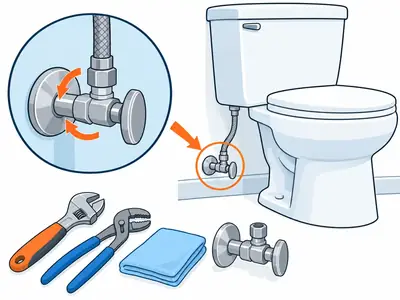 BathroomReplace Toilet Shutoff Valve: Compression or Push-FitToilet shutoff valve leaking or stuck? Replace toilet shutoff valve parts step by step with a compression or push-fit stop valve.
 BathroomHow to Measure for a New ToiletLearn how to measure for a new toilet: the rough in, the bowl shape, the seat height and the supply line, so the new one fits the first time.