
Toilet Keeps Running After Flush: Check the Fill Tube First
Part of: Basic plumbing · Also in: The Complete Guide to Home Plumbing Repair for Homeowners
- Difficulty
- Easy
- Time
- 15 to 45 minutes
- Tools
- Flashlight, food coloring, small towel, screwdriver, adjustable pliers
- Call a pro if
- the water keeps running after you replace the parts, the shutoff valve leaks, or you see cracks in the tank or bowl
In this guide
- Water off first
When a toilet keeps running after flush, the tank never seems to finish refilling, or it refills in short bursts every few minutes. The cause is often small and cheap to fix. Many people go straight to the flapper, but a loose fill tube is a quick check that takes under a minute, so start there.
What the fill tube does
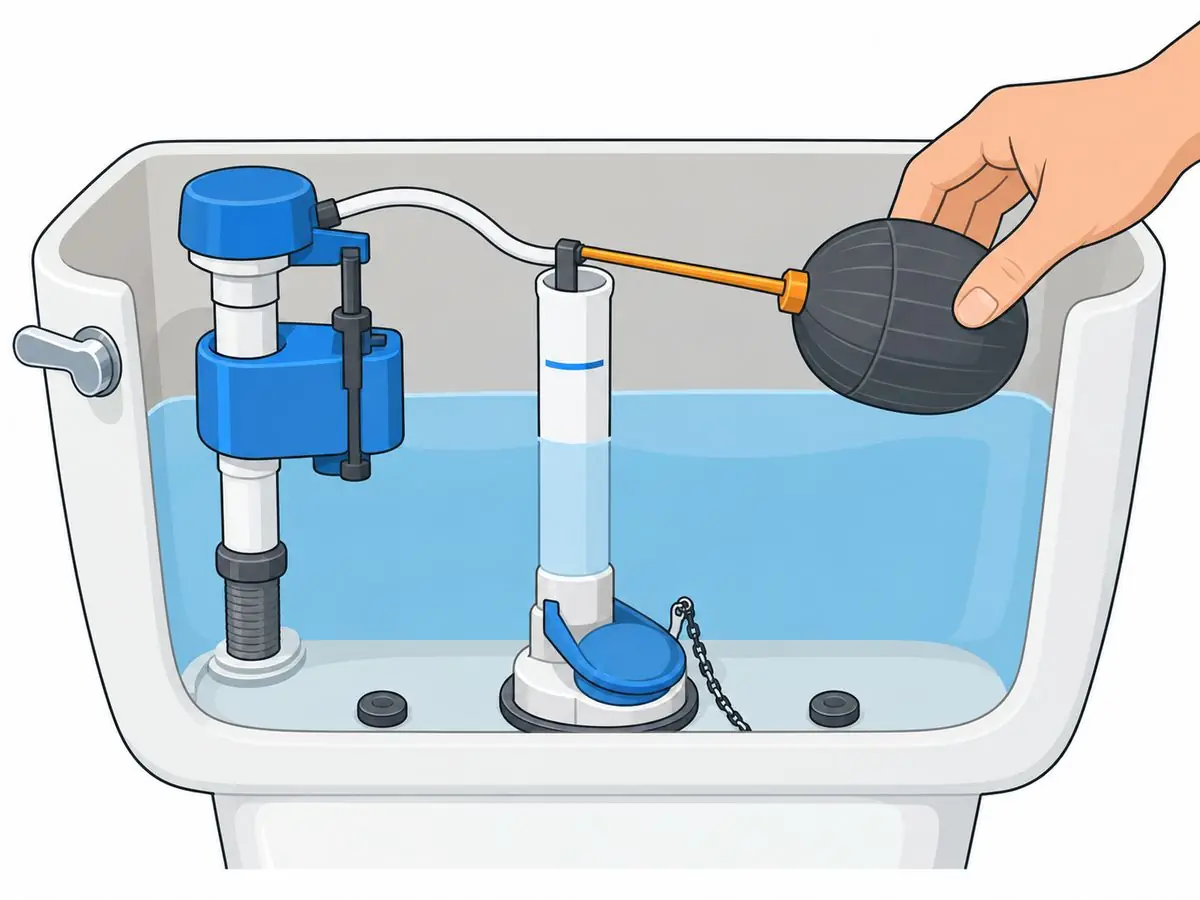
The fill tube is the thin flexible hose that comes off the fill valve. It sends a small stream of water down the tall overflow tube in the middle of the tank, which refills the bowl after a flush. A small clip holds the end of the tube on the rim of the overflow tube. If the tube slips down inside it, the water level can fall and the valve keeps trying to fill. If the tube hangs too low, it can also draw water out of the tank like a straw.
Step by step
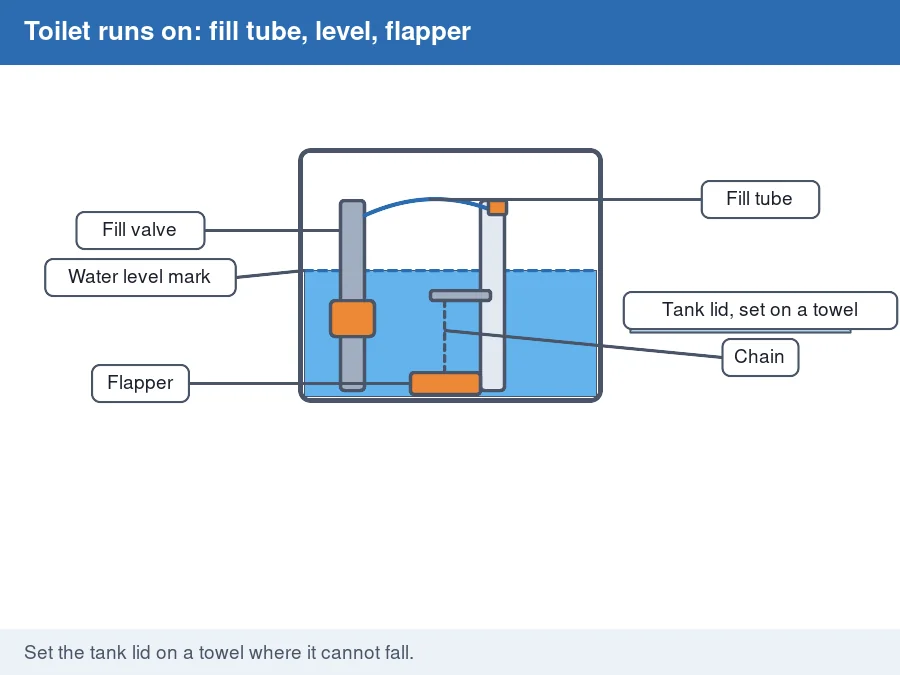
1. Lift the tank lid and set it somewhere safe, such as a towel on the floor. The lid is heavy and breaks easily.
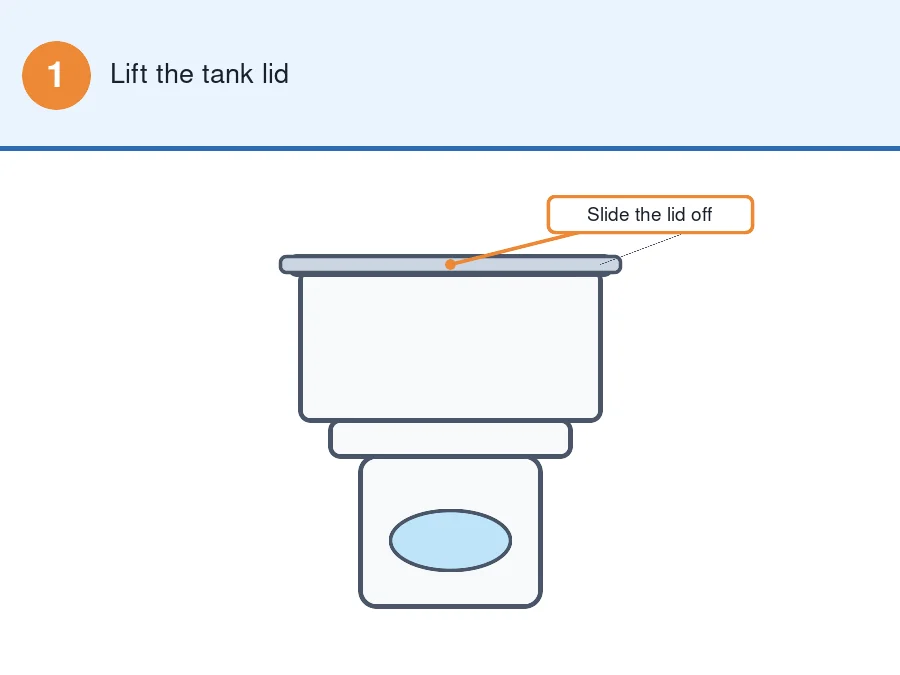
2. Look inside while the toilet runs. Find the overflow tube, the tall open pipe in the middle, and the thin fill tube.
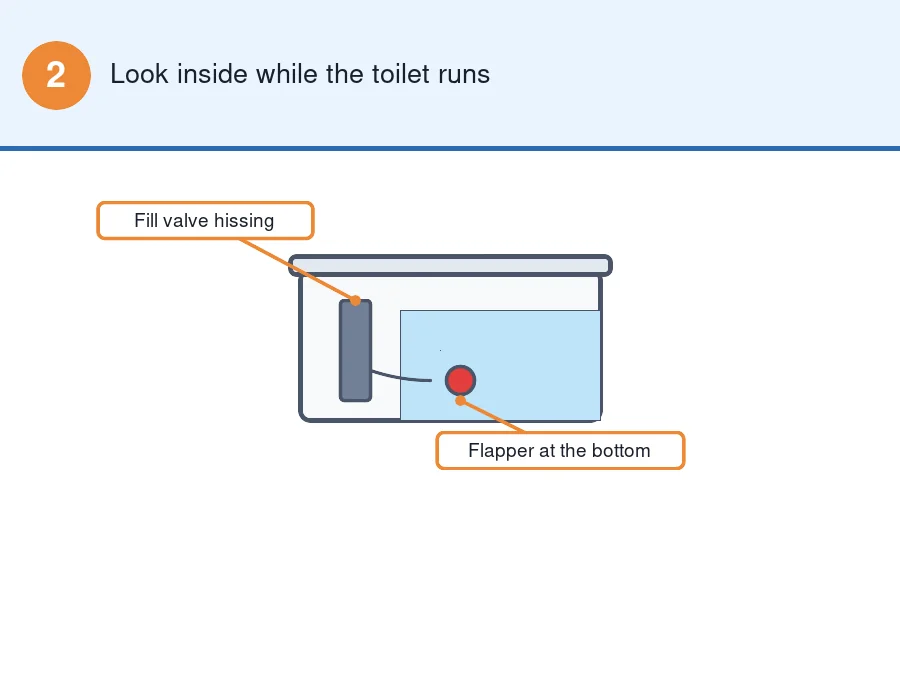
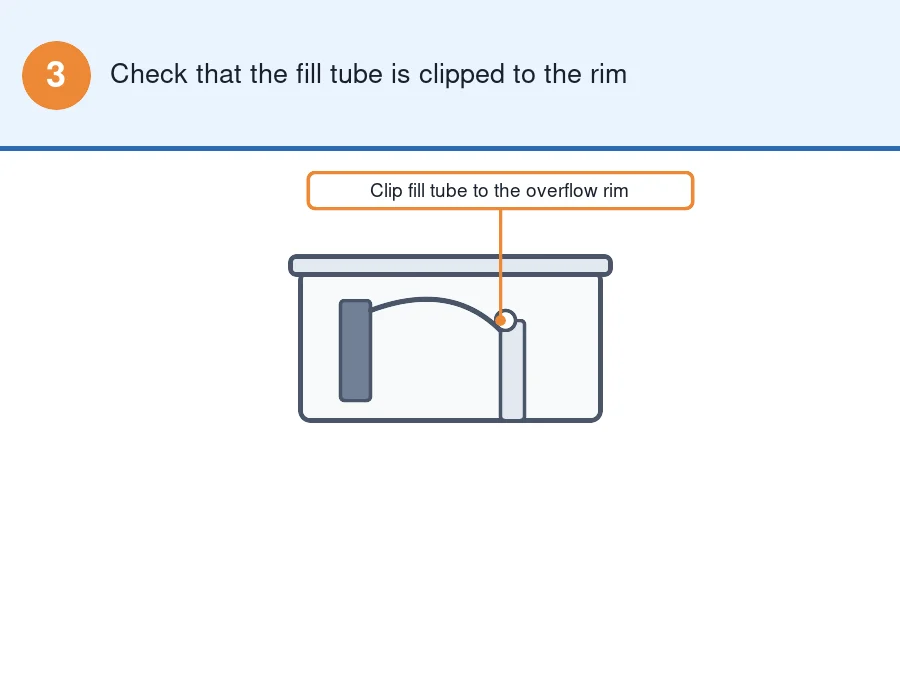
3. Check that the fill tube is clipped to the rim of the overflow tube and that its end sits above the water line, not under water. Move it to the clip if needed.
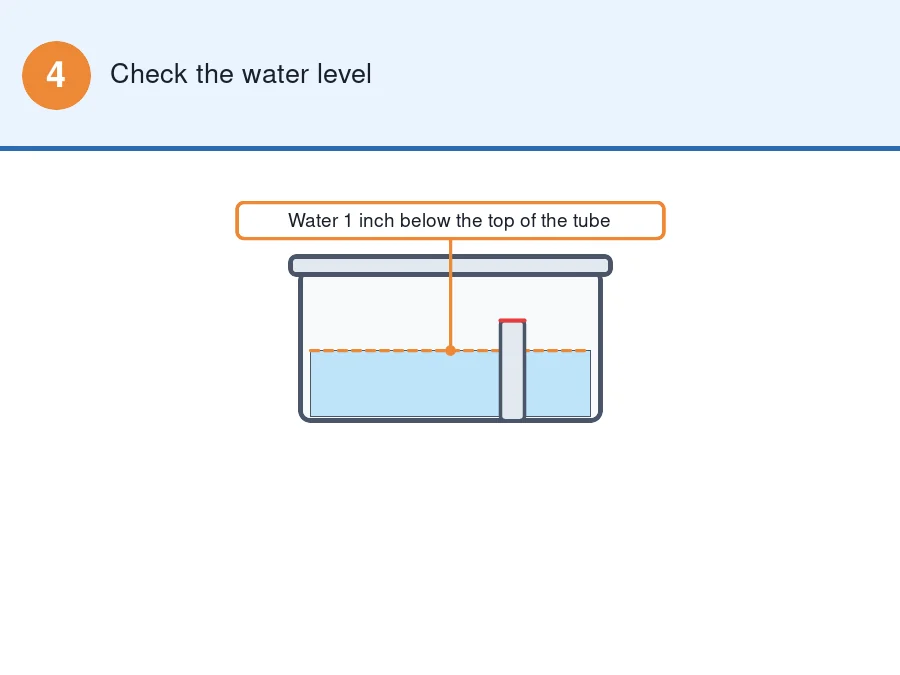
4. Check the water level. Most tanks have a mark on the back wall. If there is no mark, the water should sit about 1 inch below the top of the overflow tube. If water spills into the overflow tube, the level is too high.
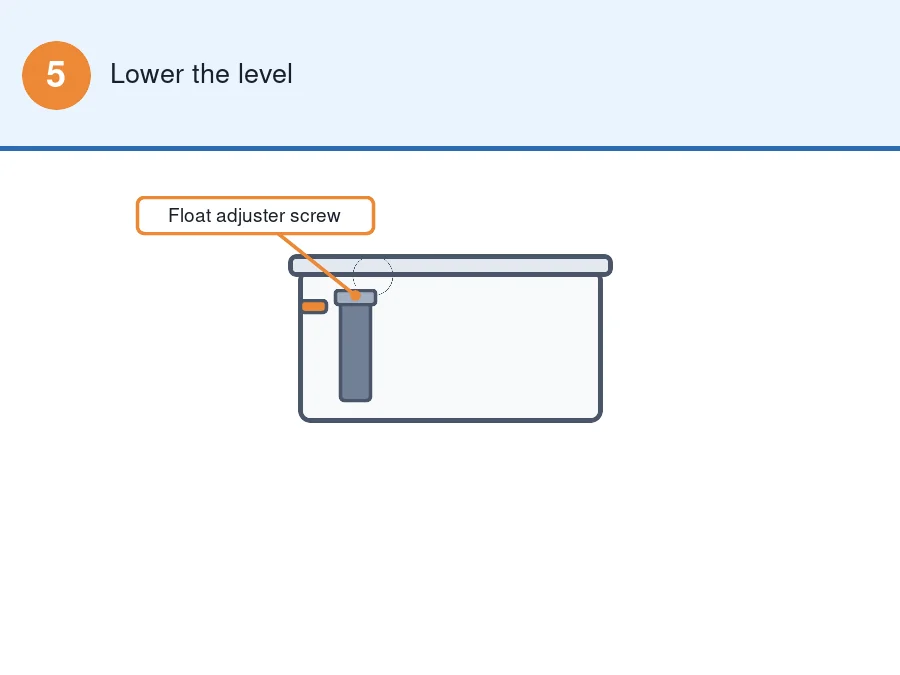
5. Lower the level. On a float cup fill valve, squeeze the clip on the rod and slide the cup down a little. On an older ball float, gently bend the arm down or turn the adjustment screw on the valve. Flush and watch.
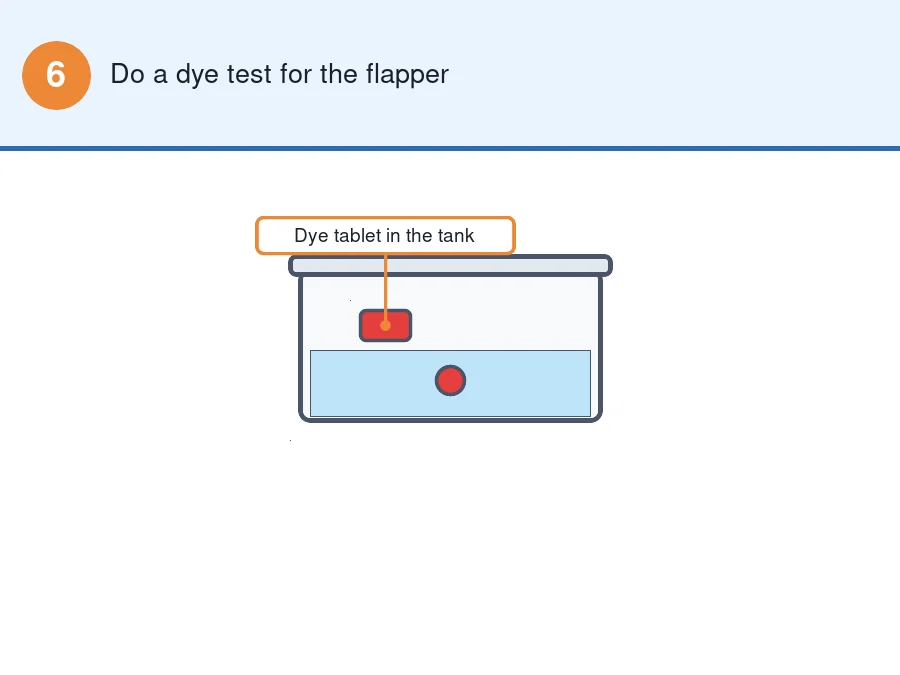
6. Do a dye test for the flapper. Add several drops of food coloring to the tank water and leave the toilet unflushed for 15 minutes. If color shows up in the bowl, the flapper is leaking. See How to replace a toilet flapper.
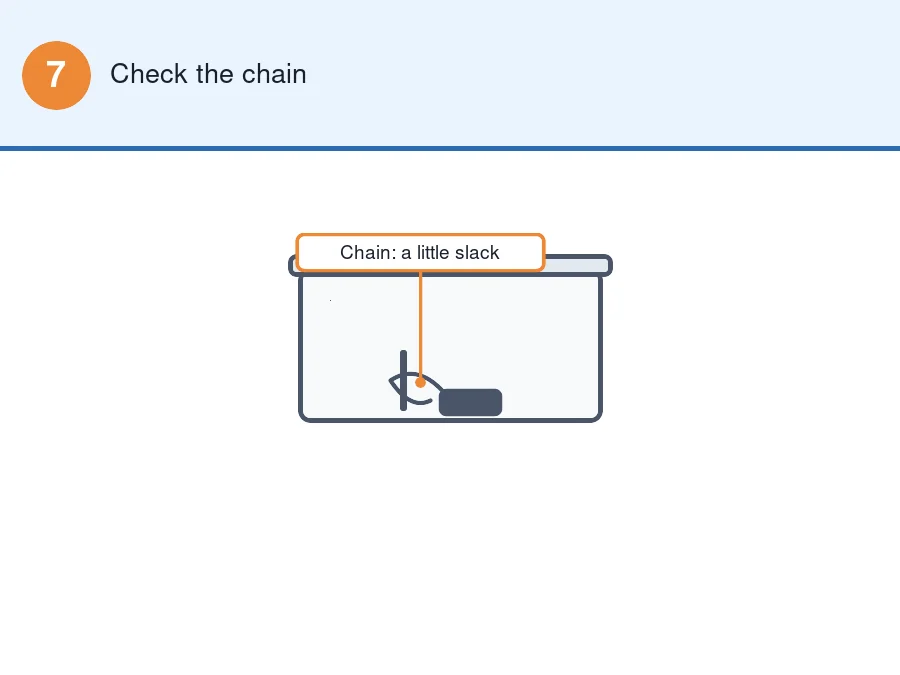
7. Check the chain. It should have a little slack, about half an inch. A chain that is too tight holds the flapper open. A chain that tangles can do the same.
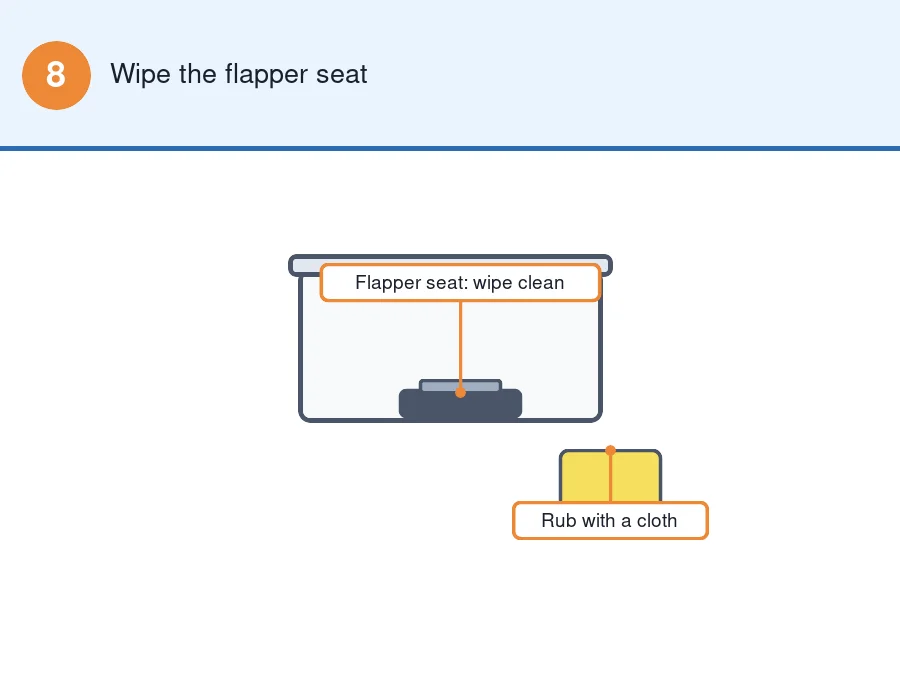
8. Wipe the flapper seat with a cloth to remove mineral buildup that keeps the seal from closing.
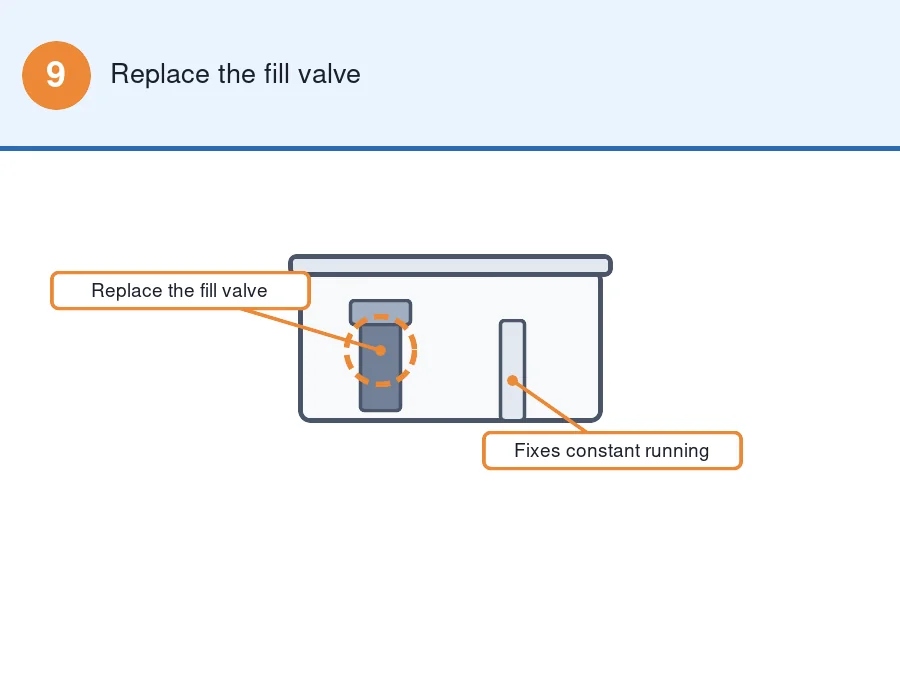
9. Replace the fill valve if the water level looks right, the flapper seals, and the tank still refills or hisses. Fill valves wear out after years of use.
Other signs and what they mean
- Hissing with no running water in the bowl usually points to a fill valve that does not shut off fully. Try the water level adjustment first, then replace the valve.
- Phantom flush every few minutes usually points to a slow flapper leak.
- Water running over the overflow tube means the level is set too high or the float is stuck.
For a broader walkthrough, read How to fix a running toilet.
Safety and good habits
Turn the water off at the small valve on the wall or floor behind the toilet when you work on the parts. Turn the handle clockwise until it stops. If the valve will not turn, do not force it. See How to shut off the water main for the whole house. Do not reach into the tank with a tool that can crack porcelain, and avoid harsh cleaners in the tank, which can damage the rubber parts.
When to replace instead of adjust
If the tank parts look worn, cracked or sticky, replacing the fill valve and flapper together is a reasonable choice. Kits are made for most common tanks. Match the kit to your tank by checking the brand label inside the tank or taking the old part to the store. Write down the model before you shop.
Related guides
- Low Water Level Toilet Bowl: How to Fix It
- Replace Toilet Flush Handle in 15 Minutes
- Toilet Leaking at the Base: How to Find the Cause and Fix It
- Replace Toilet Wax Ring and Stop Base Leaks
- How to Replace a Toilet Fill Valve
- Toilet Fills Slowly: Causes and Simple Fixes
More help
Not sure this is the right repair? Our toilet problems guide lists each symptom and the guide that fixes it.
FAQ
Why does my toilet run for a few seconds, then stop, then run again?
A small leak from the tank into the bowl drops the water level, and the fill valve tops it up. The flapper is the most common cause.
How much water can a running toilet waste?
It can waste a lot over a day, so fix it soon. Your water meter may show it moving when nothing else is on.
Is a running toilet an emergency?
No, unless water is spilling onto the floor. Shut off the valve behind the toilet and repair it when you can.
Can I fix it without tools?
Often yes. Moving the fill tube, adjusting the chain and wiping the flapper seat need only your hands.
More from this topic
- Low Water Level Toilet Bowl: How to Fix It: Toilet bowl water too low or dropping? Check the fill tube, vent, trap and tank for a low water level toilet...
- How to Adjust a Toilet Float: Set the Water Level Right: How to adjust a toilet float to fix running, weak flushes and overfilling: the screw and clip adjustments for...
- How to Fix a Toilet That Flushes Twice: How to fix a toilet that flushes twice: adjust the water level, fix the flapper timing and stop the phantom...
- How to Fix a Toilet That Overflows: How to fix a toilet that overflows: stop the water in seconds, clear the blockage and keep the flood from...
- Toilet Won't Flush Properly: What to Check: When a toilet won't flush properly, the cause is the handle, the flapper, the rim jets, the water level or a...
 BathroomLow Water Level Toilet Bowl: How to Fix ItToilet bowl water too low or dropping? Check the fill tube, vent, trap and tank for a low water level toilet bowl, and fix it step by step.
 PlumbingHow to Adjust a Toilet Float: Set the Water Level RightHow to adjust a toilet float to fix running, weak flushes and overfilling: the screw and clip adjustments for float-cup and ball floats.
 ToiletsHow to Fix a Toilet That Flushes TwiceHow to fix a toilet that flushes twice: adjust the water level, fix the flapper timing and stop the phantom second flush.
 PlumbingHow to Fix a Toilet That OverflowsHow to fix a toilet that overflows: stop the water in seconds, clear the blockage and keep the flood from coming back.
 PlumbingToilet Won't Flush Properly: What to CheckWhen a toilet won't flush properly, the cause is the handle, the flapper, the rim jets, the water level or a partial clog. Check them in this order.