
Flickering Light: Safe Fixes and When to Call an Electrician
Part of: Electrical safety
- Difficulty
- Easy
- Time
- 10 to 30 minutes
- Tools
- Replacement bulb, step ladder, voltage tester, screwdriver
- Call a pro if
- Lights flicker in many rooms, you smell burning, switches or outlets feel warm, you hear buzzing or you see scorch marks.
In this guide
- Step 1: Check if it is one light or many
- Step 2: Tighten the bulb
- Step 3: Replace the bulb
- Step 4: Check the dimmer
- Step 5: Check the fixture
- Step 6: Look at the switch
- Step 7: Know the warning signs
- Mistakes to avoid
- Keeping it from coming back
- Quick recap
- A simple log that helps
- Related guides
- FAQ
- When to call a pro
- Power off first
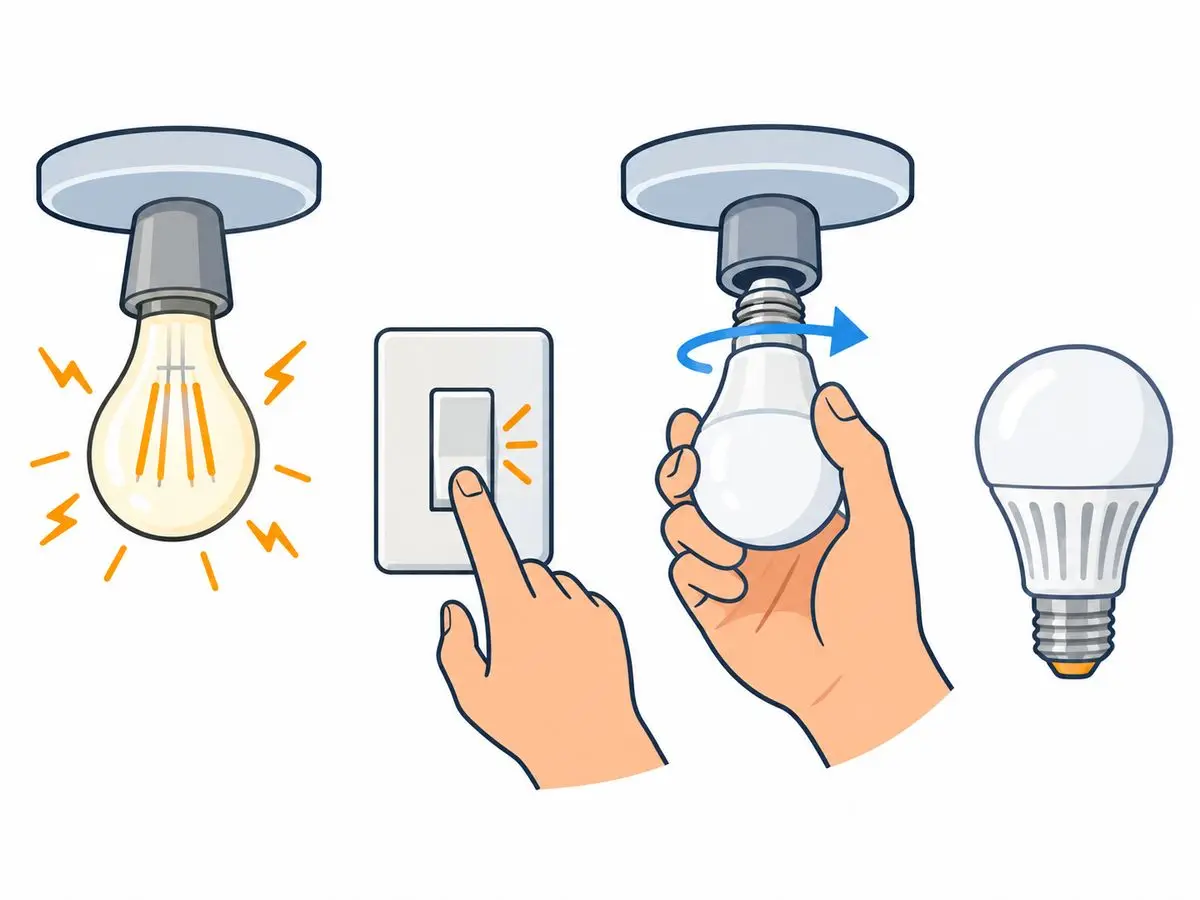
A flickering light is often caused by a loose bulb or an incompatible dimmer, and those are easy to fix. But flickering can also be a sign of a wiring problem, so know when to stop.
This guide is part of our wider guide to lights, ceiling fans and fixtures.
Step 1: Check if it is one light or many
If one fixture flickers, the cause is local. If many lights flicker or dim when a large appliance starts, there may be a wiring or service issue.
Step 2: Tighten the bulb
With the power off and the bulb cool, tighten it gently. A loose bulb makes a poor contact.
Step 3: Replace the bulb
Try a new bulb of the same type and wattage. Cheap or old bulbs can flicker.
Step 4: Check the dimmer
LED bulbs need dimmers made for LEDs. Look at the bulb package for "dimmable" and replace the dimmer with an LED-rated one if needed.
Step 5: Check the fixture
Make sure the socket tab is not bent flat. With the power off at the breaker, use a small tool to lift the tab slightly if it is flattened.
Step 6: Look at the switch
A switch that crackles or feels warm may be worn. Replace it with the power off, or ask an electrician.
Step 7: Know the warning signs
Flickering with a burning smell, buzzing, hot outlets or tripped breakers is a safety issue. Turn off that circuit and call an electrician. The breaker box and wiring should be checked by a licensed pro.
Mistakes to avoid
Do not use a bulb with a higher wattage than the fixture label allows. It can overheat the socket and the wiring. Do not work on a fixture with the switch off only. A switch is not a safe shutoff, so use the breaker and test that the power is dead. Do not ignore flicker that comes with a hot switch plate or a buzzing sound.
Keeping it from coming back
Buy bulbs from known brands and match them to the fixture. Use dimmers rated for the bulb type. Once a year, check that bulbs are snug in their sockets. If a room has the same trouble again and again, write down when it flickers, such as when the dryer starts, and give that note to an electrician. It saves time on the visit.
Quick recap
Go in this order: see whether one light or many flicker, then tighten and swap the bulb, then look at the dimmer, the fixture and the switch. Stop as soon as the flicker is gone. If several lights flicker, or you see warning signs such as heat, a burning smell or a buzzing switch, leave the wiring to an electrician and tell them what you already checked.
A simple log that helps
If the flicker comes and goes, keep a short note for a few days. Write the time, which light flickered, and what else was running, such as the dryer, microwave or the air conditioner. A pattern points to a cause. If the light flickers only when a big appliance starts, that circuit may be shared with the appliance or a connection may be loose. If it flickers at random times, a bulb, a socket or a loose neutral wire is more likely. Either way, the note makes an electrician's visit faster and cheaper because they know what to test first.
Related guides
- How to Change a Recessed Light Bulb in the Ceiling
- Outdoor Light Fixture Filling With Water: Causes and How to Fix It
- Replace Photocell Sensor on an Outdoor Light
- Ceiling Fan Light Not Working: What to Check and How to Fix It
- How to Remove a Stuck or Broken Light Bulb Safely
FAQ
Why do my LED lights flicker?
Often an incompatible dimmer or a loose bulb.
Is flickering dangerous?
Sometimes. If it comes with heat, smell or sound, treat it as urgent.
Why do lights dim when the fridge starts?
A short dip can be normal. A big one may mean a loose connection.
More from this topic
- Light Switch Hot or Buzzing: What It Means: Light switch hot or buzzing? Learn common causes like dimmer load or loose wires, which steps are safe, and...
- How to Install a Dimmer Switch: How to install a dimmer switch: check bulb compatibility, turn off power, wire it and test. Steps, tools and...
- DIY Electrical Work: What Is Safe for a Homeowner: DIY electrical work, sorted: what a careful homeowner can do safely, what needs a licensed electrician, and...
- Transfer Switch for a Generator: Safety and Setup: A transfer switch keeps generator power off the utility lines. Here is how it works, why backfeeding kills,...
- How to Change a Recessed Light Bulb in the Ceiling: Learn how to change a recessed light bulb safely. Identify the bulb type, remove the trim, swap the bulb or...
 Electrical BasicsLight Switch Hot or Buzzing: What It MeansLight switch hot or buzzing? Learn common causes like dimmer load or loose wires, which steps are safe, and when to call an electrician.
 Electrical BasicsHow to Install a Dimmer SwitchHow to install a dimmer switch: check bulb compatibility, turn off power, wire it and test. Steps, tools and when to hire an electrician.Electrical BasicsDIY Electrical Work: What Is Safe for a HomeownerDIY electrical work, sorted: what a careful homeowner can do safely, what needs a licensed electrician, and the breaker-off test-everything routine.
 Electrical BasicsTransfer Switch for a Generator: Safety and SetupA transfer switch keeps generator power off the utility lines. Here is how it works, why backfeeding kills, and what a licensed install involves.
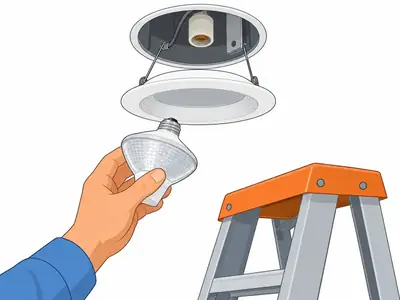 Electrical BasicsHow to Change a Recessed Light Bulb in the CeilingLearn how to change a recessed light bulb safely. Identify the bulb type, remove the trim, swap the bulb or LED module and avoid common mistakes.