
How to Hang a Shelf: Brackets, Anchors and Level Lines
Part of: Floors, walls and doors
- Difficulty
- Easy
- Time
- 30 to 45 minutes
- Tools
- A drill, a level, a stud finder, a tape measure, brackets or anchors rated for the load
- Call a pro if
- The shelf will hold serious weight, like books on a long span or anything over a bed, since load math and solid mounting matter more there.
In this guide
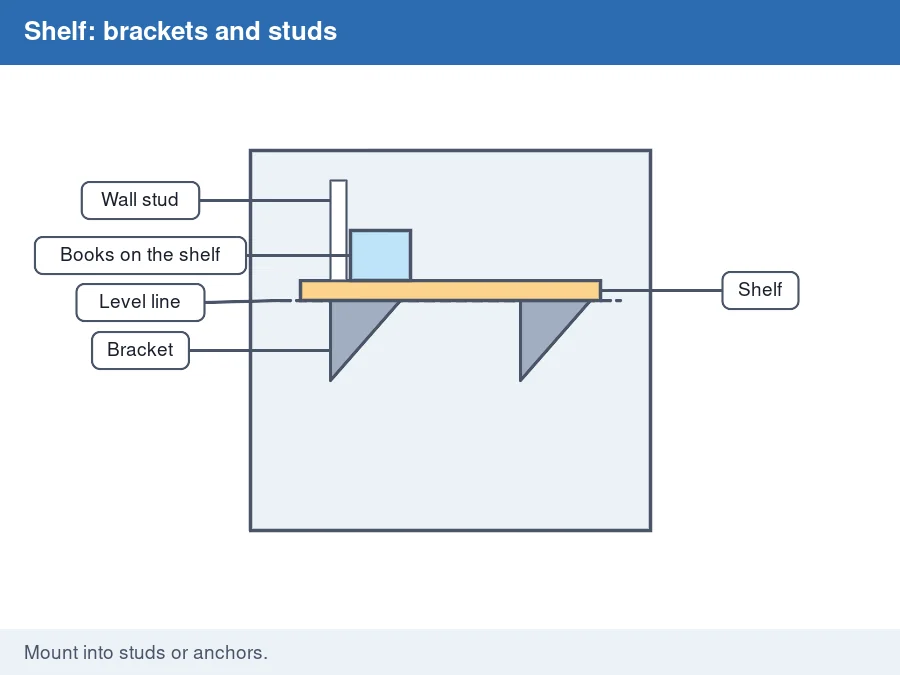
A shelf that sags, tilts or rips out was lost at the planning stage, not the drilling stage. How to hang a shelf that stays up comes down to three choices: the right brackets, the right wall hardware, and one honest level line. Here is the whole job from measuring to loading.
1. Plan the load before the layout
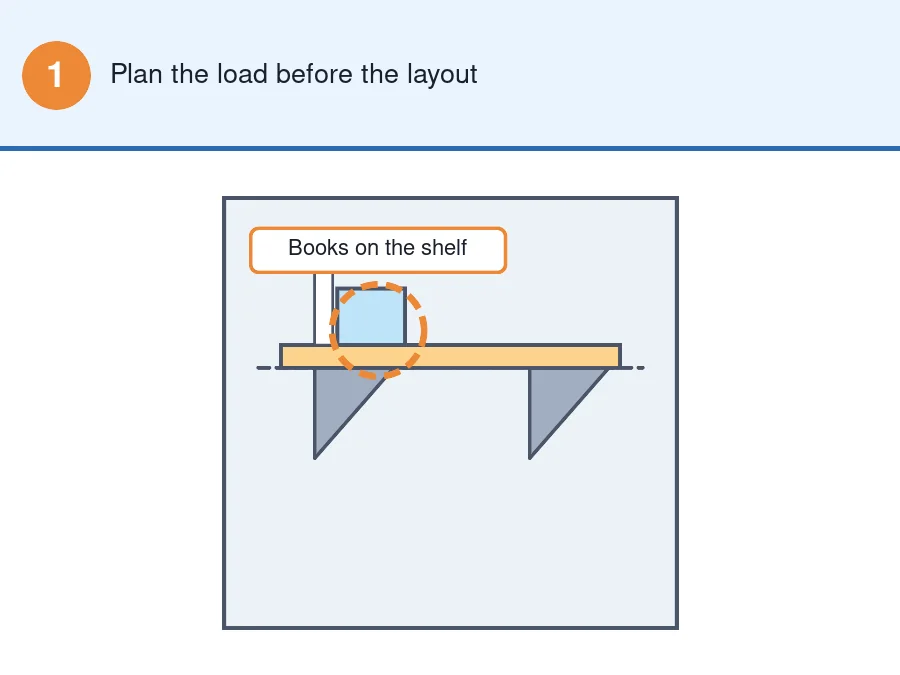
Weight decides everything that follows.
1. Estimate what the shelf will hold: books are the heaviest common load, roughly twenty pounds per foot.
2. Choose shelf material accordingly; long spans of thin board sag under books.
3. Decide bracket spacing: every sixteen to twenty-four inches for real loads.
4. Write the total weight estimate down; it chooses your hardware in step three.
2. Mark the level line
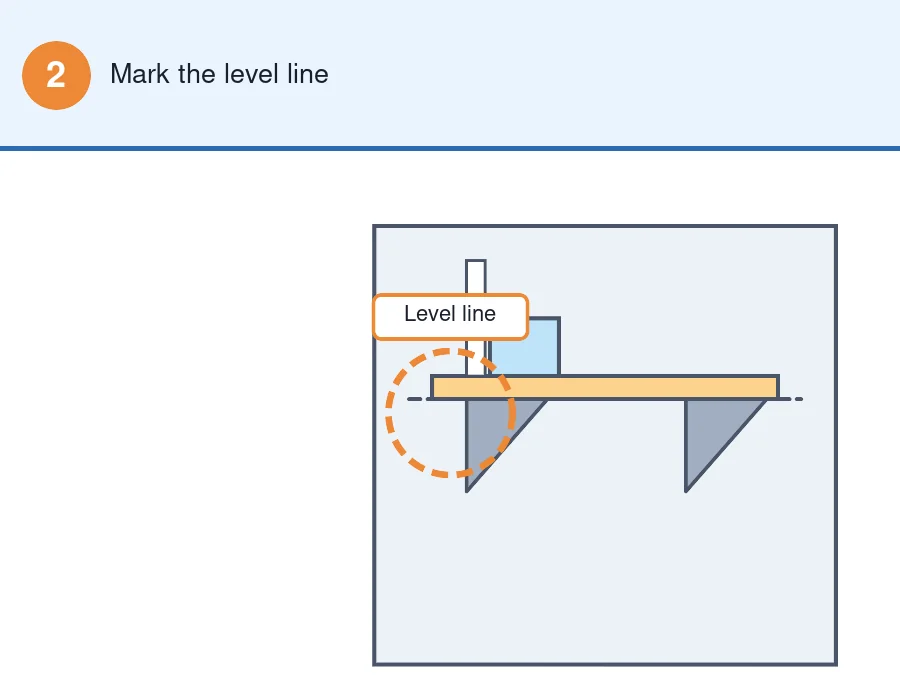
The line that everything hangs from.
1. Measure and mark the shelf height at both ends of the run.
2. Level between the marks with a two-foot level or a laser line.
3. Draw the line in pencil along the wall; painter's tape works for the visually minded.
4. Check clearance above for whatever will live on the shelf before drilling.
3. Choose studs or anchors
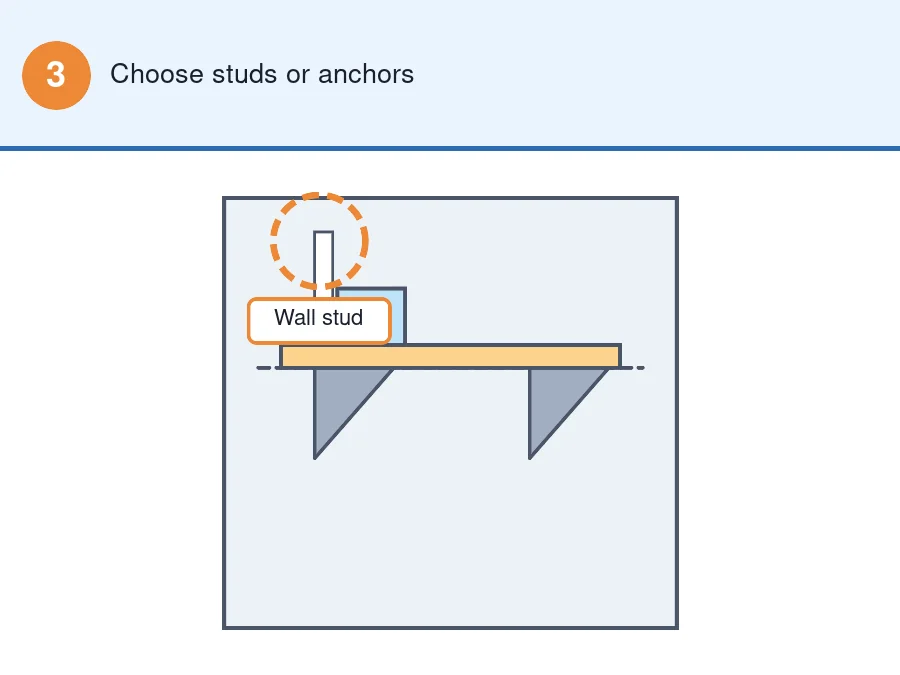
The decision that keeps shelves up.
1. Find the studs and try to place at least two brackets on them; how to find a stud in a wall covers the methods.
2. Brackets between studs need anchors matched to the load; how to anchor into drywall details each type.
3. Toggle bolts for heavy loads in drywall, self-drilling anchors for light decor shelves.
4. A shelf that cannot hit any studs and will hold books belongs on a cleat or a different wall.
4. Mount the brackets
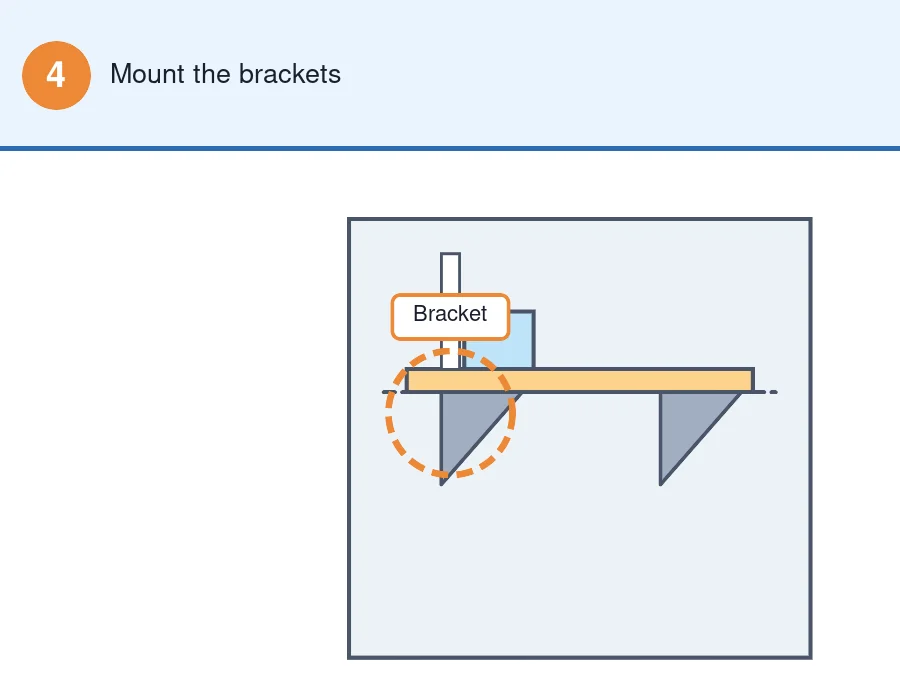
Precision here pays forever.
1. Hold each bracket to the level line and mark its holes.
2. Drill pilot holes; into studs, smaller than the screw shank.
3. Drive bracket screws snug and check each bracket against the line before loading the next.
4. Step back and sight along the brackets; your eye catches tilt the level missed.
5. Seat and secure the shelf
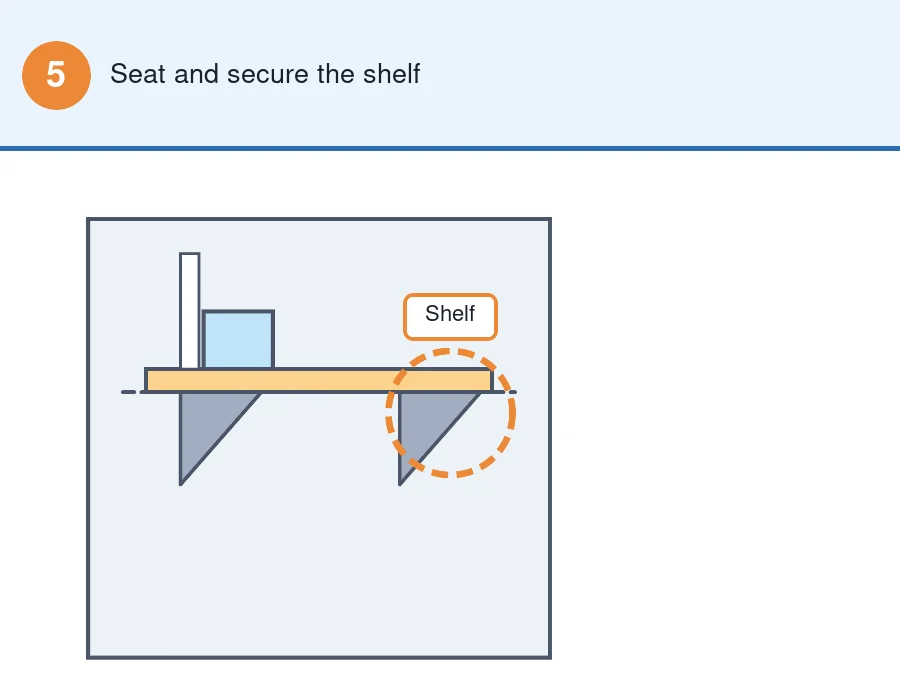
Two minutes of care.
1. Rest the shelf on the brackets and check level along its length.
2. Screw the shelf to the brackets from below; gravity alone lets shelves creep.
3. Pre-drill the shelf holes to avoid splitting, especially on thin boards.
4. Floating shelves slide onto hidden rods; tighten every set screw before loading.
6. Load it gradually
The test that proves the work.
1. Load the shelf in stages, pressing down gently as you go.
2. Watch for bracket flex or wall movement; either one means rethink the hardware now.
3. Keep the heaviest items over the brackets, not between them.
4. A properly mounted shelf should feel boring-solid under a firm hand.
7. Fix the common failures
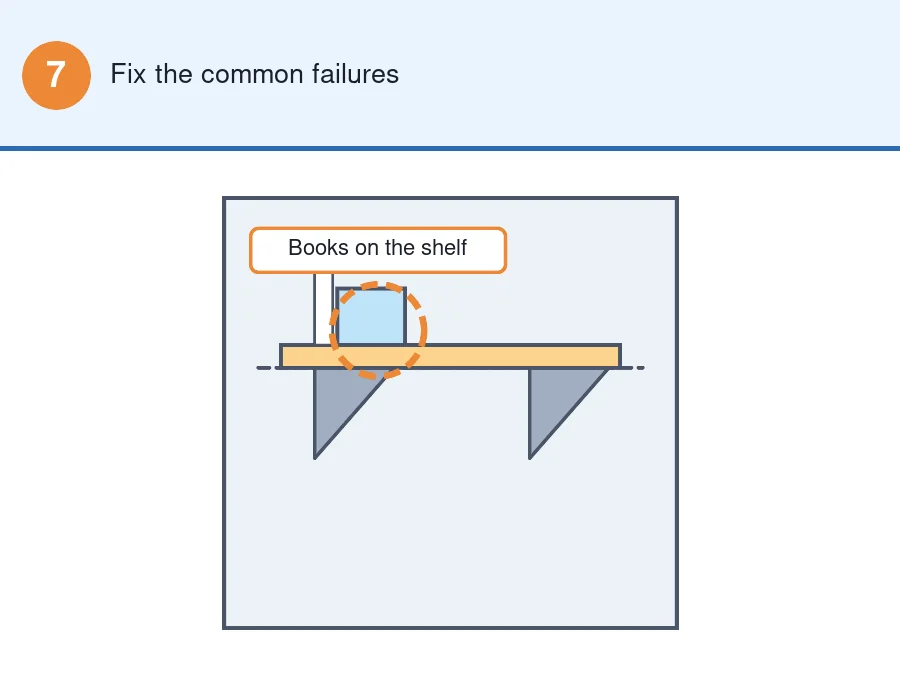
Shelves forgive second attempts.
1. A sagging middle means too few brackets; add one at the sag point.
2. A pulled anchor means the load beat the fixing; how to patch a small hole in drywall erases the hole, and a stud or toggle does the remount.
3. A shelf level at install but tilted a week later means creeping screws; re-seat and secure from below.
4. Renters: adhesive and tension options cover light display shelves; renter friendly ways to hang things without damage lists them.
Common mistakes
- Anchoring a book shelf into plain drywall with light plastic anchors.
- Spacing brackets by look instead of by stud and span.
- Skipping the level line and trusting the ceiling, which is never straight.
- Loading the shelf to full weight the minute it is up.
- Screwing into the wall where the stud was not.
Related guides
- How to Install Curtain Rods: Measure, Mount and Level
- How to Hang a Heavy Mirror on Drywall Without It Falling
- How to Use Shims to Level a Shelf
- How to Install a Chair Rail at the Right Height
- How to Install Blinds Brackets
FAQ
How do you hang a shelf on drywall?
Mark a level line, put brackets on studs where possible, and use toggle bolts matched to the load for brackets between studs. Screw the shelf to the brackets from below so it cannot creep.
How much weight can a shelf hold on drywall?
It depends entirely on the hardware: light anchors hold decor, quality toggles hold moderate loads per bracket, and stud-mounted brackets hold serious weight. Books on drywall anchors are the classic failure.
How many brackets does a shelf need?
One every sixteen to twenty-four inches for loaded shelves, matching stud spacing where possible. A light decor shelf can run wider spacing, but any sag you see needs a bracket added.
Can you hang a shelf without drilling?
For light display shelves, adhesive strips and tension systems work. Anything holding real weight, especially books or anything over furniture, needs drilled hardware into studs or proper anchors.
More from this topic
- How to Hang a Floating Shelf: How to hang a floating shelf: find the studs or use the right anchors, set the rod brackets level, and get a...
- How to Install a Towel Ring on Drywall: Learn how to install a towel ring on drywall, from height and level to the anchors that keep it tight under...
- How to Install a Shelf on a Brick Wall: How to install a shelf on a brick wall: drill the brick, not the mortar, set masonry anchors, and get the...
- How to Install a Wall Mirror With Clips: Learn how to install a wall mirror with clips, from layout and level lines to anchoring the clips and setting...
- How to Use Wall Anchors for a Rock-Solid Hold: Learn how to use wall anchors: pick the right type for the weight, drill the right size hole, and set them so...
 Walls and PaintHow to Hang a Floating ShelfHow to hang a floating shelf: find the studs or use the right anchors, set the rod brackets level, and get a shelf that holds weight without sagging.
 Walls and PaintHow to Install a Towel Ring on DrywallLearn how to install a towel ring on drywall, from height and level to the anchors that keep it tight under daily use.
 Walls and PaintHow to Install a Shelf on a Brick WallHow to install a shelf on a brick wall: drill the brick, not the mortar, set masonry anchors, and get the brackets level and tight.
 Walls and PaintHow to Install a Wall Mirror With ClipsLearn how to install a wall mirror with clips, from layout and level lines to anchoring the clips and setting the glass safely.
 Tools and BasicsHow to Use Wall Anchors for a Rock-Solid HoldLearn how to use wall anchors: pick the right type for the weight, drill the right size hole, and set them so shelves stay up.