
How to Install a Door Threshold
Part of: Floors, walls and doors
- Difficulty
- Moderate
- Time
- 1 to 2 hours
- Tools
- tape measure, hacksaw or miter saw, drill, driver, caulk gun, exterior caulk, level, chisel, hammer, safety glasses
- Call a pro if
- The sill is rotted, the door frame is out of square, or water is getting behind the threshold into the wall, since that is a water intrusion repair rather than a trim job.
In this guide
- Wear protection
Knowing how to install a door threshold fixes two problems at once: a draft or a puddle at the bottom of an exterior door, and a gap that lets water wick into the sill and the floor framing. The threshold is the sloped piece under the door, and it only works if it is bedded in caulk and pitched the right way.
Interior doors use a flat threshold or a simple saddle, and the job is even simpler: cut it to fit the opening, notch it around the jambs, and fasten it down. Either way, the steps are measuring, cutting, sealing, and fastening, in that order.
1. Measure the opening
Measure the width between the jambs at the threshold line, not at the top of the door, and measure the depth of the sill. Write both down. Old openings are rarely square, so measure at both ends and use the larger width, trimming to fit later.
2. Choose the right threshold
An exterior door needs a threshold with a slope and a lip that sheds water outward, usually aluminum or a wood and aluminum combination. An interior door takes a flat saddle or a wood threshold. Match the height to the gap under the door, since a threshold too tall will not let the door close.
3. Remove the old threshold
Pry the old threshold up, working from the middle toward the ends. Scrape the old caulk off the sill with a chisel or a putty knife, and check the sill for rot. Soft wood means the water has been getting in for a while, and that has to be repaired before a new threshold goes down.
4. Dry fit the new threshold
Set the threshold in place and check the fit against both jambs. Mark where the ends need trimming and where the jamb stops need notching. A threshold that rocks means the sill is not flat, which needs to be dealt with before fastening.
5. Cut and notch to fit
Cut the threshold to length with a hacksaw for aluminum or a miter saw for wood. Notch the ends around the jamb stops with a chisel or a saw, taking small bites and test fitting often. A threshold that fits snug against both jambs looks finished; one that is short by an eighth of an inch shows a gap.
6. Bed it in exterior caulk
Run two beads of exterior grade caulk on the sill, one near the inside edge and one near the outside, then set the threshold into it and press down. The caulk is what keeps water from running under the threshold and into the sill, and screws alone will not do it.
7. Fasten it down
Drive screws through the threshold's pre-drilled holes into the sill, working from the middle outward so the piece does not bow. Do not overtighten, which crushes the caulk out and leaves a gap. Wipe the squeeze out with a damp rag before it skins over.
8. Check the slope
Set a level on the threshold. You want it level side to side and pitched slightly toward the outside, so water runs off the doorstep instead of sitting against the door. If the sill itself is pitched the wrong way, shim the threshold at the inside edge.
9. Seal the ends and the edges
Caulk where the threshold meets each jamb and where it meets the floor inside. On an exterior door, also check the outside face where the threshold meets the sill plate, since that is where wind driven rain gets in.
10. Fit the door sweep and test the seal
Close the door and look at the gap at the bottom. The sweep or the door's bottom seal should touch the threshold lightly across its width. Adjust the sweep, not the threshold, if one corner drags. Then check the door latches without lifting.
Common mistakes
- Screwing the threshold down without caulk underneath.
- Pitching the threshold toward the house instead of away.
- Leaving the ends short of the jambs.
- Installing a threshold too tall for the gap, so the door will not close.
- Ignoring a rotted sill and covering it with a new threshold.
- Overtightening screws and squeezing out all the caulk.
Related guides
- How to Install a Storm Door
- How to Replace a Door Threshold to Stop Drafts and Water
- How to Install a Bifold Door
- How to Install a Door Stop Without Damaging the Door
- How to Install a Screen Door
FAQ
Do I need to remove the door to install a threshold?
Usually not for an exterior door. For a thick interior saddle you may need to trim the door bottom instead.
What kind of caulk should I use?
An exterior grade caulk rated for the material, such as a polyurethane or a high quality siliconized caulk, not interior painter's caulk.
Should a threshold slope outward?
Yes, slightly, so water runs off the doorstep rather than pooling against the door.
How do I stop a draft at the bottom of the door?
A threshold with a proper slope plus a door sweep that meets it with light contact seals the gap.
Can I install a threshold over a concrete slab?
Yes, with a threshold made for masonry and construction adhesive plus anchors, bedded in exterior caulk.
More from this topic
- How to Install a Storm Door: How to install a storm door straight and weathertight: set the hinge rail plumb, hang the door, fit the...
- Gap Under an Exterior Door: A gap under an exterior door lets in cold air, bugs and water. Measure it, choose the right door sweep or...
- How to Install a Garage Door Bottom Seal: How to install a garage door bottom seal: measure the door, pull the old seal, slide the new one in, and...
- How to Adjust a Screen Door Closer: Learn how to adjust a screen door closer so it shuts without slamming, with the turnbuckle, the mounting...
- How to Fix a Patio Door That Leaks Air or Water: How to fix a patio door that leaks air or water: separate the draft from the leak, clear the weep holes,...
 Doors and WindowsHow to Install a Storm DoorHow to install a storm door straight and weathertight: set the hinge rail plumb, hang the door, fit the closer, and seal the frame.
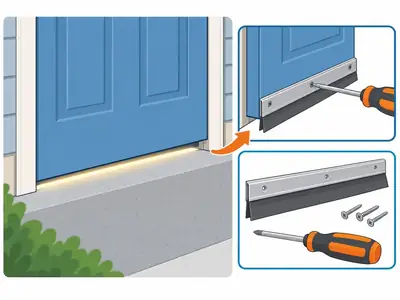 Doors and WindowsGap Under an Exterior DoorA gap under an exterior door lets in cold air, bugs and water. Measure it, choose the right door sweep or threshold fix and install it in under an hour.
 Garage and OutdoorsHow to Install a Garage Door Bottom SealHow to install a garage door bottom seal: measure the door, pull the old seal, slide the new one in, and close the gap at the floor.
 Doors and WindowsHow to Adjust a Screen Door CloserLearn how to adjust a screen door closer so it shuts without slamming, with the turnbuckle, the mounting bracket and the latch check.
 Doors and WindowsHow to Fix a Patio Door That Leaks Air or WaterHow to fix a patio door that leaks air or water: separate the draft from the leak, clear the weep holes, reseal the threshold, and check the flashing.