
Repair Sprinkler Pipe: Cut Out the Damage and Fit a Coupling
Part of: Outdoors and garage
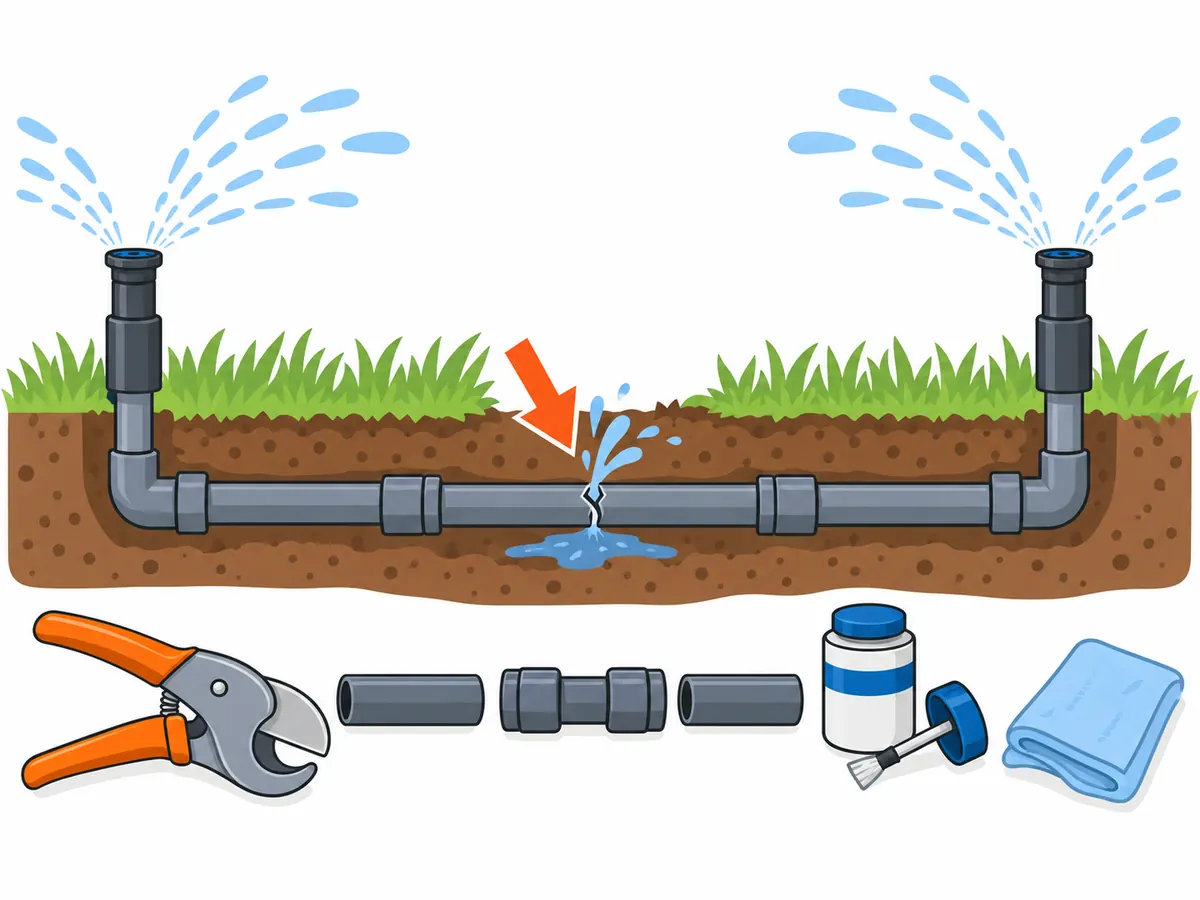
- Difficulty
- Moderate
- Time
- 1 to 3 hours
- Tools
- Shovel, pipe cutter or fine-tooth saw, deburring tool, rags, bucket, repair coupling, pipe primer and cement or push-fit couplings, gloves
- Call a pro if
- the main line is damaged, you hit a cable or gas line, or the pipe runs under a driveway
In this guide
- Power off first
- Gas safety
- Wear protection
- Chemical safety
You can repair sprinkler pipe breaks with a coupling in under an hour once you have found the damage. A broken sprinkler line shows up as a fountain in the lawn, a soggy spot, low pressure in a zone or a head that barely sprays. Pipes crack from frost, tree roots, a shovel or old age. The repair is simple once you find the break. It needs a small hole, a few fittings and some patience. This guide shows the safe way to dig, cut and fix it.
This guide is part of our wider guide to gutters and drainage.
Call before you dig
Call 811 a few days before you dig. Utility lines may run near the sprinkler pipes. Mark the break area. Sprinkler pipes are usually shallow, only 6 to 12 inches deep, but other lines may be as shallow. Do not dig if you are unsure.
Find the break
Turn on the zone and look for water bubbling up. If the break is hidden, look for the soggiest spot. Turn off the water to the system when you are ready to dig. Find the valve box or the shutoff at the main and close it. Leave the zone valve closed.
Step by step
1. Turn off the water to the sprinkler system.
2. Dig a hole about a foot wide around the break. Set the sod aside on a tarp so it can be replaced.
3. Expose the pipe for a few inches on each side of the damage.
4. Scoop out the water and keep the hole as dry as you can.
5. Cut out the broken section with a pipe cutter. Make clean square cuts on healthy pipe.
6. Remove burrs inside and out with a deburring tool or a knife.
7. Clean the ends with a rag.
8. Use a repair coupling. For PVC, a slip repair coupling has a sliding body so you can fit it without moving the pipe. For poly pipe, use a barbed or push-fit coupling with a clamp.
9. Prime and cement PVC ends as the can directs. Push the joint together, and hold for 30 seconds. Let it cure before you turn on the water.
10. Turn on the water slowly and check for leaks.
11. Wait for the cure time if cement was used, then back fill the hole in layers.
12. Replace the sod and water it in.
Match the pipe
Check the size and the type. Common sizes are three quarters of an inch and one inch. PVC is rigid and white. Polyethylene pipe is black and flexible. Take a piece to the store to match it. Mixing types needs the right transition fitting.
Signs that point to each cause
A geyser at a head may only be a broken head or riser. See Sprinkler head not popping up: how to fix. A soggy spot far from a head points to a pipe break. A zone with low pressure may have a break, a stuck valve or a clogged head. A zone that will not shut off may have a valve problem. See Sprinkler valve leaking or stuck open: how to fix.
Frost and roots
If the pipe split after winter, the line probably held water in the cold. Drain the system each fall. Roots can crush pipe over time, so if the pipe is repeatedly breaking in one place, reroute it. See How to winterize your home for the fall checks.
Prevention
Mark your pipe paths on a sketch. Avoid deep digging near them. Drain or blow out the lines before freezing weather. Check zones each spring for leaks. See How to set up a drip irrigation line for related work.
After the repair
Run the zone for ten minutes and watch the patch. Check the pressure at the heads. Fill the hole in layers, pressing the soil gently, and leave the grass a little high to allow for settling. Water the repaired sod daily for a week. Keep the sketch of the break for future reference.
Find a hidden break
If you cannot see where the water surfaces, walk the zone while it runs and look for dry spots between heads, or heads that spray weakly. The break is often just before the first weak head. Probe the soil with a screwdriver to find a soft patch. Mark it with a flag before you dig so you do not widen the hole more than you need.
Related guides
- Fix Leaking Garden Hose: Split, End or Coupling
- How to Install a Hose Bib Cover for Winter
- How to Fix a Dripping Outdoor Faucet
- Install Hose Reel on a Wall: Steps That Last
- How to Fix a Leaking PVC Pipe Joint
More help
If the water is coming from somewhere else, plumbing leaks sorts every common leak by location and links to the repair.
FAQ
How deep are sprinkler pipes? Often 6 to 12 inches, but check.
Can I use tape on PVC joints? Tape is for threaded fittings. Slip joints use primer and cement.
How long before I turn the water on? Follow the cement label. Often a few hours.
Why does the pipe keep breaking? Frost, roots or pressure spikes may be the cause.
More from this topic
- How to Fix a Sprinkler Head That Won't Spray Evenly: Learn how to fix a sprinkler head that won't spray evenly: clear the filter and nozzle, check the pressure...
- Sprinkler Head Not Popping Up: How to Fix It: Sprinkler head not popping up? Clean the head, clear the filter and check the pressure. Steps, tools, and...
- Sprinkler Valve Leaking or Stuck Open: Sprinkler valve leaking or stuck open? Learn to find the valve, check the solenoid and diaphragm, clean...
- How to Fix Dog Urine Spots on a Lawn and Prevent New Ones: Learn how to fix dog urine spots on a lawn: flush the area, rake out dead grass, reseed, and use simple...
- How to Use a String Trimmer Like a Pro: Learn how to use a string trimmer: hold the right angle, feed the line correctly, and trim around trees and...
 Garage and OutdoorsHow to Fix a Sprinkler Head That Won't Spray EvenlyLearn how to fix a sprinkler head that won't spray evenly: clear the filter and nozzle, check the pressure and replace a damaged head.
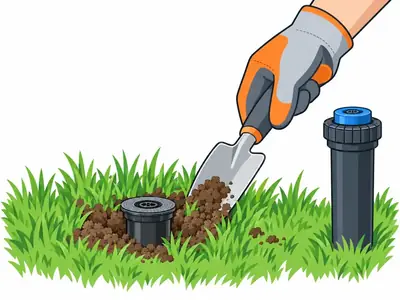 Garage and OutdoorsSprinkler Head Not Popping Up: How to Fix ItSprinkler head not popping up? Clean the head, clear the filter and check the pressure. Steps, tools, and safety tips before you dig near lines.
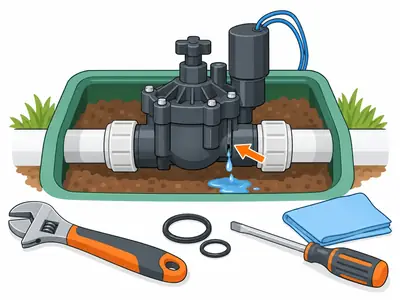 Garage and OutdoorsSprinkler Valve Leaking or Stuck OpenSprinkler valve leaking or stuck open? Learn to find the valve, check the solenoid and diaphragm, clean debris and replace parts to stop the zone from running.
 Garage and OutdoorsHow to Fix Dog Urine Spots on a Lawn and Prevent New OnesLearn how to fix dog urine spots on a lawn: flush the area, rake out dead grass, reseed, and use simple habits to prevent yellow patches from coming back.
 Garage and OutdoorsHow to Use a String Trimmer Like a ProLearn how to use a string trimmer: hold the right angle, feed the line correctly, and trim around trees and beds without the damage.