
How to Set Ceiling Fan Direction for Each Season
Part of: Heating and cooling
- Difficulty
- Easy
- Time
- 5 to 10 minutes
- Tools
- Stable step stool or ladder, flashlight, small piece of ribbon or tissue, owner's manual
- Call a pro if
- The fan wobbles badly, makes grinding noises, or the reverse switch is missing or broken and you are not sure how to fix it.
In this guide
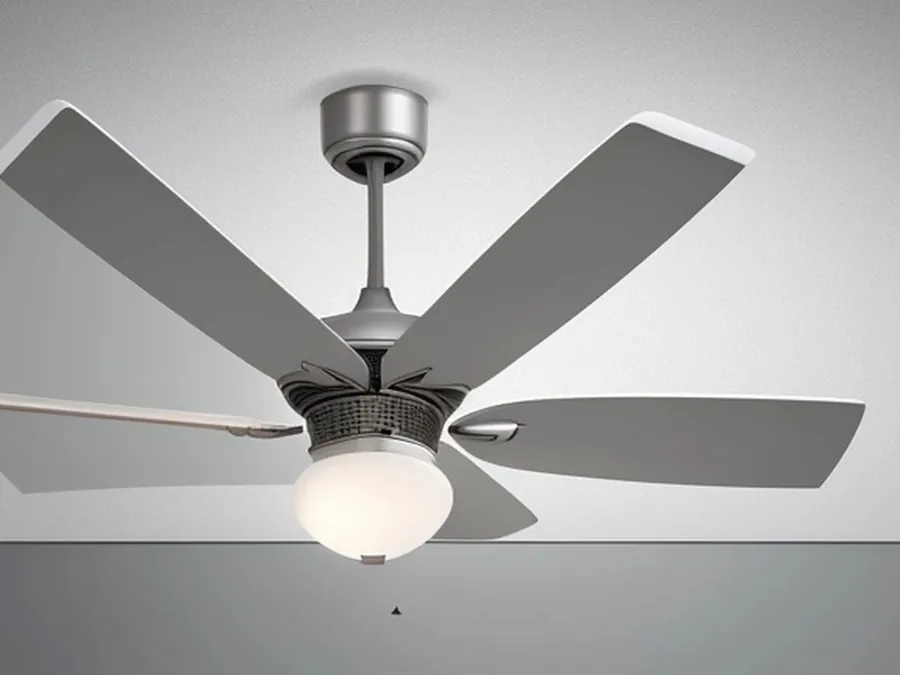
Most ceiling fans can spin both ways, and the direction changes how the room feels. If you want to set ceiling fan direction for each season, it takes a few minutes. The simple rule is below, plus ways to check you got it right.
The basic rule
- Summer: counterclockwise, as you look up at the fan. This pushes air down and creates a breeze that cools your skin.
- Winter: clockwise, on low speed. This pulls air up and spreads warm air that has collected near the ceiling, without a direct breeze.
Blade pitch matters. Most fans are made so the angle of the blade pushes air down when spinning counterclockwise. Check your manual to be sure.
Step by step
1. Turn the fan off and let the blades stop fully.
2. Find the switch. Most fans have a small slide switch on the motor housing, just above the blades. Some use a remote or a wall control. Check your manual.
3. Flip the switch to the other position.
4. Turn the fan on low. Watch the blades from below to see which way they move.
5. Test the air. In summer, you should feel air blowing down. In winter, you should feel little to no direct breeze.
A quick test with ribbon
If it is hard to tell which way the blades turn, tape a short strip of tissue or ribbon to the edge of one blade, or hold a thin strip below the fan. In summer mode the air should push it down and away. On low in winter mode, the air gets pulled up gently.
Pick the right speed
In summer, medium or high speed gives a stronger breeze, which helps when the room is warm. In winter, low speed is enough. A fast fan in the wrong direction makes a cold draft. If you feel cold, lower the speed or switch the direction.
Turn it off when you leave
A ceiling fan cools people, not rooms. It does not lower the temperature. Turn it off when the room is empty to save energy. See how to keep your house cool in summer for more ideas.
Fan problems
If the fan wobbles, see how to fix a wobbly ceiling fan. If it does not work at all, see ceiling fan remote not working. A dusty fan also moves less air. See how to clean a ceiling fan.
FAQ
Which way should a ceiling fan spin in summer?
Counterclockwise, as seen from below.
Should I use the fan in winter?
Only on low and in reverse, to move warm air down gently.
Does a fan save energy?
It can, because you may set the thermostat a bit higher while the fan runs, but only if someone is in the room.
My fan has no switch. What now?
Check the remote or manual. Some models only run one way.
Related guides
- How to Keep Your House Cool in Summer Without Constant AC: Learn how to keep your house cool in summer with shades, airflow, fans, sealing gaps, and smart habits that...
- How to Make a Draft Stopper for Doors and Windows: Learn how to make a draft stopper from fabric and filling, measure it, place it under doors and on sills, and...
- How to Set a Thermostat Schedule to Save Energy: Learn how to set a thermostat schedule to save energy: pick wake, away, home, and sleep settings, avoid big...
- How to Use Curtains to Save Energy in Winter and Summer: Learn how to use curtains to save energy: choose thermal or lined styles, hang them close to the wall, open...
- How to Prepare Your Furnace for Winter: Learn how to prepare your furnace for winter: change the filter, test it early, clear the vents and check the...
 Heating and CoolingHow to Keep Your House Cool in Summer Without Constant ACLearn how to keep your house cool in summer with shades, airflow, fans, sealing gaps, and smart habits that cut indoor heat before it builds up.
 Heating and CoolingHow to Make a Draft Stopper for Doors and WindowsLearn how to make a draft stopper from fabric and filling, measure it, place it under doors and on sills, and pair it with other air sealing steps.Heating and CoolingHow to Set a Thermostat Schedule to Save EnergyLearn how to set a thermostat schedule to save energy: pick wake, away, home, and sleep settings, avoid big swings, and match your system type.
 Heating and CoolingHow to Use Curtains to Save Energy in Winter and SummerLearn how to use curtains to save energy: choose thermal or lined styles, hang them close to the wall, open and close them with the sun, and seal the edges.Heating and CoolingHow to Prepare Your Furnace for WinterLearn how to prepare your furnace for winter: change the filter, test it early, clear the vents and check the flame before the first cold snap.