
Outdoor Outlet Cover: How to Install a Weatherproof One
Part of: Outdoors and garage
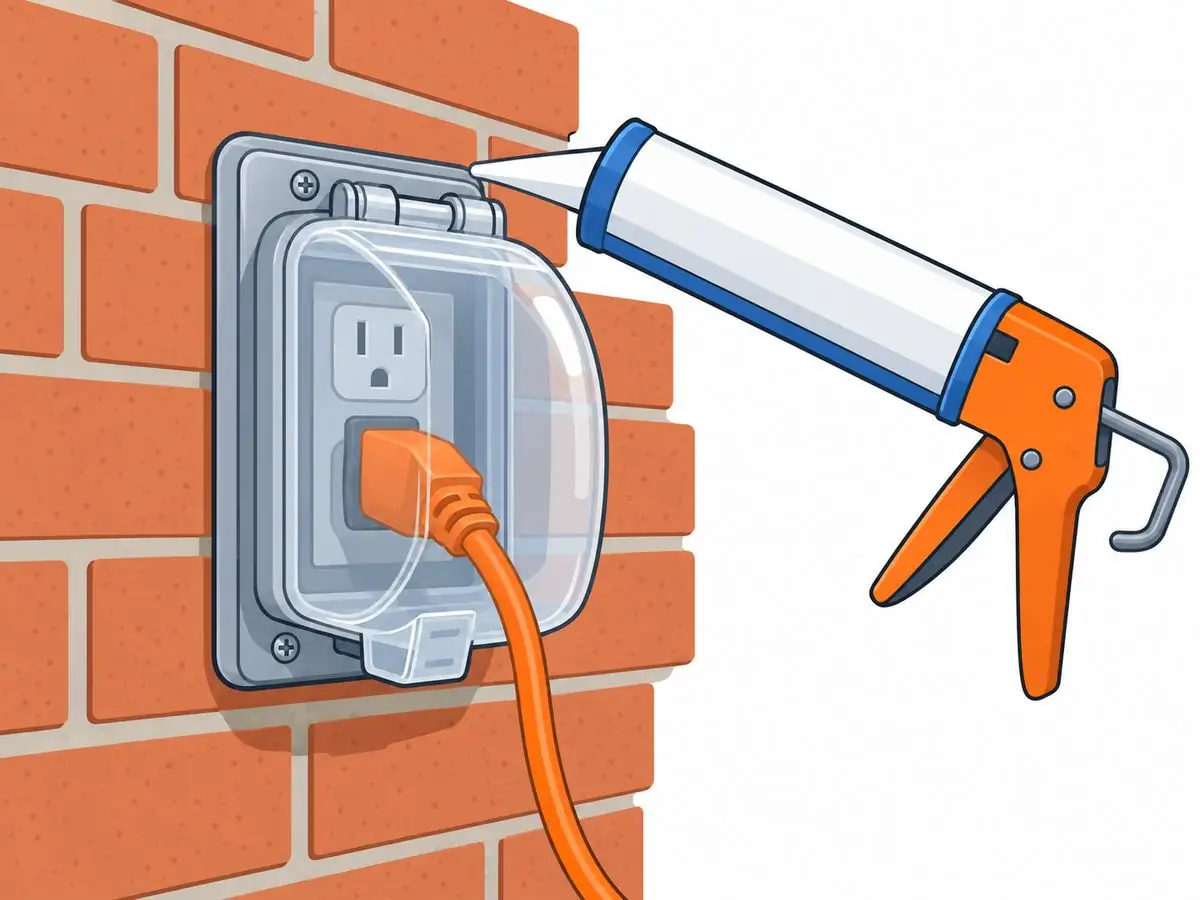
- Difficulty
- Easy to medium
- Time
- 30 to 60 minutes
- Tools
- Non-contact voltage tester, screwdrivers, caulk gun, exterior-grade silicone caulk, new gasket, in-use (bubble) cover, ladder if needed
- Call a pro if
- the box is cracked or loose, the outlet is rusted, there are signs of water inside, or the outlet is not GFCI protected and you do not know how to add protection
In this guide
- Power off first
- Ladder safety
An outdoor outlet cover keeps rain, snow and dirt out of the box so the outlet stays safe to use. A flip lid that only closes when nothing is plugged in is not enough for a cord you leave in place. This guide shows how to fit a proper weatherproof cover in about 30 minutes.
This guide is part of our wider guide to electrical problems and safety.
Pick the right cover
Look for a cover marked "weatherproof" and "in-use" or "while-in-use." These have a deep, hinged hood that closes over a plug and cord. A flat cover with a small lid is only suitable if you plug something in briefly. The cover must fit the shape of your box: vertical or horizontal, single or double. Match the outlet type and the number of gangs.
Check the outlet first
In the US, outdoor receptacles must have ground-fault protection, either a GFCI outlet or a GFCI breaker in the panel. Other countries have their own rules and local amendments vary, so check with your building department. Press the test button. The outlet should click and lose power. If it does not, replace the GFCI. See GFCI vs AFCI: what is the difference? and GFCI outlet will not reset.
Step by step
1. Turn off the breaker for the outlet.
2. Test the outlet with a non-contact tester to confirm the power is off. Test both sockets.
3. Remove the old cover. Unscrew it and peel off the old gasket.
4. Inspect the box. Look for rust, cracks, wasp nests, water or corrosion. If you see water inside or heavy corrosion, stop. A damaged box or outlet needs replacing.
5. Clean the wall surface. Scrub off dirt, old caulk and loose paint around the box. Let it dry.
6. Fit the new gasket. Use the foam gasket that comes with the cover. Press it flat against the wall.
7. Mount the cover. Line it up and tighten the screws evenly. Do not over-tighten, since you can crack the plastic.
8. Seal the top and sides with a thin bead of exterior silicone caulk between the cover and the wall. Leave the bottom edge unsealed, so any water behind the cover can run out.
9. Let the caulk cure as the label says.
10. Turn the breaker on.
11. Test. Press test and reset on the GFCI. Plug in a lamp and shut the hood. Check that the cord passes out through the opening without strain.
Care and checks
Check the cover each season for cracks and loose screws. Replace gaskets that harden or crack. Keep the lid closed when you are not using the outlet. Do not use a cord that is damaged, and see Extension cord safety for homeowners for choosing a cord.
Choosing a cover by outlet type
Vertical and horizontal covers are different shapes. Measure the box and note how the outlet sits. Double-gang boxes need a double cover. Use a cover with a gasket on the back and a tight hinge. Metal and plastic covers are both common, but check that the cover is listed for wet locations when in use. A cover that is too small will not close over a plug, and is not safe to leave in rain.
Seasonal checks
Before winter, check the cover for cracks and clean out any debris. After storms, look for water inside. If the GFCI keeps tripping after a wet week, remove the cover and look for moisture. A damp box needs to dry out fully, and the seal must be fixed before you use it again.
Related guides
- Replace Outlet Cover Plate (and Switch Plates)
- Occupancy Sensor Switch: How to Install One Safely
- How to Install a USB Outlet to Replace a Standard Outlet
FAQ
What does "in-use" mean?
The cover protects the outlet while a cord is plugged in and the lid is closed.
Do I need to caulk the bottom?
No. Leave the bottom open so moisture can drain.
Can I use an indoor outlet outside?
No. Outdoor outlets need weather-rated parts and GFCI protection.
Why does my GFCI trip in the rain?
Moisture is getting in somewhere. Check the cover, the gasket and the cord.
More from this topic
- How to Cut a Tile for an Outlet: Learn how to cut a tile for an outlet: measure the box, mark and drill the corners, then cut the opening so...
- Outlet Not Working in One Room: How to Fix It: Outlet not working in one room? Check the GFCI, the breaker and the plug first. Safe steps, tools and when to...
- Power Out in One Room? What to Check First: Power out in one room usually means a tripped breaker, a tripped GFCI upstream or a failed connection. Check...
- How to Install a Birdhouse Birds Will Actually Use: Learn how to install a birdhouse: pick the right height and direction, mount it securely, and place it where...
- How to Install a Gutter on a Shed: Learn how to install a gutter on a shed: set the fall, fix the brackets and lead the water away from the...
 KitchenHow to Cut a Tile for an OutletLearn how to cut a tile for an outlet: measure the box, mark and drill the corners, then cut the opening so the plate covers the gap.
 Electrical BasicsOutlet Not Working in One Room: How to Fix ItOutlet not working in one room? Check the GFCI, the breaker and the plug first. Safe steps, tools and when to call an electrician.Electrical BasicsPower Out in One Room? What to Check FirstPower out in one room usually means a tripped breaker, a tripped GFCI upstream or a failed connection. Check them safely, in this order.
 Garage and OutdoorsHow to Install a Birdhouse Birds Will Actually UseLearn how to install a birdhouse: pick the right height and direction, mount it securely, and place it where nesting birds feel safe.
 Garage and OutdoorsHow to Install a Gutter on a ShedLearn how to install a gutter on a shed: set the fall, fix the brackets and lead the water away from the base.