
Extension Cord Safety for Homeowners
Part of: Electrical safety
- Difficulty
- Easy
- Time
- 10 minutes to check your cords
- Tools
- Your cords, the labels on your devices, a flashlight
- Call a pro if
- you need a permanent outlet where you use a cord, a cord or outlet is hot, or a breaker trips when you plug in the device
In this guide
- Power off first
Extension cords are meant for temporary use, but many homes use them for months. Poor use can overheat a cord and start a fire. This guide covers extension cord safety in a few clear rules.
This guide is part of our wider guide to electrical problems and safety.
Read the label
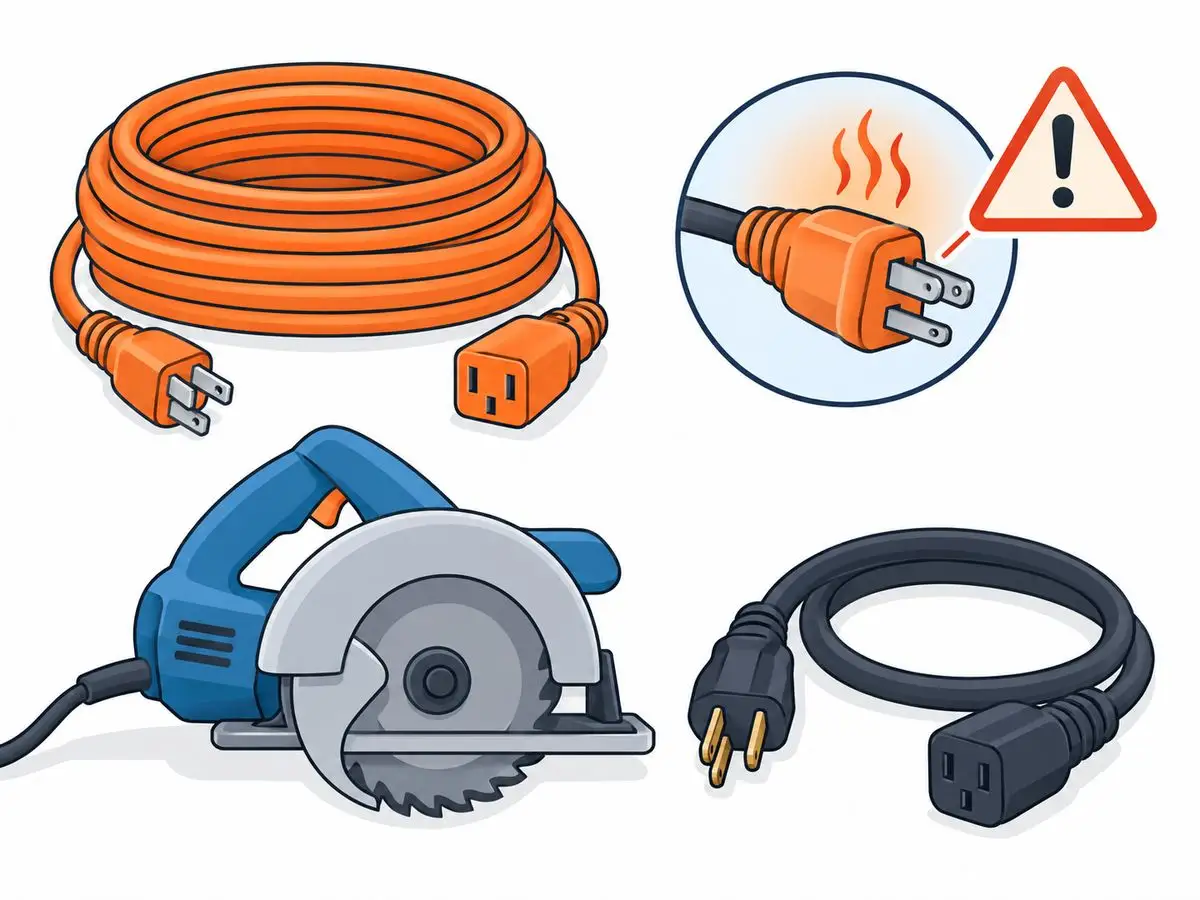
Cords have a label or printed marks on the jacket. Look for the gauge (AWG number), the length, and the amp or wattage rating. A lower AWG number means a thicker wire, which carries more power. Your device lists its power use in watts or amps on its plate.
Pick the right cord
1. Match the load. Use a cord rated for at least what the device draws. Heaters, air conditioners, power tools and space heaters draw a lot.
2. Shorter is safer. Use the shortest cord that reaches. Long, thin cords lose power as heat.
3. Use outdoor cords outdoors. Cords marked for outdoor use have a tougher jacket.
4. Use three-prong cords with grounded devices. Do not remove the ground prong.
5. Use cords listed by a recognized safety lab. Look for a listing mark on the cord or its package.
Safe habits
- Do not daisy-chain. Never plug one cord into another.
- Do not run cords under rugs or through walls. Heat builds up and damage goes unseen.
- Do not staple or nail cords.
- Keep cords out of doorways where they get pinched.
- Uncoil long cords during use. Coiled cords hold heat.
- Do not overload. Plugging heaters or appliances into a cord with other items can overload it.
- Unplug by the plug, not by pulling the wire.
- Keep cords dry. Use a weatherproof cover outside.
Inspect your cords
Check for cracked insulation, bent prongs, frayed ends, exposed wire or a plug that feels warm. Discard damaged cords. Do not repair them with tape.
Use a permanent fix
If you use a cord every day for a device, add an outlet instead. How to replace an outlet covers outlet basics, and an electrician can add new outlets safely. Also see Power strip overload: how to spot it.
Quick guide to cord choice by use
For lamps and small electronics, a light-duty cord is fine. For a power drill or a vacuum, choose a medium-duty cord. For a space heater, an air conditioner or a refrigerator, do not use an extension cord unless the heater or appliance instructions allow it, and then use a heavy-duty cord marked with a low gauge number and as short as possible. Many manufacturers say to plug heaters straight into the wall.
If you often find yourself needing a cord in the same spot, that is a sign the room needs another outlet.
When a cord becomes a hazard
Even a good cord can fail. Replace it if it feels hot, has a loose plug or if the outer jacket is stiff or cracked from sun. Cords left outside in the cold or the sun age faster. Keep a few cords of different lengths so you do not use one that is longer than you need. Label a heavy-duty cord for tools so it is not used for a heater by accident.
Related guides
- How to Anchor Furniture to the Wall (Anti-Tip Safety)
- Replace Outlet Cover Plate (and Switch Plates)
- How to Install a Dimmer Switch
- How to Replace a Light Switch
FAQ
Can I use an indoor cord outside?
No. Use a cord rated for outdoor use.
Why is my cord warm?
It may be overloaded, too thin or too long. Unplug it and use a heavier cord.
Is a surge protector the same as an extension cord?
No. A surge protector guards electronics. Check its rating and do not plug heaters into it.
What gauge do I need?
It depends on length and load. Check the cord packaging or the tool manual.
More from this topic
- Power Strip Overload: How to Spot It: Power strip overload can melt plugs and start fires. Learn the warning signs, how to add up watts and which...
- How to Babyproof Electrical Outlets and Cords: Babyproof electrical outlets and cords with tamper-resistant receptacles, sliding outlet covers, cord...
- How to Use a Space Heater Safely at Home: Learn how to use a space heater safely: pick a safe spot, plug straight into the wall, keep clear of anything...
- How to Choose and Place a Fire Extinguisher at Home: Learn how to choose and place a fire extinguisher: pick the right class and size, put it near exits, mount it...
- How to Clean a Dryer Vent to Prevent Fires: Learn how to clean a dryer vent safely: unplug the dryer, detach the hose, brush out lint, check the outside...
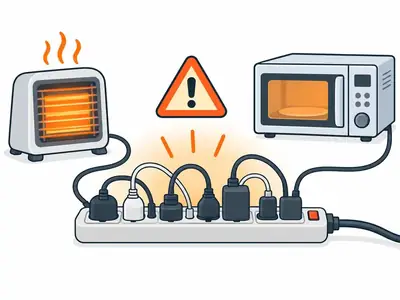 SafetyPower Strip Overload: How to Spot ItPower strip overload can melt plugs and start fires. Learn the warning signs, how to add up watts and which devices should never share a strip.SafetyHow to Babyproof Electrical Outlets and CordsBabyproof electrical outlets and cords with tamper-resistant receptacles, sliding outlet covers, cord shorteners and concealment, and smart furniture placement.
 SafetyHow to Use a Space Heater Safely at HomeLearn how to use a space heater safely: pick a safe spot, plug straight into the wall, keep clear of anything that burns and never leave it running unattended.
 SafetyHow to Choose and Place a Fire Extinguisher at HomeLearn how to choose and place a fire extinguisher: pick the right class and size, put it near exits, mount it at a safe height and check it stays ready.
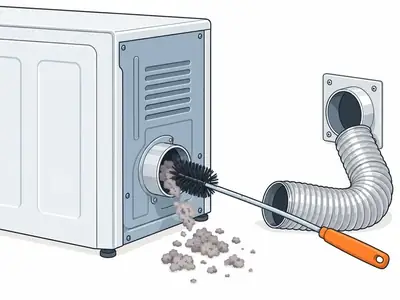 SafetyHow to Clean a Dryer Vent to Prevent FiresLearn how to clean a dryer vent safely: unplug the dryer, detach the hose, brush out lint, check the outside vent and prevent fires and slow drying.