
GFCI vs AFCI: What Is the Difference?
Part of: Electrical safety
- Difficulty
- Easy
- Time
- 10 to 15 minutes to test
- Tools
- Flashlight, plug-in outlet tester (optional)
- Call a pro if
- a device will not reset, trips again and again, or you want to add one to a circuit
In this guide
- Power off first
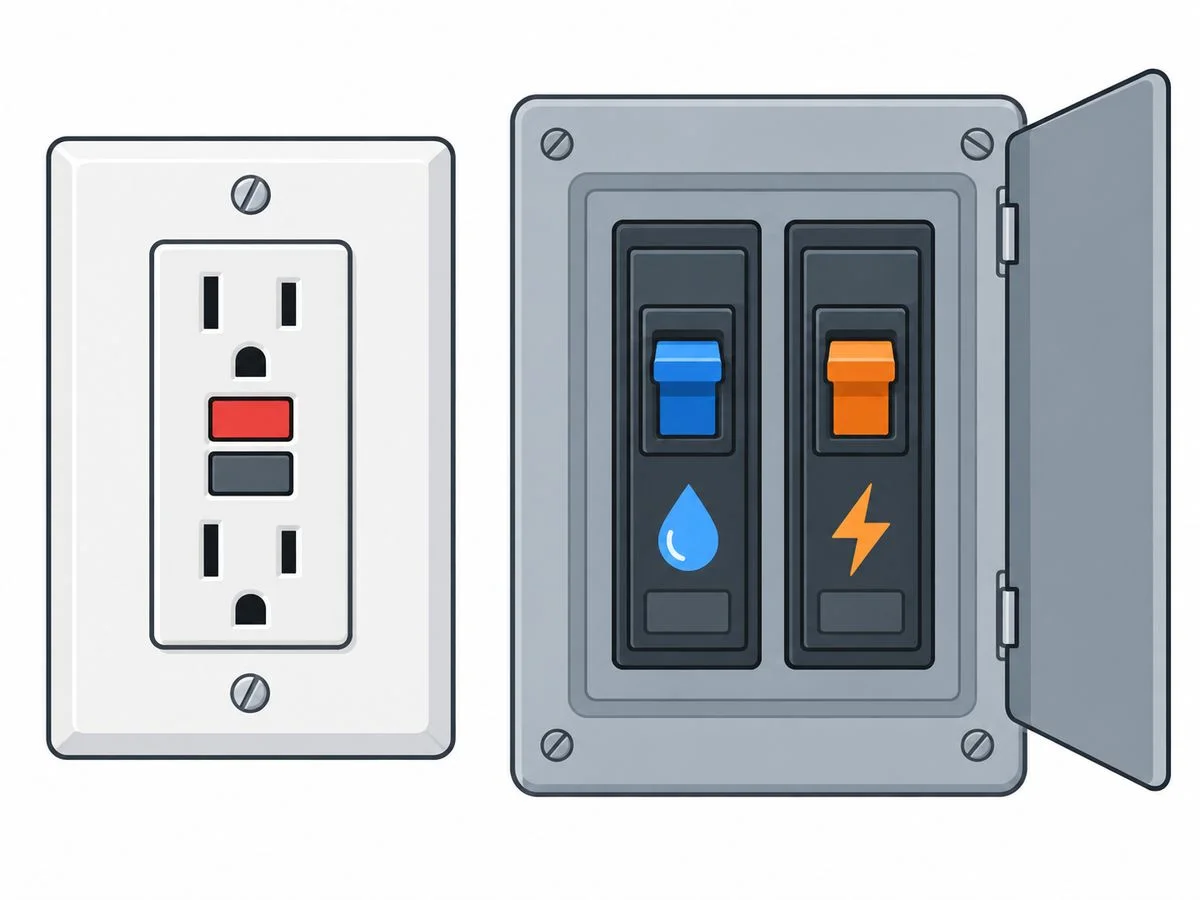
Two safety devices show up in your electrical panel and on your outlets, and they protect against different dangers. Here is GFCI vs AFCI in plain terms, with the places each is used and how to test them.
This guide is part of our wider guide to electrical problems and safety.
What GFCI does
GFCI stands for ground fault circuit interrupter. It watches for current that leaks out of the normal path, for example through water or a person. It cuts power in a fraction of a second. That protects people from electric shock.
GFCIs are used where water is near: bathrooms, kitchens, garages, basements, laundry areas and outdoors. A GFCI can be an outlet with test and reset buttons, or a breaker in the panel.
What AFCI does
AFCI stands for arc fault circuit interrupter. It detects dangerous electrical arcs, such as from a damaged cord, a loose wire or a nail through a cable. It cuts power before the arc starts a fire. That protects the house from electrical fires.
AFCIs are common on bedroom and living area circuits in newer homes, and their requirements vary by building code and by year. They are typically breakers in the panel.
The key difference
- GFCI: protects people from shock.
- AFCI: protects the building from fire caused by arcs.
- Some devices, called dual-function breakers, do both.
How to test them
1. GFCI outlet: Press the "test" button. The outlet should click and lose power. Press "reset" to restore it. Test monthly.
2. GFCI breaker or AFCI breaker: Look for a test button on the breaker. Press it. The breaker should trip to the middle or off position. Reset it by moving it fully off, then on.
3. Tell people first. Testing cuts power to the circuit, so save your work on computers.
If a device does not trip when you press test, replace it or call an electrician. See How to reset a tripped breaker.
If one keeps tripping
- A GFCI trips from moisture or a faulty appliance. GFCI outlet will not reset lists the steps.
- An AFCI may trip from a damaged cord or a loose connection. Unplug devices and test one at a time.
- Some older appliances can cause nuisance trips on an AFCI. An electrician can check.
Where you will see each one in a typical home
In a typical newer home, the kitchen and bathroom outlets are GFCI protected, often through one GFCI outlet that covers others on the same line. The bedroom circuits are often AFCI breakers in the panel. Garages, basements and outdoor outlets are normally GFCI protected as well.
Older homes may have neither, or only a few. If you buy an older house, a quick check of the panel and the outlets near water tells you what is protected. Look for the test and reset buttons, and press test once. If you are not sure what a device does, take a photo of the label and the panel for the electrician.
Replacing a GFCI or AFCI
A GFCI outlet is a simple swap for a confident DIYer, with the power off and tested. Wire the line and load terminals as the instructions say. AFCI and dual-function breakers go inside the panel, so use an electrician for those. If a breaker or outlet fails the test button, do not just reset it. Replace it, since it is not protecting you.
Related guides
- How to Install a USB Outlet to Replace a Standard Outlet
- Outlet Sparks When Plugging In: Normal Spark or Warning Sign?
- How to Replace an Outlet: Swap a GFCI Outlet Safely
- How to Replace a GFCI Outlet Safely: Line and Load Wiring Explained
- Replace Outlet Cover Plate (and Switch Plates)
FAQ
Do I need both?
Codes vary. Many homes use both in different rooms. Ask an electrician or local building office.
Can I add them to an old house?
Yes. An electrician can install GFCI outlets or breakers and AFCI breakers.
Why does my GFCI trip when I use a hair dryer?
Moisture, a damaged cord or a worn appliance. Test on another outlet.
How often should I test them?
Once a month, and after storms.
More from this topic
- How to Add an Outlet to a Bathroom: Learn how to add an outlet to a bathroom with GFCI protection, a proper box and the wiring steps, plus the...
- DIY Electrical Work: What Is Safe for a Homeowner: DIY electrical work, sorted: what a careful homeowner can do safely, what needs a licensed electrician, and...
- What to Do When Your GFCI Outlet Will Not Reset: Learn what to do when your GFCI outlet will not reset: check for a tripped breaker, unplug devices, find...
- How to Replace an Outlet: Swap a GFCI Outlet Safely: Learn how to replace an outlet with a GFCI outlet safely: turn off power at the breaker, test it, swap the...
- How to Test a GFCI Outlet in Under a Minute: Learn how to test a GFCI outlet: use the test and reset buttons, check it with a plug-in tester, and know...
 Electrical BasicsHow to Add an Outlet to a BathroomLearn how to add an outlet to a bathroom with GFCI protection, a proper box and the wiring steps, plus the parts a homeowner should not do alone.Electrical BasicsDIY Electrical Work: What Is Safe for a HomeownerDIY electrical work, sorted: what a careful homeowner can do safely, what needs a licensed electrician, and the breaker-off test-everything routine.
 Electrical BasicsWhat to Do When Your GFCI Outlet Will Not ResetLearn what to do when your GFCI outlet will not reset: check for a tripped breaker, unplug devices, find linked outlets and know when to replace it.
 Electrical BasicsHow to Replace an Outlet: Swap a GFCI Outlet SafelyLearn how to replace an outlet with a GFCI outlet safely: turn off power at the breaker, test it, swap the wires and when to call an electrician.Electrical BasicsHow to Test a GFCI Outlet in Under a MinuteLearn how to test a GFCI outlet: use the test and reset buttons, check it with a plug-in tester, and know when the outlet needs replacing.