
Outlet Sparks When Plugging In
Part of: Electrical safety
- Difficulty
- Easy to check, medium to repair
- Time
- 10 minutes to check, 30 to 60 minutes to replace an outlet
- Tools
- Flashlight, non-contact voltage tester, plug-in outlet tester, screwdrivers, replacement outlet
- Call a pro if
- you see scorch marks, smell burning, hear loud pops, feel heat in the plate or the plug, or sparks keep happening
In this guide
- Power off first
Seeing a flash when you plug something in is startling. Sometimes an outlet sparks when plugging in a device because of how electricity works, and it is harmless. Other times it points to a worn outlet or a wiring fault that can start a fire. This guide helps you tell the difference and decide what to do.
This guide is part of our wider guide to electrical problems and safety.
A small spark can be normal
When you plug in a device that is already on, or one with a large motor or a heating element, a small blue or white flash at the moment of contact is common. It happens because a tiny arc forms as the prongs touch the contacts and the device draws a burst of current. It is brief, silent or with a tiny snap, and it does not leave any marks. Plugging in a vacuum, a hair dryer or a heater with the switch on is a typical case. You can reduce it by turning the device off before you plug it in.
Signs it is not normal
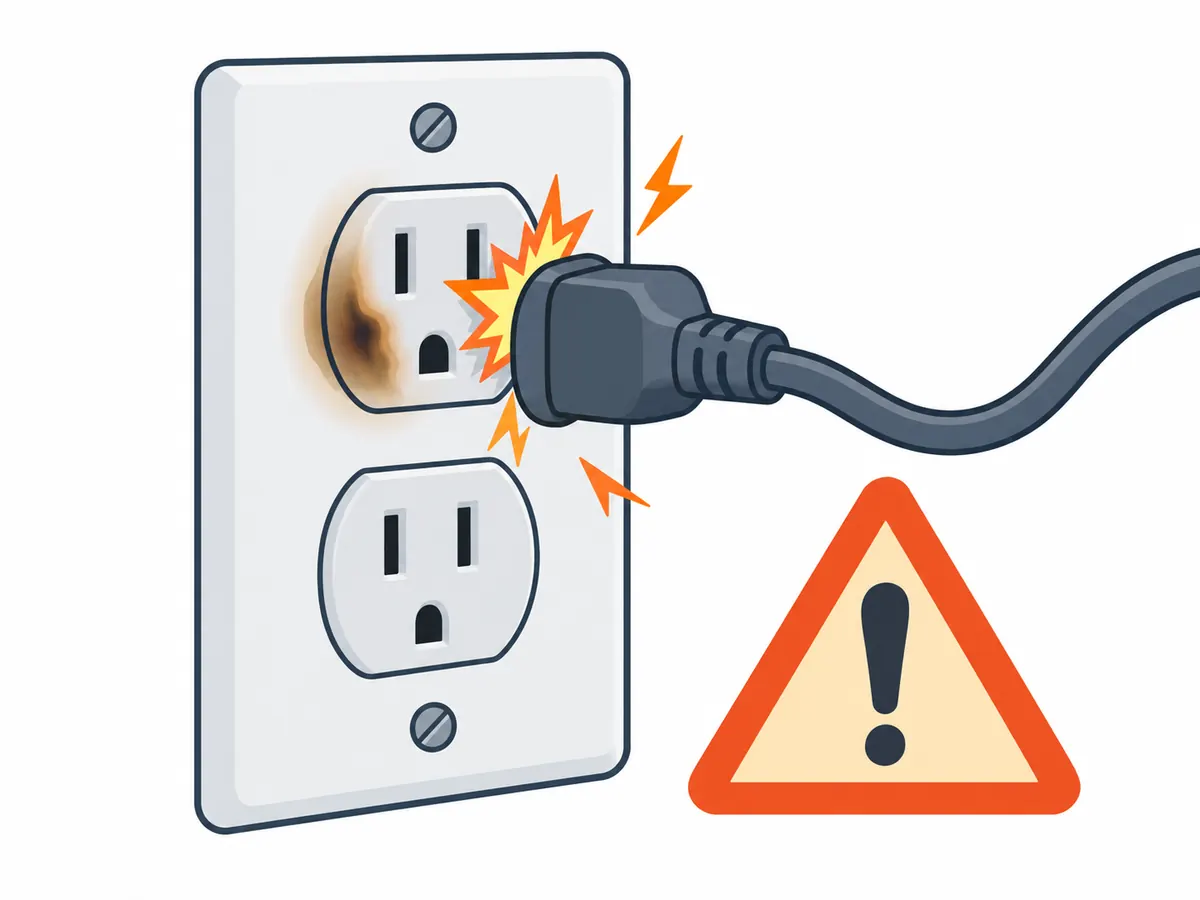
- A bright, large or lasting spark
- A loud pop or a buzzing sound
- Sparks every time, even with small devices
- Brown or black marks on the plate or around the slots
- A burning smell or melted plastic
- An outlet or plug that feels hot
- A plug that fits loosely, or falls out
- Lights that flicker when you use the outlet
If you see any of these, stop using the outlet right away.
Common causes
1. Worn contacts. Over years, the metal inside the outlet loses its grip. Plugs fit loosely and arc. See Outlet plug loose: how to fix.
2. Loose wire connections. A wire that has worked loose from a screw can arc inside the box.
3. Overloaded outlet. Too many devices on one outlet or power strip create heat. See Power strip overload: how to spot it.
4. Damaged plug or cord. Bent prongs, frayed cords and cracked plugs can arc. See Extension cord safety for homeowners.
5. Moisture or dust. Damp, dirt or metal dust in the slots can cause sparks.
6. Faulty device. The device itself may have a short.
Step by step: what to do
1. Stop using the outlet and unplug the device if you can do so safely. Do not touch a plug that is smoking or very hot. Switch off the breaker first.
2. Turn off the breaker for the circuit. See How to reset a tripped breaker to find the panel.
3. Look at the outlet and plug. Check for marks, melting, loose parts or bent prongs.
4. Try the device somewhere else. If it sparks in another outlet, the device or its cord may be the problem. Replace the cord or the device.
5. Test the outlet with a plug-in tester after the power is restored and the outlet looks clean, only if there are no signs of damage. The tester shows wiring faults.
6. Replace the outlet if it is worn or marked. Turn off the power, test with a non-contact voltage tester and follow How to replace an outlet.
7. Call an electrician if the box shows burn marks, the wires are discolored or brittle, or the problem returns after a new outlet.
Special cases
If the outlet is controlled by a GFCI that keeps tripping, there may be a ground fault. See GFCI outlet will not reset. If the outlet is outdoors, check for water in the box.
Prevention
Use outlets with good grip, and replace ones that feel loose. Turn off high power devices before you plug them in. Do not overload outlets or use damaged cords. Keep the area around outlets dry and free of dust. Use tamper resistant outlets if you have small children.
Related guides
- How to Replace a Two-Prong Outlet Safely
- Outlet Not Working in One Room: How to Fix It
- How to Replace a GFCI Outlet Safely: Line and Load Wiring Explained
FAQ
Is it normal for an outlet to spark a little?
One small flash as a plug goes in can be normal. Repeated or large sparks are a warning sign.
Can I just replace the outlet?
If the cause is a worn outlet, yes. If the wiring is damaged, an electrician must fix it.
Why does the plug get hot?
A loose fit, a worn outlet or an overloaded circuit can make it hot. Stop using it and check it.
Should I be worried about a spark in the dark?
A very brief spark is common. A lasting spark or a pop needs attention.
More from this topic
- How to Protect Electronics From Power Surges: Learn how to protect electronics from power surges: use surge protectors correctly, unplug during storms,...
- Loose Plug in an Outlet: How to Fix It: Loose plug in an outlet keeps falling out? Learn why outlets wear out, when replacement is the safe fix and...
- DIY Electrical Work: What Is Safe for a Homeowner: DIY electrical work, sorted: what a careful homeowner can do safely, what needs a licensed electrician, and...
- GFCI vs AFCI: What Is the Difference?: GFCI vs AFCI: learn what each protects against, where they are used and how to test them. A clear guide for...
- Outlet Feels Warm? What It Means and What to Do: If an outlet feels warm, it can mean overload, loose wiring or a failing device. Learn which warmth is...
 Electrical BasicsLoose Plug in an Outlet: How to Fix ItLoose plug in an outlet keeps falling out? Learn why outlets wear out, when replacement is the safe fix and how to do it with the power off and tested.Electrical BasicsDIY Electrical Work: What Is Safe for a HomeownerDIY electrical work, sorted: what a careful homeowner can do safely, what needs a licensed electrician, and the breaker-off test-everything routine.
 Electrical BasicsGFCI vs AFCI: What Is the Difference?GFCI vs AFCI: learn what each protects against, where they are used and how to test them. A clear guide for first-time homeowners.Electrical BasicsOutlet Feels Warm? What It Means and What to DoIf an outlet feels warm, it can mean overload, loose wiring or a failing device. Learn which warmth is normal, which is dangerous and the safe checks.