
How to Replace a Two-Prong Outlet Safely
Part of: Electrical safety
- Difficulty
- Medium
- Time
- 30 to 60 minutes
- Tools
- Non-contact voltage tester, screwdrivers, wire stripper, needle nose pliers, flashlight, new outlet
- Call a pro if
- the wire insulation is cloth covered, cracked or brittle, the box is damaged, you find aluminum wiring, or you want to add a grounded outlet
In this guide
- Power off first
Older homes often have outlets with only two slots and no round ground hole. These outlets work for lamps and many devices, but they do not give a ground path for safety. If you need to replace a two-prong outlet because it is cracked, loose or worn out, you have a few safe options. The wrong fix can create a shock or fire risk, so read this before you start.
This guide is part of our wider guide to electrical problems and safety.
What a two-prong outlet tells you
Two slots mean the circuit may have no ground wire in the box. Some old homes have metal cable or conduit that serves as a ground, but you cannot assume it. Before you change anything, find out what is in the box. An electrician can test it.
Your safe options
1. Replace it with another two-prong outlet. This is allowed and keeps the circuit as it is. It does not add a ground. It is a simple swap when the outlet is worn.
2. Install a GFCI outlet. A ground fault circuit interrupter outlet can be installed where there is no ground wire. It must be labeled "No Equipment Ground" on the cover plate, as the instructions show. It protects people from shock, but the third hole still does not carry a ground to a device. The wiring and labels must be done correctly. See GFCI outlet will not reset for how they work.
3. Have an electrician add a ground. An electrician can run a ground wire or rewire the circuit. This is the best long-term solution.
Do not use a plug adapter, often called a cheater plug, to put a three-prong plug into a two-prong outlet and treat it as grounded. Do not wire a three-prong outlet to a circuit with no ground, and do not connect the ground terminal to the neutral. These are shock and fire risks.
Step by step
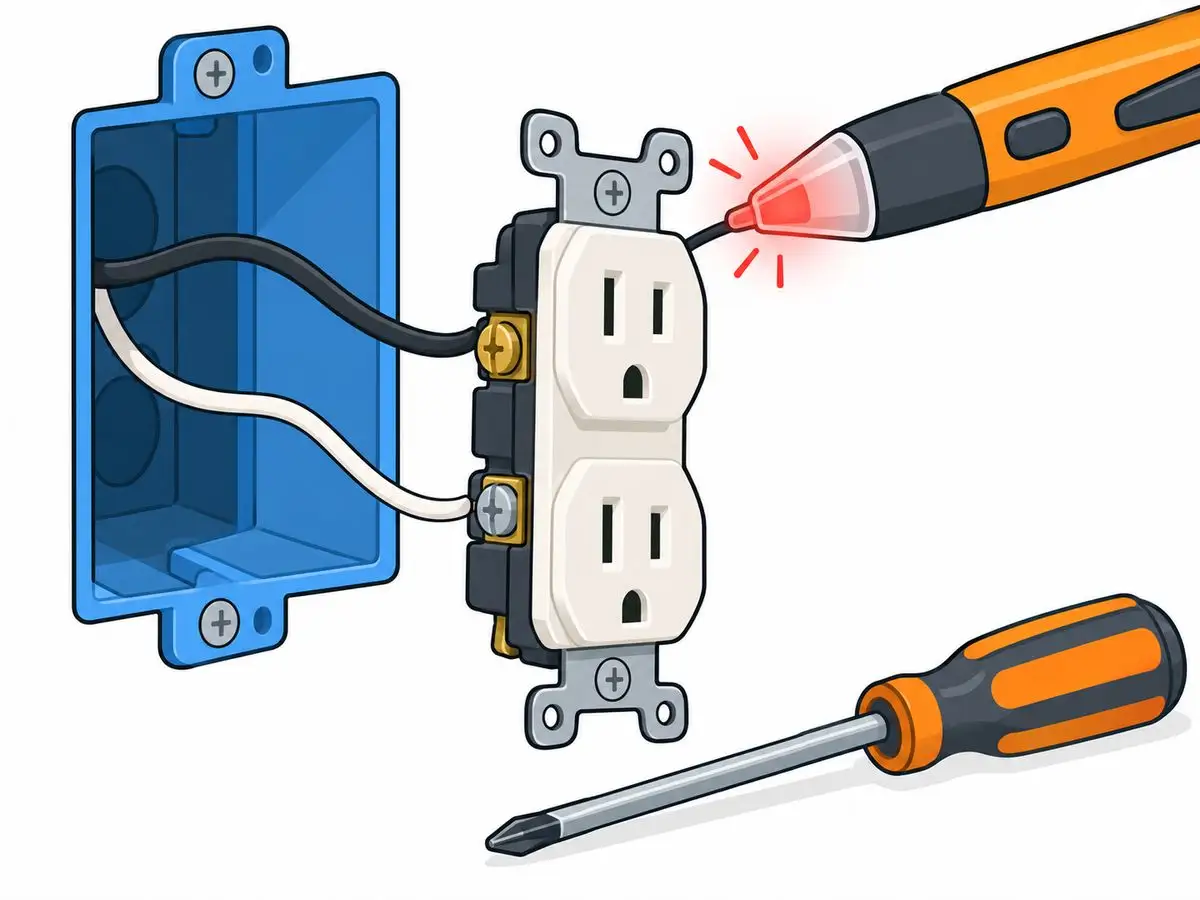
1. Turn off the power. Find the breaker for the outlet and switch it off. See How to reset a tripped breaker for help finding the panel. Put a piece of tape on the breaker so nobody turns it back on.
2. Test the outlet. Use a non-contact voltage tester at both slots. It should show no power. Test a second time at the wires after you remove the plate.
3. Remove the cover plate and the screws that hold the outlet in the box. Gently pull it out.
4. Test the wires with the voltage tester before you touch them.
5. Take a photo of how the wires attach. Note which wire goes to which terminal.
6. Check the wires. If the insulation is cracked, cloth covered or brittle, stop and call an electrician.
7. Disconnect the wires. Loosen the screws and remove them.
8. Connect the new outlet. Black, or hot, wires go to the brass colored screws. White, or neutral, wires go to the silver screws. The wide slot is the neutral side.
9. Fold the wires back into the box, push the outlet in and secure it with the screws. Do not pinch the wires.
10. Install the cover plate, turn the breaker on and test the outlet with a lamp or a tester.
Checks that matter
If the outlet is warm, scorched or buzzing, stop using it and call an electrician. In the US, receptacles in bathrooms, kitchens, garages and outdoors need ground-fault protection under current codes; your local code edition may differ. On an ungrounded circuit, use a GFCI labeled "no equipment ground" and never jumper the ground terminal to the neutral. Check local rules.
How to tell what you have
Look at the other outlets in the house. A three-hole outlet in a room with old wiring may not be grounded either, because someone may have replaced it without adding a ground. A simple plug-in outlet tester shows if a ground is present. It can show an open ground, reversed wires or a good outlet. An electrician can also test the box. If the tester shows reversed hot and neutral, or a hot ground, call an electrician right away.
Why grounding matters
A ground gives stray current a safe path if a device fails. Without it, a faulty appliance can leave its metal case live. A GFCI outlet cuts the power if it detects a leak of current, which helps protect people. It does not replace a real ground for sensitive electronics, so a surge protector may not work as intended on an ungrounded circuit. If you plan to use computers or other sensitive equipment there, have the circuit grounded.
Related guides
- How to Replace a GFCI Outlet Safely: Line and Load Wiring Explained
- How to Replace an Outlet: Swap a GFCI Outlet Safely
- Replace Outlet Cover Plate (and Switch Plates)
- How to Install a USB Outlet to Replace a Standard Outlet
When to call a pro
Code lets you replace a two-prong outlet with a GFCI labeled "no equipment ground," which is the DIY route. Call a licensed electrician if you want a true grounded three-prong outlet, since that means running a ground or a new cable back to the panel, or if the existing cable is cloth-covered or damaged, which points to wiring old enough to deserve a full look. Sources: NFPA 70 (NEC) 406.4(D), CPSC home wiring guidance.
FAQ
Can I replace a two-prong outlet with a three-prong outlet?
Only if a ground is present or the outlet is a GFCI labeled for no equipment ground. Otherwise, do not.
Are two-prong outlets illegal?
They are not illegal in most places in older homes, but new work follows current code. Ask your local building office.
Is it safe to use a plug adapter?
It is not a safe fix for a missing ground.
Why is one slot wider?
The wider slot is neutral. It keeps polarized plugs correct.
More from this topic
- How to Replace a GFCI Outlet Safely (Installation Steps): Learn how to replace a GFCI outlet. Turn off the power, identify line and load wires, connect the new outlet...
- GFCI Keeps Tripping: What It Means and What to Do: When a GFCI keeps tripping, it is doing its job: a ground fault, a wet location, a bad appliance or a failing...
- How to Set Up a Smart Plug Safely: Learn how to set up a smart plug: check the load, plug it in, connect it to WiFi in the app, name it and set...
- How to Test a GFCI Outlet in Under a Minute: Learn how to test a GFCI outlet: use the test and reset buttons, check it with a plug-in tester, and know...
- Outlet Not Working in One Room: How to Fix It: Outlet not working in one room? Check the GFCI, the breaker and the plug first. Safe steps, tools and when to...
 Electrical BasicsHow to Replace a GFCI Outlet Safely (Installation Steps)Learn how to replace a GFCI outlet. Turn off the power, identify line and load wires, connect the new outlet and test it with the test and reset buttons.Electrical BasicsGFCI Keeps Tripping: What It Means and What to DoWhen a GFCI keeps tripping, it is doing its job: a ground fault, a wet location, a bad appliance or a failing device. Find which one, safely.
 Electrical BasicsHow to Set Up a Smart Plug SafelyLearn how to set up a smart plug: check the load, plug it in, connect it to WiFi in the app, name it and set schedules without overloading the outlet.Electrical BasicsHow to Test a GFCI Outlet in Under a MinuteLearn how to test a GFCI outlet: use the test and reset buttons, check it with a plug-in tester, and know when the outlet needs replacing.
 Electrical BasicsOutlet Not Working in One Room: How to Fix ItOutlet not working in one room? Check the GFCI, the breaker and the plug first. Safe steps, tools and when to call an electrician.