
How to Adjust a Bifold Door
Part of: Floors, walls and doors · Also in: The Complete Guide to Doors and Windows: Repairs at Home
- Difficulty
- Easy
- Time
- 30 to 60 minutes
- Tools
- screwdriver, drill, level, tape measure, pencil, pliers, utility knife, lubricant, shims
- Call a pro if
- The track is pulling out of the header, the header is sagging, or the opening is out of square by more than half an inch.
In this guide
- Watch the door move
- Check the track for level
- Check the track for damage
- Adjust the pivots
- Set the top pivot and the guide
- Check the panels are plumb
- Align the panels to each other
- Fix a door that will not stay closed
- Handle rubbing at the floor or the jamb
- Lubricate and check the hardware
- Common mistakes
- Related guides
- FAQ
- When to call a pro
- Wear protection
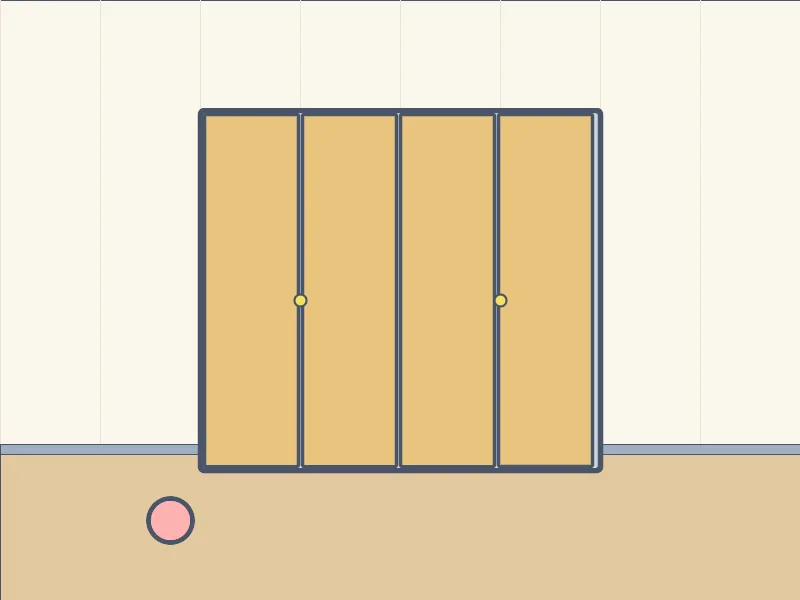
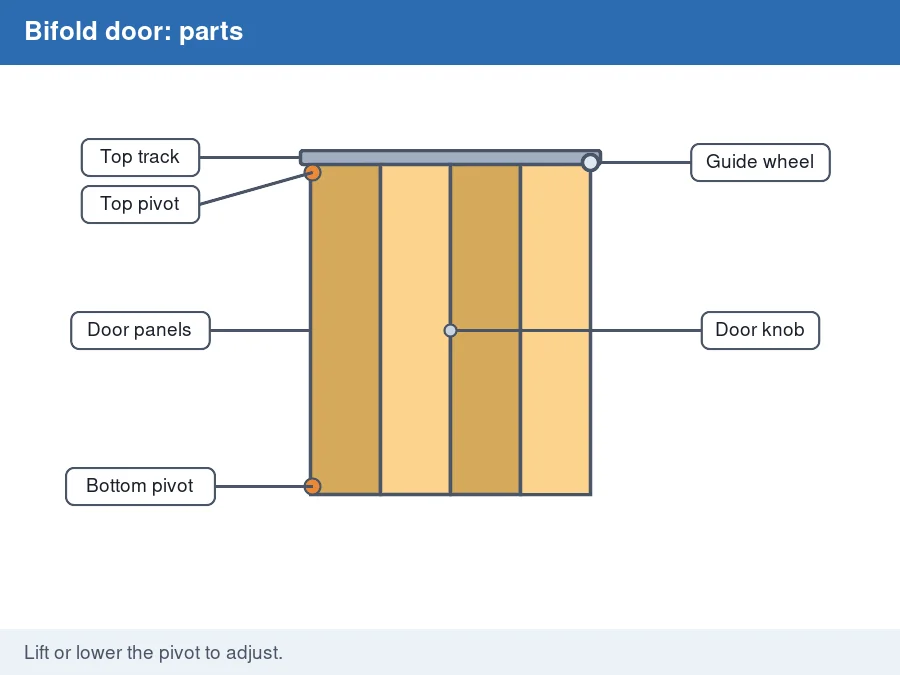
Knowing how to adjust a bifold door saves replacing hardware that is fine. Bifolds are simple: a track, two pivots, and a guide. When the door sags, rubs, or will not stay closed, one of those three is out of adjustment.
The order to work in is track, then pivots, then guide, then panels. Adjusting the panels before the track is level just moves the problem around.
1. Watch the door move
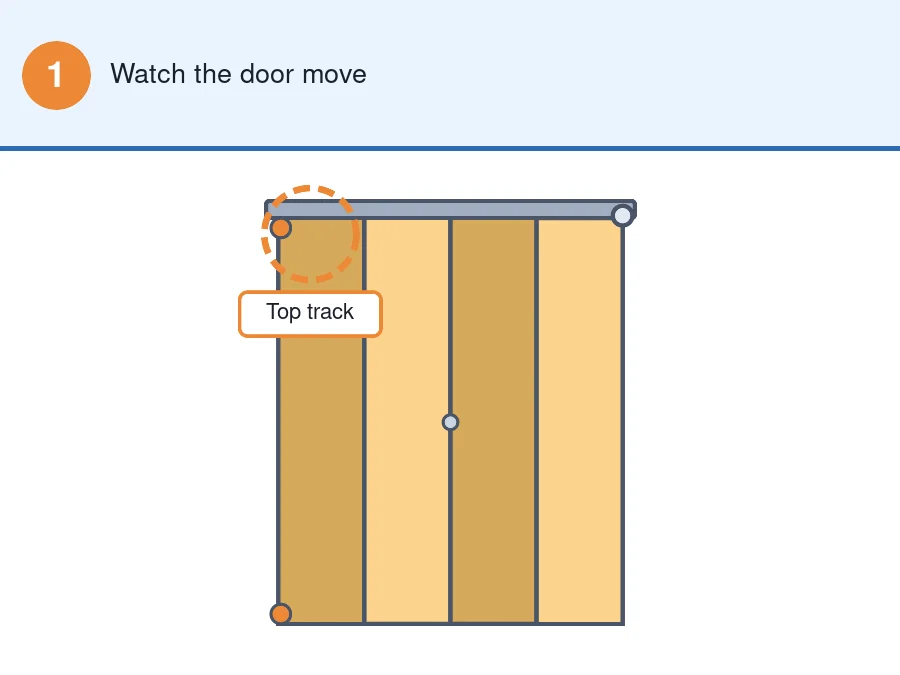
Open and close the door slowly and watch what happens. Note where it rubs, whether a panel drops out of the track, and whether the door closes with a gap at the top or the bottom. This tells you which part to adjust.
2. Check the track for level
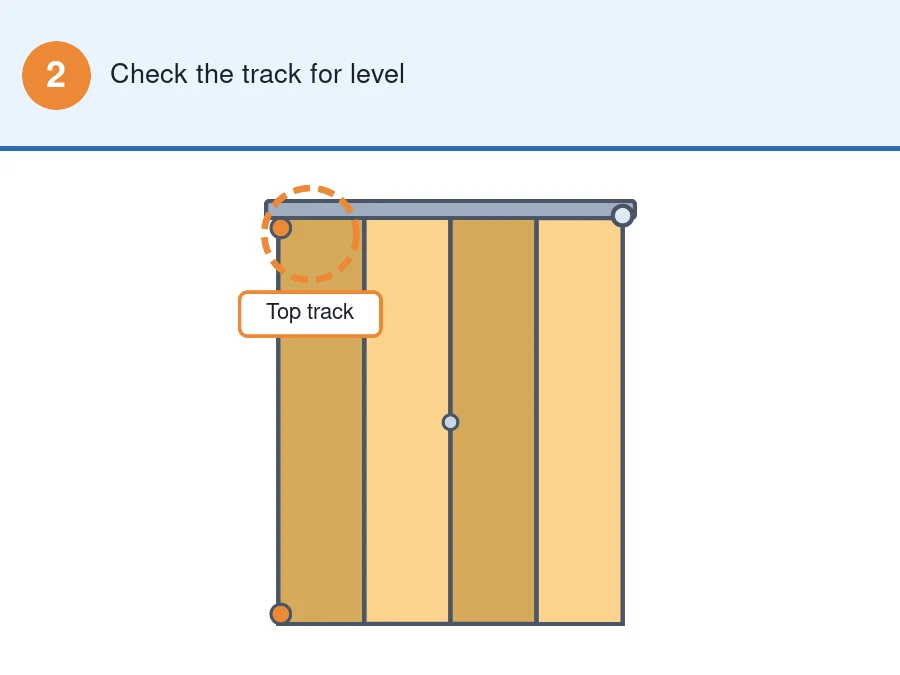
Set a level on the top track. If it is not level, the door will drift toward one side and may not stay closed. Tighten the track screws, and shim behind the track if the header is out. Every screw hole should have a screw in it.
3. Check the track for damage
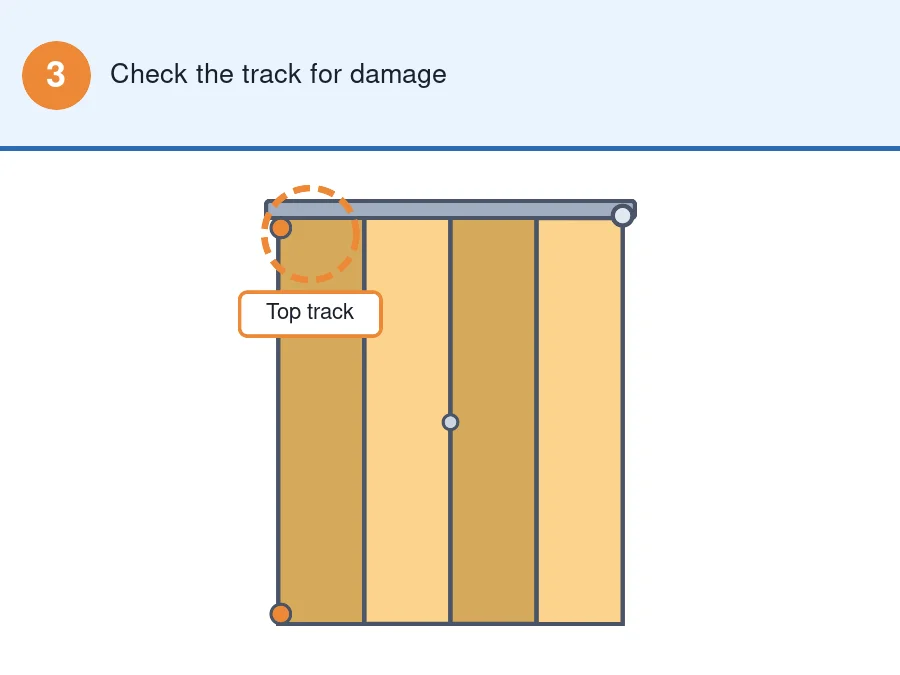
Look for a bent track, a worn spot, or a screw head sticking into the channel. A bent track makes the rollers jump and the door jam. Straighten a small bend with pliers, or replace the track if it is kinked.
4. Adjust the pivots
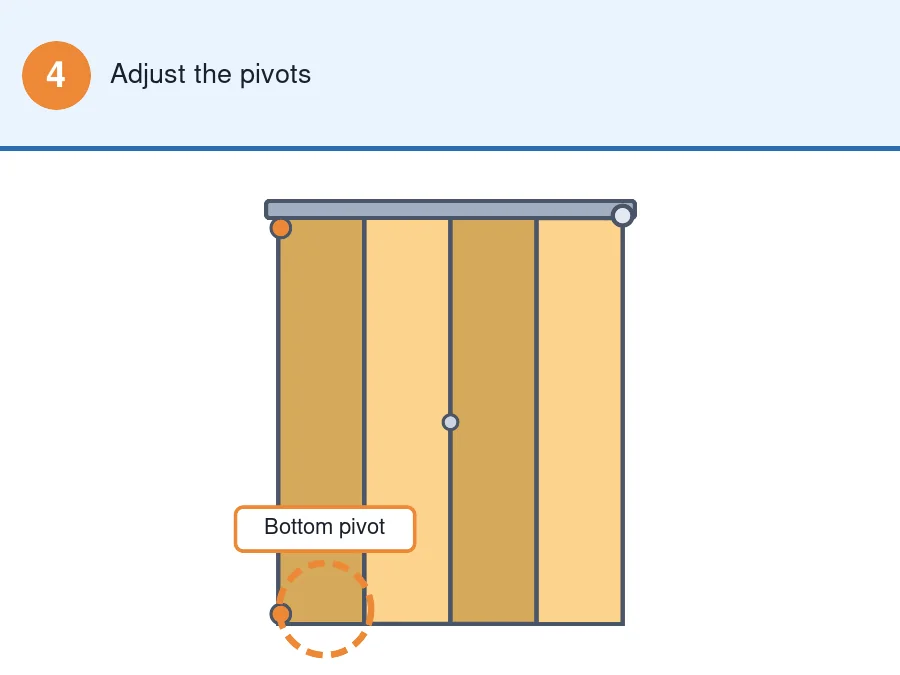
The bottom pivot usually has a screw that raises or lowers that side of the door. Turning it lifts the panel to clear a rubbing floor or drops it to close a gap at the top. Make a quarter turn at a time and test after each.
5. Set the top pivot and the guide
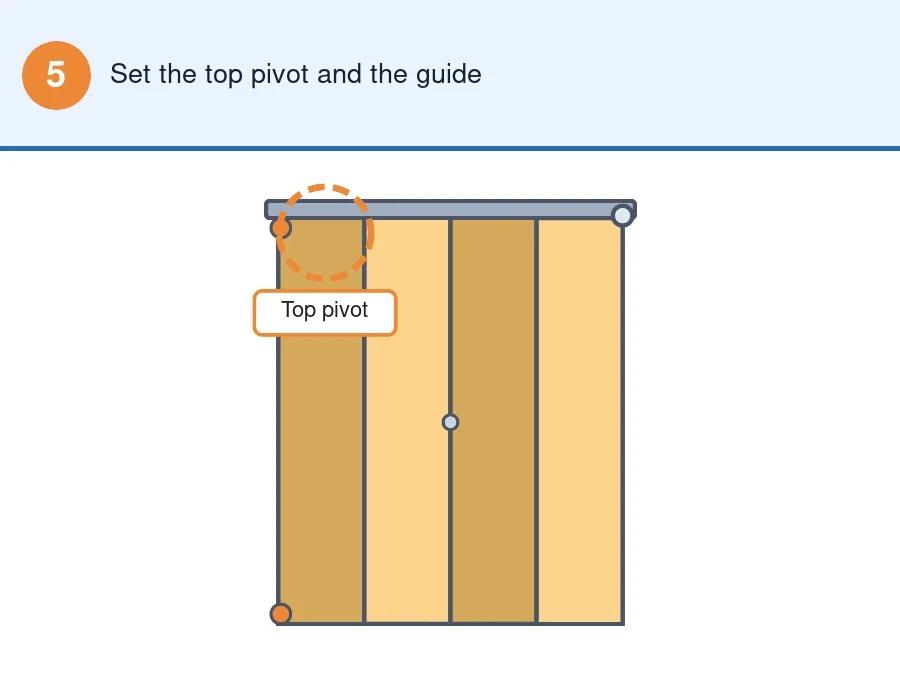
The top pivot holds the panel vertical, and the guide in the track keeps it aligned. If the door leans, adjust the top pivot. If the door will not stay in the track, check the guide and the roller for wear or a missing screw.
6. Check the panels are plumb
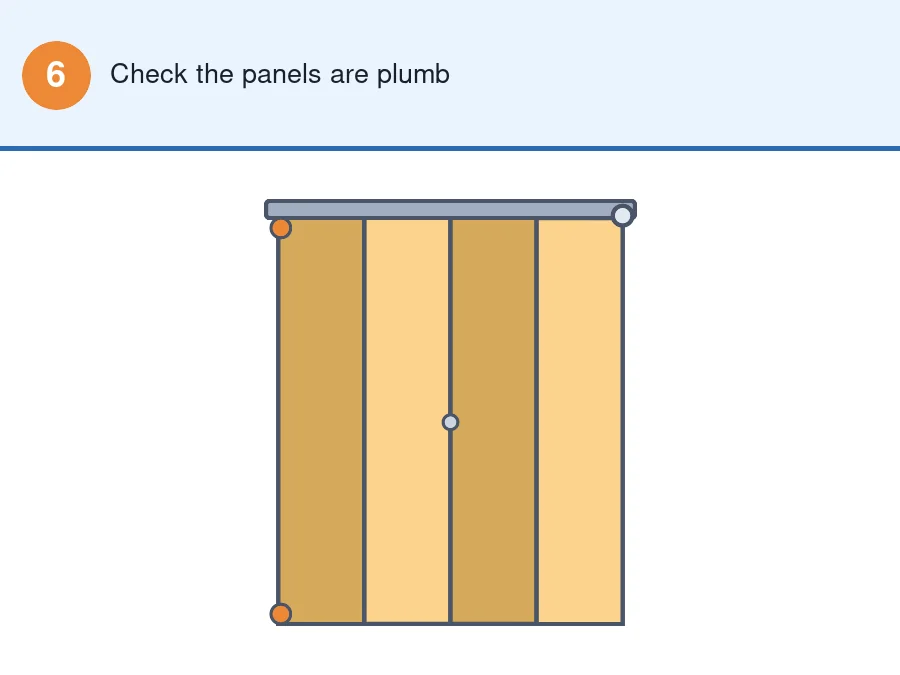
Fold the door open and hold a level against each panel. A panel that is out of plumb rubs at the top or the bottom. Adjust the pivots until both panels hang vertical when the door is closed.
7. Align the panels to each other
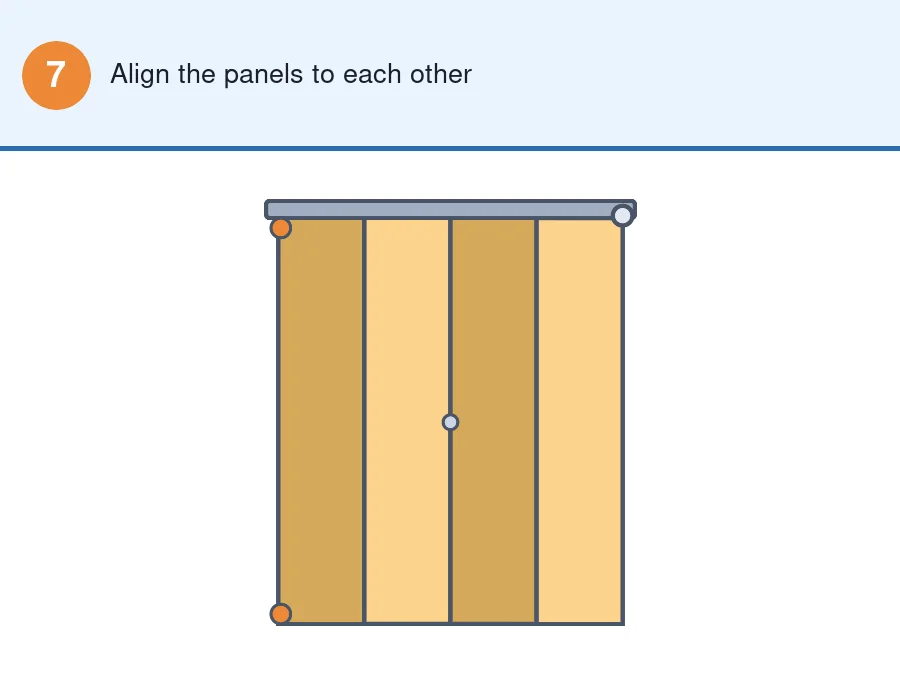
With the door closed, look at the joint between the two panels. One panel standing proud means the hinge or the pivot needs adjusting. Tighten the hinge screws first, since a loose hinge is the usual cause of a misaligned panel.
8. Fix a door that will not stay closed
If the door drifts open, the track is out of level or the opening is out of square. Level the track first. If the opening is out of square, the guide or the pivot can be adjusted slightly, or a magnetic catch can hold the door closed.
9. Handle rubbing at the floor or the jamb
A door that rubs the floor needs the pivot raised or the floor checked for a high spot. A door that rubs the jamb needs the track shifted slightly, or the jamb checked for plumb. Trim only as a last resort, and seal the cut edge afterward.
10. Lubricate and check the hardware
Put a drop of silicone lubricant on the pivots and the rollers, and check that every screw is tight. Wipe the track clean, since dust and pet hair are what make a bifold stiff. Test the full swing and the fold.
Common mistakes
- Adjusting the panels before checking the track for level.
- Turning the pivot screw several full turns at once, which overshoots.
- Trimming the door for a problem the pivots could fix.
- Leaving missing or loose screws in the track.
- Ignoring a bent track and fighting the symptom.
- Lubricating with oil, which collects dust and makes it worse.
Related guides
- How to Install a Bifold Door
- How to Fix an Interior Door That Sticks
- Sliding Door Off Track or Hard to Slide: How to Fix It
- How to Fix a Storm Door That Slams or Will Not Close
- How to Adjust a Screen Door Closer
- How to Fix a Bathroom Door Lock That Sticks or Wont Latch
FAQ
Why does my bifold door keep coming off the track?
A worn guide, a bent track, or a top pivot that is too low. Check the guide and roller first, then the pivot height.
How do I raise a bifold door?
Turn the adjustment screw on the bottom pivot, a quarter turn at a time, and test the clearance after each.
Why will not my bifold door stay closed?
The track is out of level or the opening is out of square. Level the track, then adjust the guide or add a magnetic catch.
Can I cut a bifold door to fit?
You can trim the bottom, but adjust the pivots and track first. Trimming does not fix a track that is out of level.
What lubricant should I use on bifold hardware?
Silicone spray or a dry lubricant. Oil and grease collect dust and make the track gritty.
More from this topic
- How to Fix Loose Cabinet Door: Tighten Hinges and Realign: Learn how to fix loose cabinet door problems: tighten hinge screws, repair stripped holes, adjust the hinge...
- How to Install a Bifold Door: How to install a bifold door square and smooth: set the track level, anchor the pivot side, hang the panels,...
- How to Install a Bypass Closet Door: How to install a bypass closet door: set the top track level, hang the panels so they overlap, and adjust the...
- How to Chisel a Hinge Mortise: How to chisel a hinge mortise that fits flush: score the outline, cut the edges first, and remove the waste...
- How to Fix a Loose Hinge Screw: How to fix a loose hinge screw so the door hangs straight again: test the holes, pack them with wood, and...
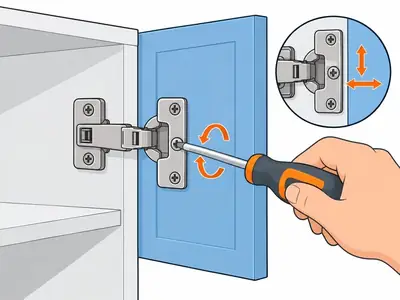 Doors and WindowsHow to Fix Loose Cabinet Door: Tighten Hinges and RealignLearn how to fix loose cabinet door problems: tighten hinge screws, repair stripped holes, adjust the hinge and realign a door that hangs crooked.
 Doors and WindowsHow to Install a Bifold DoorHow to install a bifold door square and smooth: set the track level, anchor the pivot side, hang the panels, and adjust the gap.
 Doors and WindowsHow to Install a Bypass Closet DoorHow to install a bypass closet door: set the top track level, hang the panels so they overlap, and adjust the rollers until they close evenly.
 Doors and WindowsHow to Chisel a Hinge MortiseHow to chisel a hinge mortise that fits flush: score the outline, cut the edges first, and remove the waste in shallow passes.
 Doors and WindowsHow to Fix a Loose Hinge ScrewHow to fix a loose hinge screw so the door hangs straight again: test the holes, pack them with wood, and reset the screws.