
How to Prevent Overloading a Circuit
Part of: Electrical safety
- Difficulty
- Easy
- Time
- 30 to 60 minutes
- Tools
- Pencil and paper, appliance labels, outlet tester, flashlight, circuit directory, calculator
- Call a pro if
- A breaker trips with nothing new plugged in, an outlet is warm, or the panel has fuses instead of breakers.
In this guide
- Learn what a circuit can carry
- Map the outlets
- Read the labels
- Find the heavy hitters
- Add up the worst case
- Spread the load
- Give big appliances their own circuit
- Watch the power strips
- Notice the signs
- Check the outlets themselves
- Label the panel when you are done
- Know when to call
- Recheck when seasons change
- Common mistakes
- Related guides
- FAQ
- When to call a pro
- Power off first
A tripping breaker is doing its job. The problem is on the load side, where too many appliances share one run of wire. Counting what is on a circuit takes half an hour and prevents the kind of failure that scorches an outlet. How to prevent overloading a circuit starts with what the circuit carries, since a 15 amp circuit holds about 1,800 watts and should stay under 80 percent.
1. Learn what a circuit can carry
1. A 15 amp circuit holds about 1800 watts.
2. You should stay under 80 percent of that.
2. Map the outlets
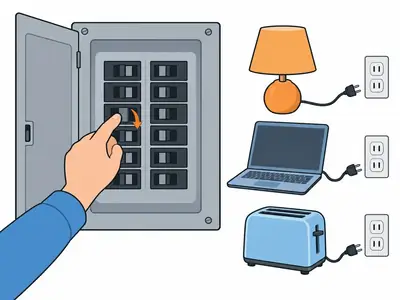
1. Walk the room and note every outlet.
2. Flip one breaker and see what dies.
3. Read the labels
1. Every appliance plate lists watts or amps.
2. Amps times 120 gives watts.
4. Find the heavy hitters
1. Space heaters, kettles, toasters and hair dryers.
2. Each one can fill most of a circuit alone.
5. Add up the worst case
1. Not everything runs at once.
2. But winter mornings come close.
6. Spread the load
1. Move the heater to another circuit.
2. Use the outlet on the other wall, not another strip.
7. Give big appliances their own circuit
1. A microwave, a space heater and a dryer each want one.
2. Sharing with lighting is what trips.
8. Watch the power strips
1. A strip does not add capacity.
2. It just lets you plug in more than you should.
9. Notice the signs
1. A warm cover plate.
2. Lights that dim when a motor starts.
3. A breaker that trips more than once a month.
10. Check the outlets themselves
1. A tester shows an open ground or reversed wires.
2. Loose slots mean a worn outlet.
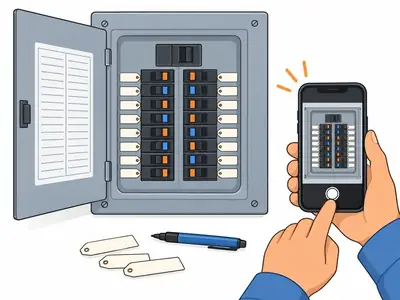
11. Label the panel when you are done
1. Write the room and the load.
2. The next person will thank you.
12. Know when to call
1. Tripping with nothing plugged in.
2. A burning smell at the panel.
13. Recheck when seasons change
1. Heaters in winter, air conditioners in summer.
2. The load moves with the weather.
Common mistakes
- Swapping in a bigger breaker.
- Running a heater on a strip.
- Counting only what is plugged in, not what runs together.
- Ignoring a warm outlet.
- Assuming a strip adds power.
Related guides
FAQ
How many watts can one circuit take?
A 15 amp circuit is rated for 1800 watts, and you should keep the real load well under that.
Why does my breaker trip when the microwave runs?
The microwave is on the same circuit as something else heavy. Move one of them.
Is it safe to plug a space heater into a strip?
No. A heater needs a wall outlet on a circuit with room.
Can I just reset the breaker each time?
No. Repeated trips mean the load or the wiring is wrong.
More from this topic
- How to Test a Circuit Breaker With a Multimeter: Learn how to test a circuit breaker: check for tripped positions, test voltage with a multimeter, and know...
- Breaker Will Not Reset: What to Do: Breaker will not reset? Unplug devices, flip it fully off then on and learn what a repeat trip means. Safe...
- How to Find Your Electrical Panel and Label Breakers: How to find your electrical panel and label breakers in a new home. Safe steps with a helper, a radio or...
- How to Map Your Breaker Panel in One Afternoon: Learn how to map your breaker panel: label every breaker to its rooms and outlets with a lamp, a helper and a...
- How to Protect Electronics From Power Surges: Learn how to protect electronics from power surges: use surge protectors correctly, unplug during storms,...
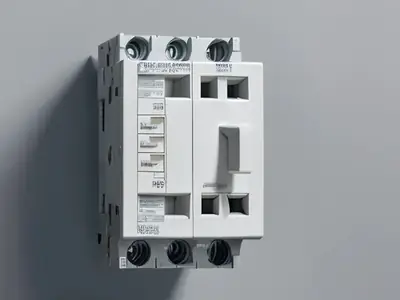 Electrical BasicsHow to Test a Circuit Breaker With a MultimeterLearn how to test a circuit breaker: check for tripped positions, test voltage with a multimeter, and know when the breaker itself is bad.
 Electrical BasicsBreaker Will Not Reset: What to DoBreaker will not reset? Unplug devices, flip it fully off then on and learn what a repeat trip means. Safe steps and when to call an electrician.
 Electrical BasicsHow to Find Your Electrical Panel and Label BreakersHow to find your electrical panel and label breakers in a new home. Safe steps with a helper, a radio or tester, and a clear panel map. Know when to call a pro.Electrical BasicsHow to Map Your Breaker Panel in One AfternoonLearn how to map your breaker panel: label every breaker to its rooms and outlets with a lamp, a helper and a circuit directory you will actually use.Electrical BasicsHow to Protect Electronics From Power SurgesLearn how to protect electronics from power surges: use surge protectors correctly, unplug during storms, check ratings and know when to ask an electrician.