
How to Remove Paint Splatter From Floors and Trim
Part of: Floors, walls and doors · Also in: The Complete Guide to Home Wall and Floor Repair
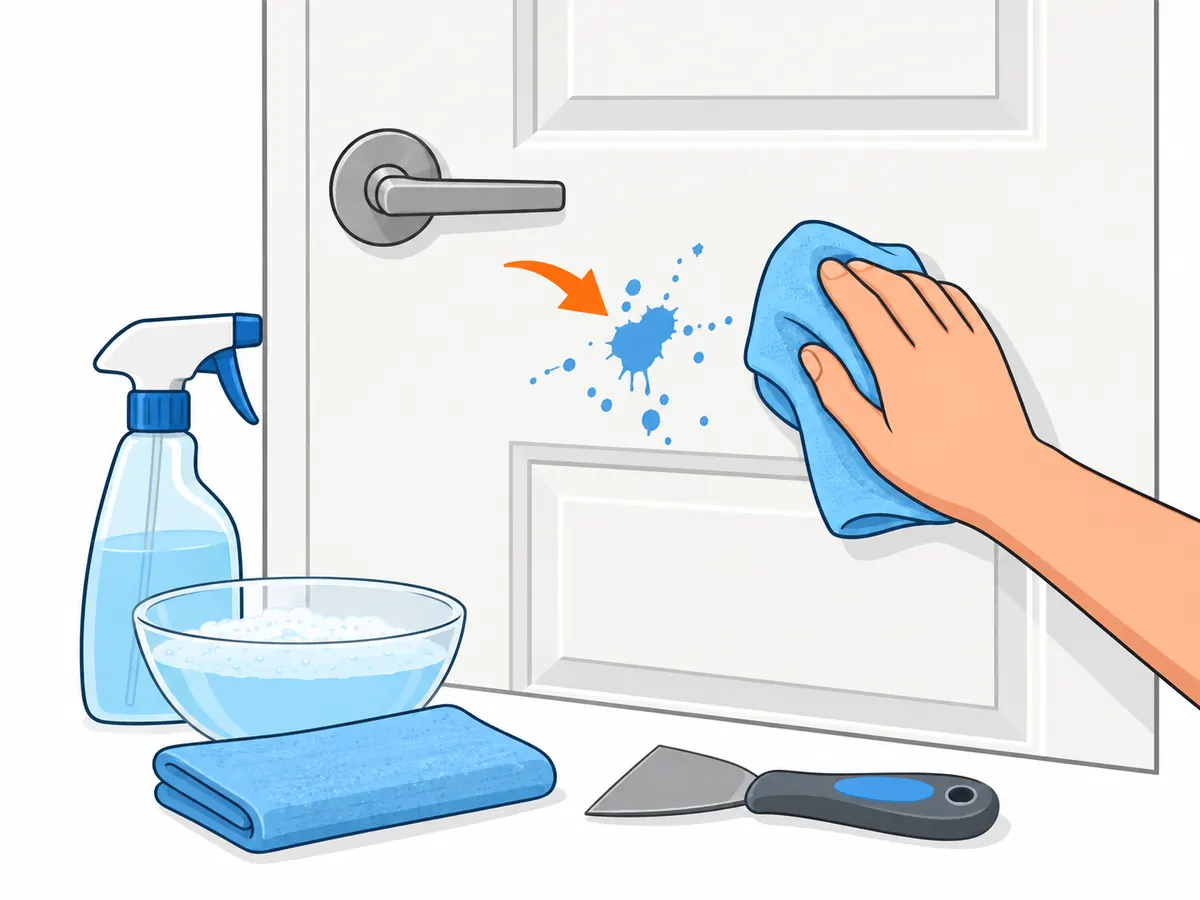
- Difficulty
- Easy
- Time
- 15 to 60 minutes depending on the mess
- Tools
- Plastic putty knife, old credit card, warm water and dish soap, rubbing alcohol, soft cloths, fine steel wool for glass only, hair dryer
- Call a pro if
- The splatter is on delicate flooring like natural stone or vintage finished wood and household methods risk the finish.
In this guide
- Chemical safety
Every paint job leaves a signature: a constellation of tiny drips on the floor and a stripe on the baseboard where the tape was optimistic. Dried latex paint looks bonded forever, but it sits on top of most surfaces rather than into them, and the right touch pops it off cleanly. The method depends on the surface, so here is how to remove paint splatter from each one.
This guide is part of our wider guide to drywall, paint and wall repair.
Fresh splatter on anything: act now
Wet paint wipes up with a damp cloth and a drop of dish soap. Blot, do not smear, and rinse the cloth often. If you catch splatter the same day, the job takes seconds, so do a floor sweep with a damp cloth the moment you finish painting, while everything is still soft.
Hardwood floors
Latex paint on finished hardwood releases with patience. Hold a plastic putty knife or an old credit card nearly flat and push gently under the drip; most pops off in one piece. For stubborn spots, soften first: lay a cloth dampened with warm soapy water over the spot for a few minutes, or warm it with a hair dryer for 30 seconds, then scrape again.
Rubbing alcohol on a cloth dissolves latex paint film. Dab it on, wait a minute, and rub gently. Alcohol can dull some floor finishes, so test in a closet corner first and wipe the area with a damp cloth afterward.
Laminate and vinyl floors
The same plastic-scraper-first rule applies, and these surfaces scratch more easily, so no metal anywhere. Warm soapy water handles most spots. Alcohol works on vinyl but test it on laminate, since some laminate top layers cloud with solvents.
For splatter along baseboards where the floor meets trim, an old toothbrush dipped in soapy water reaches the crevice the scraper cannot.
Tile and grout
Glazed tile is the easiest surface of all: scrape with a plastic blade and wipe. Unglazed or textured tile holds paint in its pores, so use a nylon brush with soapy water. Grout is porous; paint in grout usually needs a grout brush and repeated scrubbing, and a final pass with the methods in our guide on cleaning grout lines.
Glass and windows
Paint on glass scrapes off with a razor blade held flat at a low angle, with the glass wet with soapy water so the blade glides without scratching. For a mist of fine spray, 0000-grade steel wool on dry glass removes it without scratching. Never use steel wool on anything but glass.
Trim and baseboards
This is where splatter matters most, because trim is at eye level. If the trim paint is intact, dried drips pop off with a fingernail or a plastic scraper. Rub gently with a cloth dampened with warm water; latex drips soften and release.
If the drip has merged with the trim's own paint, or removal dulls the finish, the honest fix is a touch-up: sand the spot lightly, wipe, and feather in matching paint. Our guide on touching up paint on walls covers the blending, and fixing paint drips and runs handles the same problem on walls.
Carpet
Dried latex in carpet is the worst case. Pick out what you can, then soften the rest with warm water and pick again with a spoon, working from the outside of the spot inward. Repeat patiently. Large dried spills in a visible area sometimes justify a professional carpet cleaner.
Common mistakes
- Reaching for a metal scraper or knife, which trades a paint spot for a permanent scratch.
- Soaking hardwood. Water is a bigger risk to the floor than the paint is.
- Skipping the test spot with alcohol on finished surfaces.
- Scrubbing carpet aggressively, which frays the fibers and leaves a fuzzy patch.
Related guides
- How to Remove Wallpaper Without Wrecking the Wall
- How to Paint a Front Door That Looks Good and Lasts
- How to Paint a Bathroom (Moisture, Mildew and Tight Spaces)
- How to Paint Over a Water Stain Without It Bleeding Back
- How to Clean a Paint Brush After Latex Paint
FAQ
What removes oil-based paint splatter?
Oil-based paint needs its matching solvent, typically mineral spirits, on a cloth, with strong ventilation and no flames nearby. Test first, since solvents attack some finishes. Small spots on trim are often easier to sand and touch up than to dissolve. Lay used solvent rags flat outdoors to dry before you throw them away, because they can heat up and catch fire in a pile.
Will a magic eraser remove dried paint?
It works on some surfaces but it is abrasive, so it can dull finishes as it works. Test first and use light pressure.
How do I avoid this next time?
Canvas drop cloths, not plastic, since plastic slides and paint pools on it. Tape the baseboard top edge, and keep a damp cloth in your pocket while you work so fresh drips never get the chance to dry.
More from this topic
- How to Strip Paint With a Heat Gun: Learn how to strip paint with a heat gun safely: test for lead first, keep the gun moving and lift the...
- How to Fix Paint Drips and Runs on a Wall: Fix paint drips and runs by letting them dry, scraping or sanding the ridge flat, touching up with thin...
- How to Paint a Stair Riser: Learn how to paint a stair riser cleanly: sand and prime the board, paint the edges first and keep the line...
- How to Clean a Paint Roller: Learn how to clean a paint roller after latex paint: scrape the cover, rinse and wash it, spin out the water...
- How to Paint a Bathroom Ceiling with Paint: Learn how to paint a bathroom ceiling: fix the moisture and mold first, prime stains, use a bathroom-rated...
 Walls and PaintHow to Fix Paint Drips and Runs on a WallFix paint drips and runs by letting them dry, scraping or sanding the ridge flat, touching up with thin coats, and adjusting your rolling technique.
 Walls and PaintHow to Paint a Stair RiserLearn how to paint a stair riser cleanly: sand and prime the board, paint the edges first and keep the line straight at the tread.
 Walls and PaintHow to Clean a Paint RollerLearn how to clean a paint roller after latex paint: scrape the cover, rinse and wash it, spin out the water and dry it standing on end.
 Walls and PaintHow to Paint a Bathroom Ceiling with PaintLearn how to paint a bathroom ceiling: fix the moisture and mold first, prime stains, use a bathroom-rated paint, and roll it evenly so it resists steam.