
How to Trim a Hedge Evenly Without Leaving Bare Spots
Part of: Outdoors and garage
- Difficulty
- Easy to moderate
- Time
- 1 to 3 hours
- Tools
- Hedge trimmer or shears, string and stakes, ladder or stool, gloves, safety glasses, hearing protection, tarp, rake, extension cord rated for outdoor use or fresh battery
- Call a pro if
- The hedge is very tall, grows near power lines, needs a high ladder, or you have a large hedge that needs chain saw cutting.
In this guide
- Ladder safety
- Wear protection
A crooked hedge draws the eye in the wrong way. A little planning gives a neat, even line. You do not need special skills, only a guide and a steady pace. Here is how to trim a hedge evenly and keep it healthy.
Pick the right time
Trim after the main growth flush, often in late spring or early summer. A light trim in late summer can tidy the shape. Avoid heavy trimming late in fall, since new growth may be hurt by frost. Check local rules and nesting season. Birds may be nesting in the hedge, and in some places it is illegal to disturb them.
Choose your tool
- Hand shears give control on small hedges.
- Electric or battery trimmers are fast for longer hedges.
- Pole trimmers reach the top without a ladder.
Keep blades sharp and clean. Dull blades tear leaves and leave brown tips.
Step by step
1. Check the hedge for nests, wires, and hidden objects.
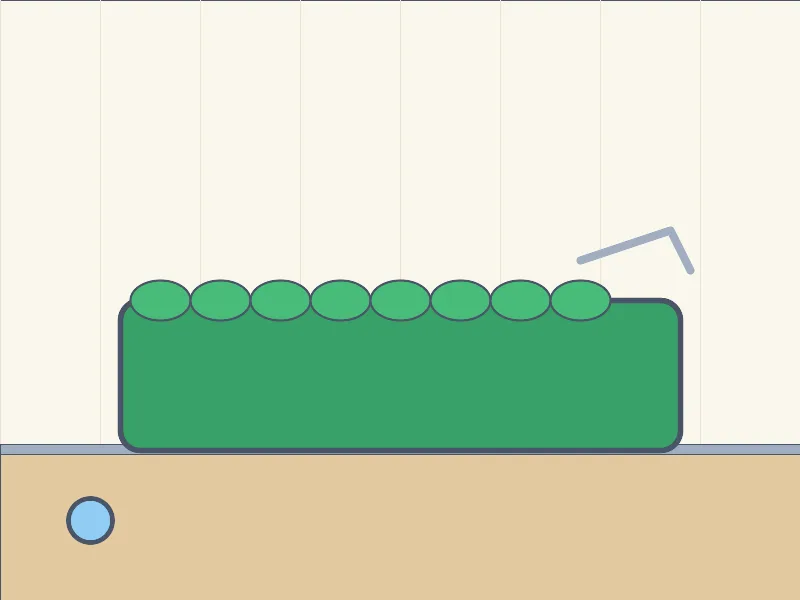
2. Plan the shape. A slightly wider base and a narrower top lets light reach the lower branches. A flat top works too, but avoid a top that is wider than the base.
3. Set a guide. Tie string between stakes at both ends of the hedge at the height you want. Use a level or a line level for a straight guide.
4. Lay a tarp along the base to catch clippings.
5. Trim the top first. Cut along the string from one end to the other. Use a sweeping motion and keep the blade flat.
6. Trim the sides. Start at the bottom and work up. Keep the same angle to maintain the taper.
7. Step back often and look for high spots.
8. Do not cut too deep. On many hedges, cutting into bare wood leaves holes that may not regrow.
9. Clean up. Rake clippings and compost them or bag them. See how to start a compost bin.
Safe use of power tools
Keep both hands on the trimmer. Do not cut above shoulder height. Do not reach into the blades. Unplug or remove the battery before you clear a jam. See extension cord safety for homeowners.
Overgrown hedges
A badly overgrown hedge may need a hard prune over a couple of years. Cut back one side one year and the other side the next. See how to prune overgrown shrubs.
After trimming
Water the hedge if the weather is dry. Add mulch around the base. Keep the soil moist. See how to mulch garden beds.
Keep hedges away from the house
Hedges against walls hold moisture and hide pests. Keep a gap and trim them back. See how to spot termite damage for signs of trouble.
Maintenance
Clean the trimmer after use, oil the blades, and store them dry. See how to store garden tools for winter.
FAQ
Should the hedge be wider at the bottom?
Yes. It lets light reach lower leaves and prevents bare bottoms.
How often should I trim?
Once or twice a year for most hedges. Fast growing types may need more.
Can I use hedge trimmers on every plant?
They suit leafy hedges. Some plants prefer hand pruning.
What if I cut too far?
Wait. Many plants regrow, but some do not from old wood.
Related guides
- How to Use a String Trimmer Like a Pro: Learn how to use a string trimmer: hold the right angle, feed the line correctly, and trim around trees and...
- How to Restring a Weed Trimmer the Easy Way: Learn how to restring a weed trimmer: pick the right line, wind it the right direction, and load the spool so...
- How to Fix Bare Patches in a Lawn: Find the Cause, Reseed: Learn how to fix bare patches in a lawn by finding the cause, loosening the soil, adding seed and cover, and...
- How to Fix Dog Urine Spots on a Lawn and Prevent New Ones: Learn how to fix dog urine spots on a lawn: flush the area, rake out dead grass, reseed, and use simple...
- How to Drill Into Concrete Without Cracking It: Learn how to drill into concrete: use a hammer drill with a masonry bit, clear the dust, and set anchors that...
 Garage and OutdoorsHow to Use a String Trimmer Like a ProLearn how to use a string trimmer: hold the right angle, feed the line correctly, and trim around trees and beds without the damage.
 Garage and OutdoorsHow to Restring a Weed Trimmer the Easy WayLearn how to restring a weed trimmer: pick the right line, wind it the right direction, and load the spool so it feeds smoothly.
 Garage and OutdoorsHow to Fix Bare Patches in a Lawn: Find the Cause, ReseedLearn how to fix bare patches in a lawn by finding the cause, loosening the soil, adding seed and cover, and watering so the grass fills in evenly.
 Garage and OutdoorsHow to Fix Dog Urine Spots on a Lawn and Prevent New OnesLearn how to fix dog urine spots on a lawn: flush the area, rake out dead grass, reseed, and use simple habits to prevent yellow patches from coming back.
 Garage and OutdoorsHow to Drill Into Concrete Without Cracking ItLearn how to drill into concrete: use a hammer drill with a masonry bit, clear the dust, and set anchors that actually hold.